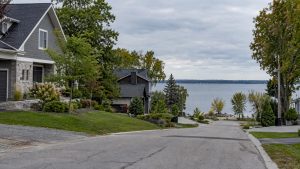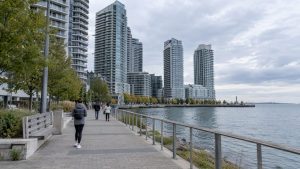
Remote work enables homebuyers to ask “Where do I want to live?” instead of “Where do I have to live?” That single shift changes everything about the home search. Buyers who once filtered listings by commute time now filter by lake views, trail access, and square footage. The industry term for this shift is location independence, and it has reshaped homebuyer priorities more than any other trend since the mortgage stress test. Understanding what this means for your search, your budget, and your long-term satisfaction is the first step toward making a decision you will not regret.
How does remote work reshape location flexibility for homebuyers?
Location independence is the defining benefit of remote work for buyers. Since 2020, approximately 10% of all migration has been directly attributable to remote work. That is not a rounding error. It represents hundreds of thousands of households choosing towns, secondary cities, and resort communities they would never have considered when a daily commute was non-negotiable.
The financial logic is compelling. Moving to a lower-cost housing market improves your debt-to-income ratio and your loan-to-value profile. That combination often qualifies buyers for a lower mortgage interest rate, saving thousands over the life of the loan. A buyer priced out of a Toronto condo may qualify for a detached home with a dedicated office in Innisfil or Barrie at a lower rate than they expected.

The trade-offs are real, though. Urban buyers give up walkable density, rapid transit, and a wide restaurant and retail base. Suburban and rural buyers gain space, quiet, and affordability. Neither choice is universally correct. The right answer depends on how often you will actually need to travel to a city office, and how much you value the lifestyle benefits of a slower-paced community.
| Location type | Key benefit | Key trade-off |
|---|---|---|
| Urban core (Toronto) | Walkability, transit, amenities | High cost, limited space |
| Suburban (Barrie, Innisfil) | Affordability, space, growing services | Car-dependent, less density |
| Resort/waterfront (Friday Harbour) | Lifestyle, nature, community | Premium pricing, seasonal considerations |
| Rural Ontario | Maximum affordability and space | Limited services, infrastructure gaps |
Pro Tip: Before committing to a location, spend a full work week there, not just a weekend. Remote work life in a community feels very different from a Saturday afternoon visit.
What home features do remote work buyers prioritise?
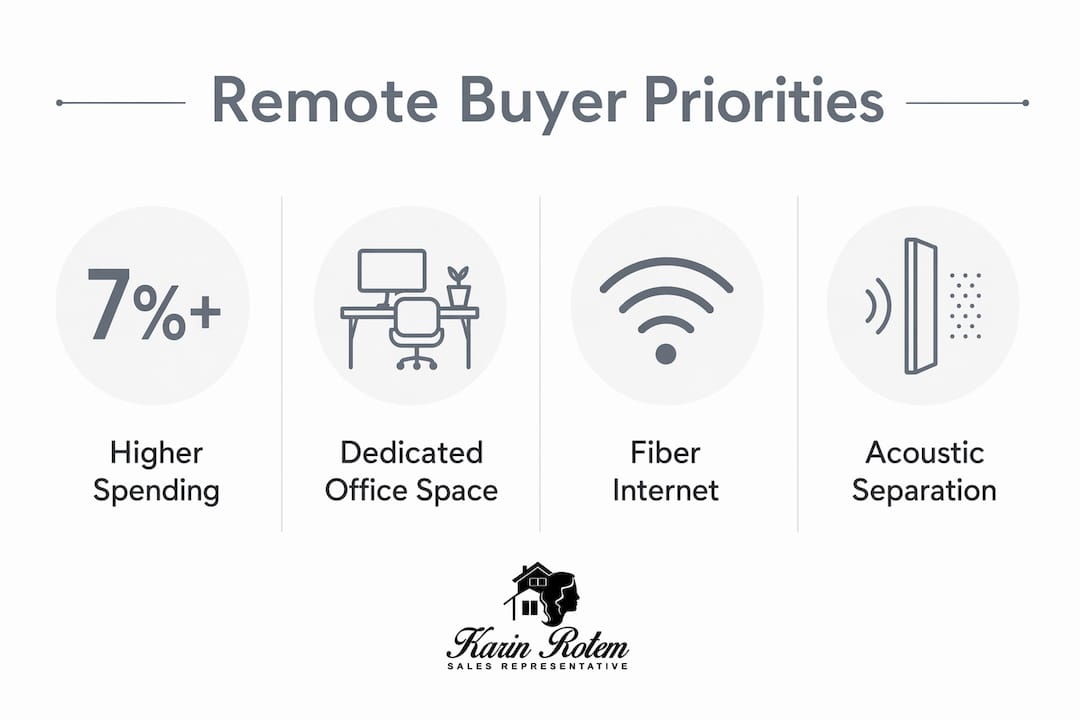
Remote work has increased the average desired home size by 200–300 square feet, and 63% of remote workers now view a dedicated home office as essential. Before the pandemic, only 20% said the same. That gap tells you exactly how much the checklist has changed.
What buyers are now looking for goes well beyond an extra bedroom. The features that matter most include:
- Dedicated office space with a door that closes. Open-concept layouts fail remote workers who take video calls or need acoustic separation from family members.
- Enterprise-grade internet infrastructure. Fibre availability and sufficient electrical capacity are now basic necessities for remote buyers, not upgrades.
- Acoustic buffering in the layout. Homes with bathrooms or closets acting as sound buffers between the workspace and living areas outperform open-concept designs for dual remote-worker households.
- Outdoor living areas. A deck, garden, or waterfront access provides the mental reset that a short commute used to offer.
- Natural light in the workspace. Buyers consistently report that a well-lit office reduces fatigue during long video call days.
Remote households spend over 7% more on housing than comparable non-remote households within the same commuting zone. That premium reflects real demand for these features. Buyers are not overpaying out of emotion. They are paying for a home that functions as both a residence and a workplace.
Pro Tip: When touring a home, stand in the proposed office space and clap once. If you hear a long echo, the room will amplify background noise on video calls. Hard floors and bare walls are the enemy of professional-sounding calls.
You can read more about how remote work reshapes buyer wants in the context of the Ontario market specifically.
How does remote work change lifestyle priorities and community choices?
Remote work shifts buyer priorities away from transit access toward lifestyle factors like parks, trails, local coffee shops, and a sense of community. This is not a soft preference. It is a measurable change in what buyers rank as non-negotiable.
The lifestyle priorities that now drive searches include:
- Access to nature. Trails, waterfront, and green space rank at the top of buyer wish lists in secondary markets. Friday Harbour buyers, for example, consistently cite the marina, trails, and lake access as the primary draw.
- Community engagement. Buyers want to know their neighbours. Smaller, walkable communities with local events and shared amenities deliver this in a way that a suburban subdivision rarely does.
- Slower pace. The absence of rush-hour stress is itself a quality-of-life gain. Buyers who have experienced it rarely want to return to a commuter lifestyle.
- Portfolio living. Some remote workers now own or rent in two locations, spending part of the year in a city and part at a waterfront or resort property. This multi-location lifestyle is a direct product of location independence.
- Resort-style amenities. Communities with fitness centres, restaurants, and managed common areas attract buyers who want the convenience of urban amenities without the urban density.
The rise of lifestyle-driven real estate as a category is a direct result of this shift. What used to be a niche preference for retirees is now a mainstream priority for buyers in their 30s and 40s.
What challenges does remote work introduce to the homebuying market?
Remote work improves affordability for individual buyers, but it creates pressure in the markets they move to. Increased demand in smaller, less-populated regions drives up home prices without a corresponding increase in housing supply. That is good news if you already own in those markets. It is a real obstacle if you are a local buyer competing against higher-income remote workers from Toronto or Vancouver.
The key challenges buyers face include:
- Price inflation in destination markets. Communities like Innisfil, Collingwood, and Wasaga Beach have seen significant price appreciation as remote workers relocate. Buyers need to act with current market data, not assumptions from two years ago.
- Work-life boundary erosion. A home that doubles as an office requires deliberate design. Without acoustic separation and a defined workspace, productivity suffers and burnout follows.
- Infrastructure gaps. Not every attractive rural or resort community has fibre internet. Confirming connectivity before making an offer is non-negotiable for remote workers.
- Long-term usability. A home optimised purely for remote work may feel limiting if your employment situation changes. Buyers should assess whether the space works for multiple uses over a 10-year horizon.
Remote work may exacerbate regional housing affordability if destination markets do not expand supply to match demand. This is a policy issue, but it is also a practical reality buyers need to price into their search. The Ontario luxury waterfront market has felt this pressure acutely over the past several years.
Key takeaways
Remote work enables homebuyers to prioritise lifestyle, space, and location independence over commute proximity, but success depends on matching the right community and home features to your actual work and life needs.
| Point | Details |
|---|---|
| Location independence is real | Since 2020, roughly 10% of all migration links directly to remote work and location freedom. |
| Dedicated office space is now essential | 63% of remote workers require a proper home office, up from 20% before the pandemic. |
| Lower-cost markets improve mortgage terms | Relocating to an affordable market can improve your debt-to-income ratio and qualify you for a better rate. |
| Lifestyle factors now lead the search | Access to nature, community, and outdoor amenities rank above transit access for remote buyers. |
| Destination markets face affordability pressure | Increased remote worker demand raises prices in smaller communities without matching supply growth. |
What I tell every remote work buyer before they start their search
Most buyers come to me with a list of features. What they actually need is a framework for making a decision they will be happy with in year five, not just year one.
What most buyers do not realise is that the home office question is not about square footage. It is about acoustics, light, and separation. I have seen buyers purchase beautiful open-concept homes and spend the first year fighting background noise on every call. A smaller room with a door and a window beats a large open loft every time for a serious remote worker.
The Friday Harbour community is a good example of how this plays out in practice. Buyers there are not just purchasing a property. They are purchasing a lifestyle with marina access, a fitness centre, restaurants, and trails. For a remote worker who used to spend two hours a day commuting, that environment replaces the social and physical stimulation the office once provided. That is a real and measurable quality-of-life gain.
My honest advice: confirm fibre internet availability before you fall in love with a property. I have had clients lose sleep over this after the fact. Check what buyers look for in Friday Harbour homes to see how these priorities play out in a real community context. The buyers who are happiest two years later are the ones who assessed the home for productivity and comfort, not just aesthetics.
— Felix
Friday Harbour and waterfront living for remote workers
Friday Harbour is one of the few communities in Ontario that was purpose-built around the lifestyle priorities remote workers now demand. The marina, trails, fitness centre, and year-round amenities create the kind of environment that replaces what the office used to provide socially and physically. Properties here range from waterfront condos to detached homes, many with dedicated workspace layouts and smart home infrastructure already in place.
Karinrotem specialises in this market and works with buyers to match the right property to their specific remote work and lifestyle needs. Whether you are looking for a primary residence or a Friday Harbour waterfront property as a full-time base, the team can guide you through current listings, pricing, and community fit. Reach out to Karinrotem directly for a personalised conversation about your search.
FAQ
What does remote work enable homebuyers to do differently?
Remote work enables homebuyers to choose locations based on lifestyle preferences rather than proximity to an employer. Buyers gain the freedom to prioritise space, community, nature, and affordability over commute time.
How does remote work affect mortgage qualification?
Relocating to a lower-cost market improves your debt-to-income ratio and loan-to-value profile, which can qualify you for a lower mortgage interest rate and reduce your total borrowing cost over time.
What home features matter most for remote workers?
A dedicated office with acoustic separation, fibre internet access, and sufficient electrical capacity are the top priorities. Outdoor living space and natural light in the workspace also rank highly among remote buyer checklists.
Does remote work increase home prices in destination markets?
Remote work drives up prices in smaller and resort communities when demand grows faster than housing supply. Buyers entering these markets should use current data and work with a local agent who tracks active price trends.
Is Friday Harbour a good fit for remote workers?
Friday Harbour offers year-round amenities, waterfront access, and a strong community environment that suits remote workers well. Many properties include dedicated workspace layouts and the community has reliable connectivity infrastructure.