
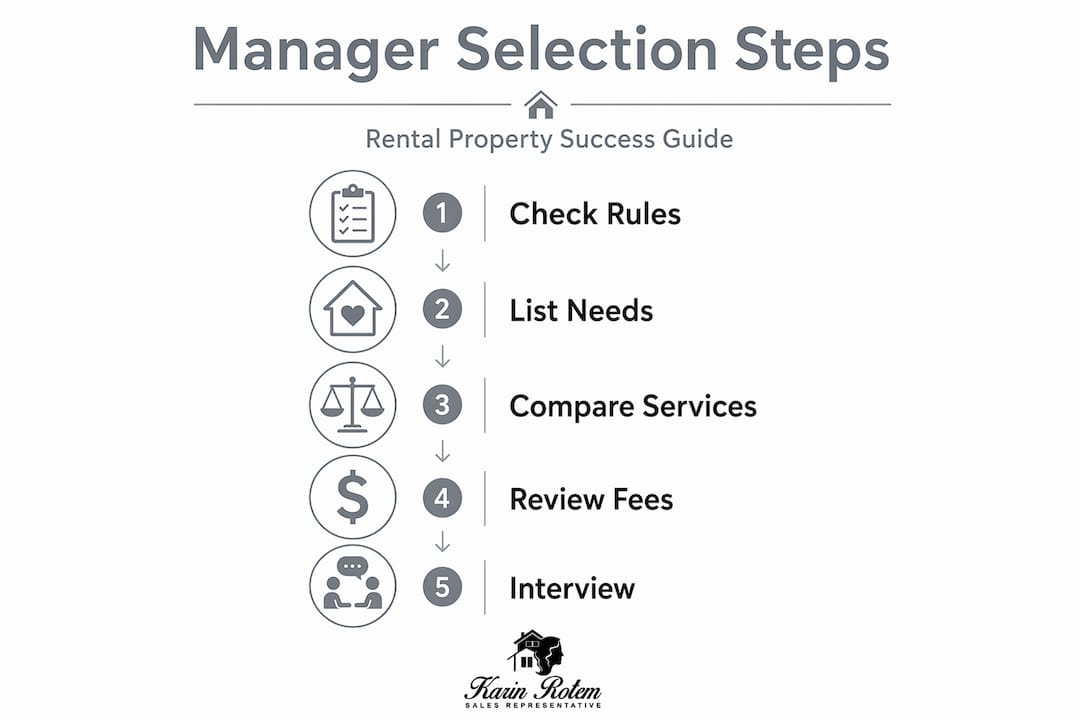
Owning a vacation rental in Toronto or Innisfil can be genuinely rewarding, but managing it well requires more than listing it online and hoping for the best. Between short-term rental regulations that cap entire-unit rentals at 180 nights per year, Municipal Accommodation Tax obligations, and the constant pressure to keep occupancy rates high, the complexity adds up fast. Choosing the right person to manage your property is one of the most consequential decisions you will make as an owner. This guide walks you through how to choose a property manager for your vacation rental with confidence, covering compliance, services, fees, and interviews.
Key Takeaways
| Point | Details |
|---|---|
| Know local rules | Short-term rentals in Toronto require principal residence status, registration, and compliance with night caps and taxes. |
| Define needed services | Choose a manager whose services align with your property type, involvement level, and income goals. |
| Vet local expertise | Confirm managers understand Toronto and Innisfil market seasonality, pricing, and regulations deeply. |
| Understand fees and contracts | Review all fee components, payout timing, contract length, and penalties to avoid surprises. |
| Interview thoroughly | Ask detailed operational, compliance, and technology questions to find a capable and trustworthy manager. |
Understanding how to choose a property manager for your vacation rental starts with regulations
Before you begin comparing managers or reviewing fee schedules, you need a firm grasp of the rules governing short-term rentals in your market. This is where many owners get tripped up. A manager who operates confidently in Vancouver or Muskoka may still be unprepared for the specific obligations Toronto imposes.
In Toronto, short-term rentals under 28 days must be registered with the city, the property must be the operator’s principal residence, and entire-unit rentals are capped at 180 nights per calendar year. This is not a technicality you can work around later. A property manager who does not understand these rules could put your registration at risk and expose you to fines.
Here is what any property manager you consider must be prepared to handle:
- Principal residence compliance. They need to understand what qualifies and how to document it properly.
- 180-night tracking. A good manager will have a system that monitors booking totals and flags when you are approaching the annual limit.
- Municipal Accommodation Tax (MAT). Toronto’s MAT applies to rentals under 28 days and requires regular remittance to the city. Missed filings carry penalties.
- Condo board restrictions. If your unit is part of a condominium, your building’s declaration may impose tighter rules than the city does. Review Friday Harbour rental rules and your status certificate carefully.
- Innisfil municipal requirements. While Innisfil has different local rules than Toronto, it is equally important that your manager be familiar with that specific market’s regulatory environment.
Knowing the short-term rental legal setup in Ontario before you enter any management conversation gives you leverage. You will immediately identify managers who speak fluently about compliance versus those offering vague reassurances.
Pro Tip: Ask any prospective manager to describe exactly how they track the 180-night cap for Toronto units. If they hesitate or give a generic answer, that is a signal to keep looking.
Identify what services and expertise you need in a property manager
Once you understand your compliance obligations, the next step is getting clear on what you actually need a manager to do. This sounds obvious, but many owners skip it and end up either overpaying for services they do not use or underserved in areas that matter most.
Full-service managers handle dynamic pricing, guest communication, cleaning coordination, maintenance, and regulatory compliance under one roof. That is appealing if you want a truly hands-off experience, but it comes at a cost. Partial management or co-hosting arrangements give you more control but require your ongoing involvement.
Here is how to think through what you need:
- Pricing and revenue management. Do you want someone actively adjusting nightly rates based on demand, local events, and seasonality? This alone can meaningfully improve your annual income.
- Guest communication. Pre-arrival instructions, check-in support, and responding to issues at 2 a.m. are time-intensive. Decide whether you want this handled entirely by your manager.
- Cleaning and turnovers. Coordinating cleaners between stays is one of the most operationally intensive parts of running a short-term rental. A manager with a reliable cleaning network is worth a lot.
- Maintenance coordination. Burst pipe at Friday Harbour on a Friday evening? Your manager needs a local trades network to handle emergencies quickly.
- Financial reporting. Monthly statements that clearly show income, expenses, and payout timing help you manage your investment with clarity.
Management fees typically range from 15% to 35% of rental revenue, and what is included varies considerably. Some managers charge separately for cleaning, maintenance calls, and onboarding photography. Others bundle everything. You cannot compare two managers solely on percentage without understanding what each fee covers.
Before talking to anyone, write out a list of the responsibilities you want handled and those you are comfortable managing yourself. This becomes your baseline for evaluating every candidate. You may also find it helpful to review vacation property usage ideas to clarify how your personal usage schedule affects your management needs.
Pro Tip: Ask every manager to give you a sample monthly owner statement from a similar property. It tells you immediately how transparent and organised their reporting actually is.
Evaluate potential managers for local experience and market knowledge
A manager may have impressive credentials and a polished website, but the key question is whether they understand your market. Toronto’s short-term rental environment and the Innisfil/Friday Harbour market operate very differently in terms of guest profiles, peak seasons, and pricing drivers.
“Local execution matters. Managers should know who visits the property, coordinates turns, and handles phone calls on the ground.” (Global Property Management)
This is not about geography for its own sake. It is about whether your manager can react intelligently when Innisfil’s summer season peaks, when a major Toronto event creates a short-term demand spike, or when a stretch of bad weather softens weekend bookings. Seasonal and event-driven pricing is one of the highest-value services a manager can provide, but only if they are paying attention to the local calendar.
When vetting for local expertise, ask the following:
- Who is my local point of contact? You want a name, not a call centre.
- Can you show me pricing calendars for similar properties in this area? Look for rate adjustments around local events, holidays, and shoulder seasons.
- How do you handle guest issues that require someone on-site within an hour? A manager without a local operational presence will give you a vague answer here.
- What is your current portfolio in Toronto or Innisfil specifically? Broad national portfolios without local concentration are a warning sign.
Understanding the differences between Innisfil and Toronto condo ownership will also help you ask better questions. The waterfront lifestyle market around Friday Harbour attracts a different guest than a downtown Toronto unit does, and your manager’s approach should reflect that.
Pro Tip: Request a short video call or in-person meeting rather than relying solely on email exchanges. How responsive and knowledgeable a manager is in that conversation mirrors exactly how they will handle your guests.

Understand fee structures and contract terms to avoid hidden costs
Fee percentages get most of the attention, but the real risks often hide in contract terms. A 20% management fee sounds reasonable until you discover a 12-month minimum term, a 90-day termination notice, and additional charges for every maintenance call.
Fee ranges of 15–50% are reported across the industry, and the variance reflects genuinely different service models. Here is a simplified comparison to help you frame your conversations:
| Fee range | Typical services included | What may be extra |
|---|---|---|
| 15–25% | Listing management, guest comms | Cleaning, maintenance, photography |
| 25–35% | Full guest services, pricing, reporting | Major repairs, damage handling |
| 35–50% | Full-service including on-site support | Extraordinary repairs |
Beyond the percentage, these are the contract terms that deserve your closest attention:
- Payout timing. Some managers hold funds for 30 days or longer after a stay. That affects your cash flow directly.
- Minimum contract length. A 12-month term with a 60-day termination clause means a poor-fit manager could cost you an entire season to exit.
- Damage handling. Who absorbs costs when a guest causes damage? Who files claims? What is the process timeline?
- Exclusivity clauses. Some contracts prohibit you from listing on any platform independently, which removes your flexibility.
- Renewal terms. Automatic renewals with short opt-out windows are easy to miss.
Review the rental contract key points specific to your property type before signing anything. Understanding your obligations and exit options before committing is far easier than trying to renegotiate later.
Pro Tip: Before signing, ask the manager directly: “If I am unhappy after three months, what does it cost me to leave?” The ease and clarity of their answer tells you a lot about how they handle difficult conversations.
Prepare and conduct effective interviews with property manager candidates
Choosing a vacation rental agency or individual manager ultimately comes down to fit, and fit requires a real conversation. A structured interview process separates serious candidates from those who are simply good at sales calls.
Here is a step-by-step approach for how to select a rental manager through the interview process:
- Open with a compliance question. Ask them to walk you through how they would keep your Toronto unit within the 180-night cap and ensure MAT remittances are filed correctly. Listen for specifics, not generalities.
- Ask about their technology stack. Good managers use dynamic pricing tools, channel management software, and owner reporting dashboards. Ask which platforms they use and whether you will have direct access to your property’s data.
- Probe their emergency response process. Describe a realistic guest emergency, such as a lockout or a plumbing leak, and ask how they would handle it. Vague answers indicate thin operational depth.
- Discuss their cleaning and maintenance network. Ask how many cleaners they work with in your area and what their backup plan is if a primary cleaner cancels before a same-day check-in.
- Request references from owners in similar markets. Follow up with those owners and ask specifically about communication frequency, income performance, and how issues were resolved.
Your interview list should also include these practical questions:
- How many properties do you currently manage in Toronto or Innisfil?
- What platforms do you list on, and do you charge separately for multi-platform management?
- How do you communicate with owners, and how often can I expect updates?
- What happens if my property sits vacant for an extended period?
Before your first interview, review the legal setup for short-term rentals in Ontario so you can speak confidently about regulatory requirements and evaluate whether candidates truly understand the landscape.
Pro Tip: Send a follow-up email after the interview with one or two additional questions. How quickly and thoroughly they respond is a direct preview of their ongoing communication style.
Our perspective: the interview is not the hardest part, the day 60 review is
Most property owners agonise over finding the right manager, conduct thorough interviews, and feel confident once they sign. Then they stop paying attention. That is where most management relationships quietly deteriorate.
The hardest and most important step in choosing a vacation rental agency or manager is not the selection itself. It is what you do 60 days after handing over the keys. You need to review your first two months of statements line by line, compare your occupancy rate against comparable listings in the area, and ask your manager to explain every gap. If they cannot, or will not, that is your answer.
We also see a pattern with owners who choose the manager with the lowest fee percentage. It seems rational. But the difference between a 20% and a 30% fee is irrelevant if the higher-fee manager produces 40% more bookings through superior pricing and guest experience. The role of a property manager at a vacation home is revenue generation as much as it is administration. Evaluate both.
Owners in the Friday Harbour community face a particularly interesting version of this decision. The resort’s managed rental pool offers one option, but independent managers who know the property type and the seasonal Innisfil market may produce different results depending on your unit and your goals. There is no universal right answer, but there is a right answer for your specific property.
Work with a team that knows Toronto and Innisfil investment properties
Selecting the right property manager is easier when you are starting with the right property. At Karin Rotem’s team, we work with investors across Toronto and Innisfil who are making exactly these decisions, from buying their first waterfront condo to growing a multi-property income portfolio. We understand the local regulations, the rental dynamics at Friday Harbour, and which property types perform best as short-term rentals. Whether you already own a property or are considering purchasing one with rental income in mind, our team can connect you with local resources and help you approach this decision with full information. Reach out to us to start the conversation.
Frequently asked questions
Can I legally rent out a vacation property in Toronto if it is not my principal residence?
No. Toronto regulations require that short-term rentals operate only in your principal residence, and entire-unit rentals are further limited to 180 nights per year. Renting out a non-principal property on a short-term basis puts your registration and any income at risk.
What percentage do vacation rental managers typically charge in Toronto?
Management fees typically range between 15% and 35% of gross rental revenue, though full-service models can reach higher depending on what is included. Always confirm the specific services covered before comparing percentages between candidates.
How can a property manager help with the Municipal Accommodation Tax in Toronto?
A professional manager ensures correct MAT collection and remittance on your behalf, tracks quarterly filing deadlines, and maintains the records the city requires. This removes significant administrative burden and reduces the risk of penalties for missed or incorrect filings.
What are important services to expect from a full-service vacation rental manager?
Full-service managers typically handle dynamic pricing, guest communications, cleaning coordination, maintenance oversight, and regulatory compliance. The goal is to generate strong income while giving you a genuinely hands-off ownership experience.
How do I verify a property manager’s local market knowledge?
Ask for recent pricing examples showing how they adjusted rates around local events or seasonal shifts, and request references from owners with properties in your specific area. A manager with real local expertise will answer both requests without hesitation.
Recommended
- Can I Use My Friday Harbour Condo as a Vacation Property? | Smart Usage Ideas – Karin Rotem Real Estate Agent
- What Should I Look for in a Friday Harbour Condo? | Expert Buyer Tips – Karin Rotem Real Estate Agent
- Finding Your Way Around: Map of Friday Harbour Rentals – Karin Rotem Real Estate Agent
- Understanding the Rental Contract at Friday Harbour: Key Points – Karin Rotem Real Estate Agent