Lake Simcoe remains one of the most practical near-Toronto waterfront markets for buyers who want weekly use without a long drive, and the numbers back that up: 140 waterfront sales closed in the surrounding region in 2025, up sharply from the year before. If you’re serious, start listing alerts today, then work through a pre-offer checklist covering shoreline, septic and permits before you write anything. The rest of this guide covers pricing, regulation and the exact steps I walk clients through.
TL;DR:
- Waterfront prices around Lake Simcoe have dropped by about 7% in Q4 2025, with the median sale price around $767,000, while sales volume increased to 140 properties in 2025.
- Homes priced between $900,000 and $1 million sold fastest, indicating intense competition in that range, whereas negotiations tend to be easier below that band.
- Shoreline, septic, permit history, and erosion risk are the key factors to verify during due diligence, requiring specialist inspections before making an offer.
- Regulations from conservation authorities and Parks Canada restrict development, with permit requirements for in-water structures and shoreline alterations, often delaying or complicating projects.
- Budget considerations should include land transfer taxes, higher inspection costs, shoreline maintenance, and potential shoreline or septic repairs beyond the property’s listed price.
Current price bands and which Lake Simcoe submarkets matter
Waterfront pricing around Lake Simcoe has shifted in an interesting direction. The median sale price for waterfront properties in Simcoe County West and Grey County West was around $767,000 in Q4 2025, down 7.1% year over year. At the same time, volume moved the other way: 140 waterfront sales closed in 2025, an increase over 2024. Read together, that’s a market with more buyers active but softer pricing, which tells you sellers are more open to negotiation than the headlines suggest.
The tightest activity is concentrated in a specific band. Homes priced between $900,000 and $1 million sold fastest in Q4 2025, suggesting that’s where competition is sharpest and where you should expect multiple showings booked before you can get in. Below that band, negotiating room tends to open up.
Submarket choice matters as much as price:
- Barrie and Innisfil offer the shortest commute from the GTA and the widest inventory range, from entry-level cottages to Friday Harbour’s resort-style condos and homes.
- Georgina and Keswick sit on the lake’s south shore with a mix of older cottage stock and newer builds, often at a lower price point than Innisfil.
- Ramara, including Lagoon City, is a canal-front community with boat access to the lake, appealing to buyers who want a marina lifestyle rather than open shoreline.
- Orillia anchors the lake’s north end with more year-round infrastructure and a town centre, suiting buyers who want a permanent residence rather than a seasonal retreat.
For deeper context on how these price bands compare across the wider province, our Ontario luxury waterfront market trends guide breaks down segment-by-segment movement. If Innisfil specifically is on your shortlist, our analysis of average Innisfil waterfront pricing is worth a read before you set your budget.
Where to find Lake Simcoe waterfront listings and how to read them
Most active waterfront inventory surfaces through MLS-fed portals and local brokerage pages rather than general search sites, so your alert setup determines how fast you see new listings.
- Set MLS-based alerts filtered specifically for waterfront frontage, not just “lake view” or “lake access,” since those terms cover very different properties.
- Watch dedicated community pages for faster-moving pockets. Friday Harbour listings, for example, update through pages built specifically for that community rather than general search results.
- When a listing appears, check frontage type first: deeded waterfront, shared access and lake view are three different products with very different resale value.
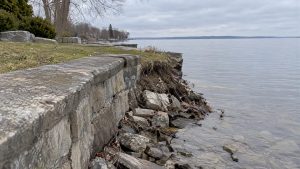
- Look for dock status, shoreline photos taken at different water levels, and any mention of erosion or retaining walls, since these details tell you more than the listing description ever will.
- Track days on market against the neighbourhood average: a property sitting well past that average often has a defect the listing hasn’t disclosed, and it’s worth asking why before booking a showing.
Once a listing clears those checks, book a site visit at a time when you can also see the shoreline at close range, ideally not during a scheduled open house when access is rushed.
Pre-offer due diligence: the checklist I use with clients buying waterfront
What most buyers don’t realize is that the inspection everyone budgets for, the general home inspection, is only one piece of waterfront due diligence. The bigger risks live in the shoreline, the septic system and the permit history, and those need their own specialists.
Here’s the sequence I walk clients through before any offer goes in:
- Shoreline and erosion exposure: check the property against Lake Simcoe Region Conservation Authority mapping under O. Reg. 179/06, which regulates development near flood-prone and erosion-hazard shoreline.
- Septic and well status: commission a septic inspection and, where the property relies on a private well, a hydrogeological assessment before your financing condition expires.
- Drainage Act exposure: request a municipal drain status report, since drains created under the Drainage Act can carry assessments that don’t appear on title.
- In-water structures: confirm any dock, boathouse or boatlift has a valid permit, particularly on the Trent-Severn Waterway, where Parks Canada requires permits for all in-water and shoreline works.
- Insurance and title: get written confirmation from an insurer on overland flood coverage availability, and have your solicitor run a full title search for encumbrances and easements.
Pro Tip: Build your financing and inspection conditions around a timeline long enough to get a written response from the conservation authority, not just the home inspector.
I generally recommend sequencing these checks so the cheapest and fastest ones (title search, drain status letter) happen first, and the ones with longer lead times (hydrogeological report, permit confirmation) get built into your conditional offer period rather than squeezed in after waiving conditions. For a longer version of this checklist, see our detailed pre-offer guide for Ontario waterfront.
How conservation authorities and Parks Canada affect what you can build or repair
Lake Simcoe shoreline is not a build-what-you-want zone, and that surprises buyers coming from inland suburban markets.
O. Reg. 179/06 requires permission from the Lake Simcoe Region Conservation Authority for development within areas affected by flood levels, erosion hazards or dynamic beach movement. That covers new construction, additions and in some cases significant landscaping near the water. The Lake Simcoe Protection Plan layers on top of that, setting vegetation protection zones that commonly run 30 metres from the shoreline in built-up areas and wider elsewhere, restricting how much natural cover you can clear.
Where the property touches the Trent-Severn Waterway, Parks Canada requires a permit for any work on, under or over the bed and waters of the waterway, including docks, boathouses, swim rafts and boatlifts. That applies even to repairs on an existing structure, not just new builds.
Practical steps before you remove conditions:
- Use TRCA’s property inquiry service or the equivalent Lake Simcoe authority process to get a formal letter on regulated-area status.
- Ask the seller for copies of any existing permits for docks, boathouses or shoreline alterations.
- Build permit confirmation into your offer as a condition, not an assumption, since timelines can run several weeks.
Our boathouse permit guide walks through the provincial and municipal steps in more detail if a dock or boathouse is part of your decision.
Closing costs, municipal assessments and insurance issues
Budgeting for Lake Simcoe waterfront means going beyond the purchase price. Ontario land transfer tax applies on a sliding scale based on purchase price, and Toronto buyers also face the municipal land transfer tax if the property sits within the city, though most Lake Simcoe waterfront falls outside that boundary. Have your lawyer calculate your exact LTT once you have a firm purchase price.
Standard home insurance policies in Canada rarely cover overland flooding from rising lake levels or heavy rainfall, and endorsement availability depends on the property’s individual risk profile, so get written confirmation from an insurer before you close, not after.
Other line items to plan for:
- Municipal drain assessments, which can carry priority lien status even when they aren’t listed on title.
- Ongoing shoreline maintenance, including armour stone repair, dock upkeep and vegetation management within protection zones.
- A contingency buffer in your offer for any conditions the conservation authority attaches to future work.
Our guide on avoiding financing and insurance surprises near Toronto covers this budgeting process step by step.
Match your buyer goal to the right neighbourhood and property type
Your intended use should drive your search filters more than price alone.
If you’re commuting from the GTA on weekends, Innisfil and Barrie put you closest to the highway, while Ramara and Orillia suit buyers planning a full relocation or a slower-paced retirement. Shoreline type matters too: sandy shorelines near Innisfil and Keswick suit swimming and families, while rockier stretches around Ramara often mean better boat depth but less beach.
- Weekender buyers should prioritize winter road maintenance and municipal water access over larger lot size.
- Year-round buyers need confirmed septic capacity for full-time use, not just seasonal occupancy.
- Investment buyers planning short-term rental income should check municipal rental rules before offering, since some Lake Simcoe municipalities restrict short-term rentals in residential zones.
Our property types guide for buyers weighing living versus investing walks through how intended use changes the inspection scope you should request.
Comprehensive breakdown of total costs
A realistic Lake Simcoe waterfront budget has three layers beyond the purchase price. Realtor commission is paid by the seller in a typical transaction, but buyers should still confirm this in writing with their agent before offering. Inspection costs run higher than a standard home purchase because waterfront properties typically need a general home inspection plus a separate septic inspection and, where applicable, a well water test and hydrogeological assessment.
Renovation costs vary enormously based on the shoreline condition and structure age. A property with an aging septic system, a dock needing permit renewal, or shoreline erosion repair can add tens of thousands to your first-year costs beyond the purchase price itself. Older cottages converted for year-round use often need insulation upgrades and heating system replacement, which your home inspector should flag but won’t quote directly.

Build your offer with a contingency line for these items rather than assuming the listed price is the full cost of ownership. A tree survey can also be worth commissioning where mature trees sit close to the house or shoreline, since hazard trees affect both insurance underwriting and future removal costs, a point covered in more detail by arborists who specialize in pre-sale tree surveys.
What I tell clients who want Lake Simcoe waterfront
My rule of thumb with every waterfront buyer: shoreline first, insurance second, permit timeline third. If any of those three raise a red flag, the price almost never justifies pushing through.
Lake Simcoe is a strong fit for buyers who want lake life without giving up a GTA commute, particularly around Innisfil and Barrie. It’s a weaker fit for buyers expecting cottage-country isolation or assuming every waterfront listing comes with an unrestricted dock. When I build a buyer plan, we set alerts first, then line up the septic inspector, the title search and the conservation authority inquiry before we ever discuss offer price, because that order protects you from falling in love with a property that can’t do what you need it to do.
— Felix
How Karin Rotem’s team can help you buy on Lake Simcoe
Buying waterfront means coordinating a lot of moving pieces at once: alerts, inspections, permit checks and negotiation, often on a compressed timeline once the right listing appears. That coordination is exactly what our team handles for buyers targeting Innisfil, Friday Harbour and the wider Lake Simcoe area.
- Tailored listing alerts built around your frontage, budget and submarket preferences.
- Coordination of septic, well and shoreline inspections with specialists familiar with local conservation authority requirements.
- Guidance through the O. Reg. 179/06 and permit process before you remove conditions.
- Local negotiation experience specific to waterfront communities in the Lake Simcoe area.
If Friday Harbour is on your list, our Friday Harbour Exclusive Listings page shows current inventory, and our main site is the best place to start a consult and get a pre-offer checklist built around the property you’re watching.
Sources
- CREA MLS stats: Muskoka & Simcoe sales by category
- O. Reg. 179/06: Lake Simcoe Region Conservation Authority regulation
- Parks Canada: Policies for in‑water and shoreline works, Trent–Severn Waterway
- TRCA property inquiries and regulated-area searches
- Government of Canada: Overland flood insurance guidance
FAQ
Is a waterfront property a good investment?
Waterfront property tends to hold long-term value because supply is fixed and demand near the GTA stays strong, though short-term price movement can be soft, as seen in the recent Lake Simcoe median price decline. Whether it’s a good investment for you depends on your holding period, financing costs and how the shoreline and permit checks come back.
Where is the cheapest waterfront property in Canada?
Pricing varies enormously by province and region, and the cheapest waterfront in Canada is generally found in remote areas of Atlantic Canada or northern Ontario rather than near major cities. Near the GTA specifically, Lake Simcoe submarkets like Georgina tend to offer more accessible entry points than Innisfil or Friday Harbour.
Can you own a shoreline in Ontario?
Yes, in Ontario you can own deeded shoreline as part of a waterfront property, though the shoreline itself remains subject to conservation authority regulation under rules like O. Reg. 179/06. Ownership doesn’t remove the permit requirements for altering or building near the water.
Where’s the cheapest place to buy waterfront property?
Within reach of the GTA, Georgina and parts of Ramara tend to offer lower entry prices than Innisfil or Barrie, though exact positioning shifts with each season’s inventory. Outside the GTA commuter zone, more remote Ontario lakes and Atlantic Canada generally offer lower waterfront prices than Lake Simcoe.
How long does it take to buy Lake Simcoe waterfront from offer to closing?
A typical closing runs about 30 days from an accepted offer, though waterfront purchases often run longer when conditions include permit confirmation or hydrogeological reports. Building extra time into your conditional period protects you from rushing a shoreline or septic assessment.