
A special assessment is a one-time charge a condo corporation levies on owners when the regular budget and reserve fund can’t cover an expense. It’s separate from your monthly common expense fees, and under the Condominium Act, 1998, most boards in Ontario can approve one without putting it to an owner vote.
If you’re staring down a notice from your board, or you’re mid-negotiation on a resale unit, here’s what to do right now:
- Buyers: keep your status certificate condition active until a lawyer has reviewed it, in full.
- Owners: ask the board, in writing, for the total assessment amount, your unit’s exact share, and the payment timeline.
- Everyone: pull the most recent reserve fund study before you make any decision, not after.
The Condominium Authority of Ontario (CAO) is the province’s go-to regulator for this stuff, and its guidance is the clearest starting point for owners who’ve never dealt with one before. What most buyers don’t realize is that a status certificate and a reserve fund study aren’t optional paperwork. They’re the two documents that tell you whether the building you’re buying into is financially sound or one bad winter away from a levy.
Key Takeaways
A condo special assessment in Ontario can be levied by the board without an owner vote, and the single best defence is a careful reserve fund and status certificate review before you buy or before you pay.
| Point | Details |
|---|---|
| Definition | A special assessment is a one-time charge covering costs the regular budget or reserve fund can’t meet. |
| Immediate action | Request the status certificate and reserve fund study before removing conditions or making payment decisions. |
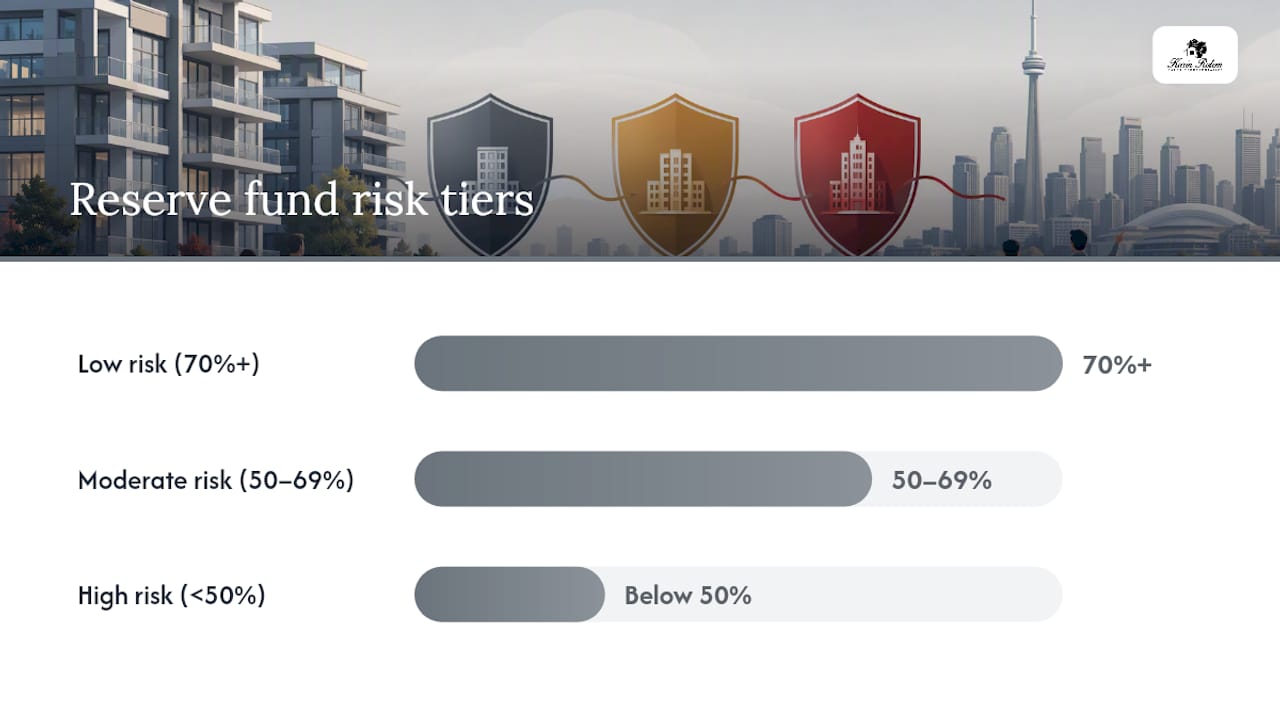
| Reserve fund threshold | A fund below 50% of the study’s recommended balance signals high assessment risk. |
| Non-payment consequences | Defaulting can lead to a lien within three months, plus interest, legal costs, and eventual power of sale. |
| Local guidance | Karinrotem helps Toronto, Innisfil, and Friday Harbour buyers coordinate status certificate review and reserve fund analysis before closing. |
What is a special assessment in a condo, and where does it apply?
A special assessment applies to every unit owner in a condominium corporation, calculated using the same proportionate share, called the declaration percentage, that determines your regular common expense fees. It’s not a fine, and it’s not optional. Under the Condominium Act, 1998, every owner has a legal obligation to contribute to common expenses, and that obligation extends to special assessments the same way it applies to your monthly fees.
The distinction that trips people up is the difference between an ordinary fee increase and a special assessment. A fee increase happens through the annual budget process, gradually, and shows up as a change to your monthly payment. A special assessment is sudden, one-time (though sometimes payable in instalments), and tied to a specific shortfall the board couldn’t anticipate or fund through normal reserves.
Common triggers include:
- Urgent structural or building envelope repairs (roof failure, garage membrane deterioration)
- An insurance deductible after a major loss, like a flood or fire
- Litigation costs, whether the corporation is suing or being sued
- A persistent operating deficit that regular fee increases haven’t closed
- Unexpected capital replacement, such as an elevator or HVAC system failing years ahead of schedule
Here’s a simplified scenario. A 200-unit building discovers its underground garage membrane needs replacement at a cost of $2 million. The reserve fund has $600,000 earmarked for the project. The board levies a special assessment for the $1.4-million gap, split across owners by their declaration percentage.
A special assessment is an extra one-time charge added to the owners’ common expense fees, and an owner’s portion is calculated using the same percentage used for regular fees. Non-payment can lead to a lien registered directly against the unit.
Why do boards levy special assessments? Common causes and examples
Reserve fund shortfalls are the single most predictable cause of a special assessment, and they’re also the most preventable. When a reserve fund study underestimates future costs, or the board defers contributions to keep monthly fees low, the math eventually catches up. Inflation on construction materials, longer-than-expected component lifespans that turn out shorter, and lower-than-projected investment returns on reserve holdings can all quietly widen the gap between what’s saved and what’s needed.
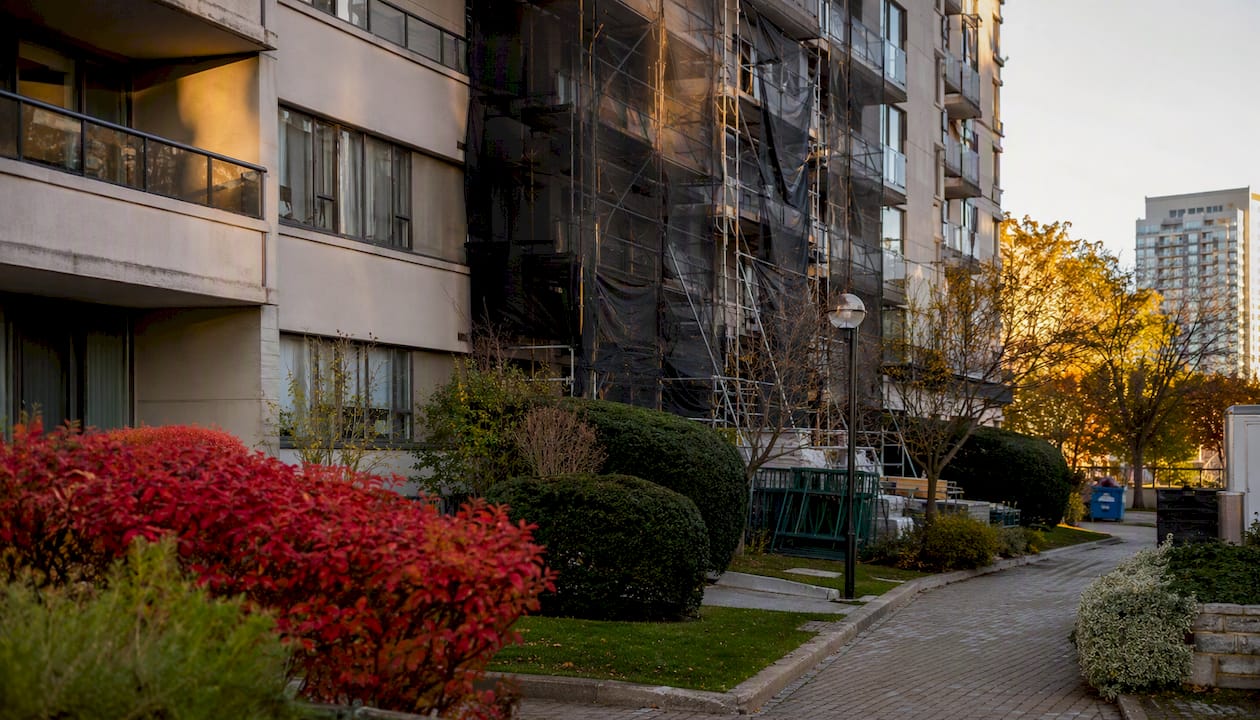
Reserve fund shortfalls, unexpected repair timing, and weaker-than-forecast investment returns are the structural reasons special assessments still happen despite mandatory reserve planning. A reserve fund study is a prediction, not a guarantee, and predictions built five or ten years out are bound to miss something.
The most common causes I see in practice break down into a few buckets:
- Underfunded reserves: the study said $3 million by year eight, the fund has $1.8 million.
- Major capital replacement: roofs, windows, and garage membranes rarely fail on a convenient schedule.
- Insurance deductibles: a single water damage claim can trigger a $50,000 to $250,000 deductible, sometimes higher in high-rise buildings.
- Litigation judgments: disputes with a developer, contractor, or another owner can produce legal bills that dwarf the operating budget.
- Operating deficits: persistent underbudgeting for utilities or staffing eventually forces a correction.
High-profile Ontario cases involving multi-million-dollar assessments almost always trace back to one of two roots: a reserve fund that was chronically underfunded for years, or litigation that nobody budgeted for. The unpredictable events, like a burst pipe flooding forty units, are genuinely hard to plan around.
The line between an unlucky building and a poorly managed one usually comes down to whether the reserve fund was tracking the study’s recommendations or quietly falling behind for years before the bill came due.
How is my share calculated, and what are the payment options?
Your share of a special assessment equals the total assessment amount multiplied by your unit’s declaration percentage. That percentage, sometimes called your proportionate interest, is fixed in the condo’s declaration and is the same number used to calculate your monthly common expense fees.
Worked example: A corporation levies a $900,000 special assessment across the building. Your unit carries a 0.65% declaration percentage. Your share is $5,850.
Boards generally offer one of a few payment structures, and courts in Ontario tend not to interfere with the choice as long as it’s reasonable and transparently communicated. Boards can choose payment structures, whether lump sum, instalments, or a temporary fee increase, without needing owner sign-off on the method itself.
- Lump sum payment, typically due within 30 to 90 days of the notice.
- Instalments, spread over several months or up to a year or two for larger amounts.
- A temporary increase to monthly common expense fees that recovers the assessment over a longer period.
- A combination, such as a smaller lump sum with the balance spread across instalments.
Pro Tip: If you’re an owner facing a large assessment, ask the board in writing whether instalments are available before you assume you have to pay it all at once. Most boards would rather set up a payment plan than chase a delinquent account through a lien.
If you’re buying a resale unit and an assessment is pending, confirm in your purchase agreement whether the seller or the buyer is responsible for any portion due before or after closing. This is exactly the kind of detail that a closing costs review should flag before you sign anything.
Can a condo board levy a special assessment without an owner vote?
Yes. In most cases, an Ontario condo board can approve a special assessment without putting it to an owner vote, because the Condominium Act, 1998 gives the board legal authority to cover shortfalls the regular budget or reserve fund can’t meet, provided the decision-making process is reasonable. Owner votes are typically only required if the corporation’s declaration or bylaws specifically demand one, or if the assessment is tied to a major change requiring a broader ownership approval.
That’s a surprise to a lot of new owners, who assume a five- or six-figure bill needs a building-wide vote. It usually doesn’t. What the board does need is a defensible process: proper board meeting minutes, a documented rationale (an engineering report, a lawyer’s invoice, a reserve fund study showing the gap), and communication to owners that’s clear about the amount, the reason, and the payment terms.
Ontario courts have consistently sided with boards that can demonstrate this kind of fair and reasoned process. Courts generally give significant deference to board decisions on special assessments, even large ones, when the board shows it considered the options and acted in the corporation’s interest. Where courts do intervene is when disclosure was incomplete or the process cut corners.
One notable protection for buyers: a Superior Court decision found that a buyer was exempt from paying a special assessment because the condo corporation failed to disclose in the status certificate that an assessment might be coming. If the paperwork you relied on to buy the unit didn’t mention the risk, that omission can work in your favour.
The strongest legal position for a board is a documented, reasonable process. The strongest legal position for an owner challenging one is proof that the process, or the disclosure behind it, was flawed.
A quick reference on the statutory backbone:
- Section 84 establishes owner obligations to contribute to common expenses, the foundation for enforcing any assessment.
- Section 85 gives the corporation lien powers when an owner defaults.
- Section 94 sets out reserve fund study obligations, the mechanism meant to prevent assessments in the first place.
- Section 76 governs status certificate disclosure requirements, including any known or planned assessments.
What should I check in the reserve fund study and status certificate?
A reserve fund study must be updated at least every three years under Ontario law, and it’s the single best predictor of whether a building is headed for a special assessment. A reserve fund that’s significantly underfunded relative to the study’s recommendations dramatically raises the odds of a levy in the next few years.
The status certificate is where you verify all of this before you commit to a purchase. It’s arguably the single most important document in an Ontario condo transaction, and the corporation is legally required to provide it within 10 business days of a request.
Here’s what to check on it, in order of priority:
- Current reserve fund balance compared to the study’s recommended balance for that year.
- Any pending or past special assessments, including amounts and payment status.
- Ongoing or threatened litigation involving the corporation.
- Recent AGM and board meeting minutes, which often flag deferred maintenance before it hits the status certificate.
- Insurance deductible exposure, especially in older buildings with aging plumbing or roofing.
- Paragraph 12 disclosures, the specific section where a corporation must flag known or anticipated increases to common expenses or special assessments.
Most experienced buyers focus beyond the assessment line itself and read the meeting minutes closely. Repeated mentions of deferred maintenance or management complaints in the minutes are often an early warning sign that an assessment is coming, even when nothing has been formally disclosed yet.
| Reserve fund funding level | Risk tier |
|---|---|
| 70% or higher of study recommendation | Low risk |
| 50% to 69% of study recommendation | Moderate risk |
| Below 50% of study recommendation | High risk |
Spending $200 to $500 on a lawyer to review the status certificate before your 10-day window closes is cheap insurance against a levy that could cost tens of thousands. A home inspection focused on physical deferred maintenance complements this paperwork review nicely, since visible wear often lines up with what the minutes are quietly flagging.
What happens if I don’t pay a special assessment?
Non-payment of a special assessment is treated exactly like defaulting on your monthly common expense fees, and the consequences escalate quickly. The corporation can register a certificate of lien against your unit, and it must do so within three months of the default to preserve its rights. That lien covers the unpaid assessment amount, accrued interest, and the corporation’s reasonable legal costs of collection.
Here’s the typical escalation path:
- Default: you miss the payment deadline set by the board.
- Notice: the corporation sends formal notice of the arrears.
- Lien registration: if unresolved, the corporation registers a certificate of lien against title within the three-month window.
- Enforcement: the corporation can pursue power-of-sale proceedings if the lien remains unpaid.
Condo liens in Ontario carry a priority position ahead of most mortgages, which is a detail a lot of owners find alarming once they understand it. That priority is what gives the corporation real leverage, and it’s also why lenders take special assessment history seriously when underwriting a mortgage on a unit.
- Interest accrues on the outstanding balance from the date of default.
- Legal costs the corporation incurs collecting the debt get added to what you owe.
- A unit sold through power of sale rarely nets the owner anything close to fair market value.
Once a lien is registered, the clock is working against the owner, not the corporation. The fastest way out is almost always a negotiated payment plan struck before the lien stage, not after.
If you’re behind on a special assessment, engage the board immediately. Boards are generally far more willing to negotiate a payment plan with an owner who reaches out early than one who goes silent until a lien shows up on title.
How do you dispute or challenge a special assessment in Ontario?
Challenging a special assessment starts with documentation, not with refusing to pay. Owners who successfully push back almost always do it by proving the board’s process or disclosure was flawed, not by arguing the repair itself wasn’t necessary.
- Gather the paper trail: the reserve fund study, engineering reports, contractor invoices, and board meeting minutes tied to the decision.
- Request the board’s justification in writing: ask for the cost breakdown, competing quotes obtained, and the rationale for the assessment amount.
- Request an owners’ meeting if the declaration or bylaws allow it, to raise concerns collectively rather than individually.
- Consider a Superior Court application for relief, or an oppression remedy under the Act, if you believe the board acted unfairly or failed to disclose material information.
Your evidence checklist should include:
- The most recent reserve fund study and any prior versions showing funding trends
- Independent engineering assessments, if available
- Invoices and quotes the board relied on
- Board and AGM meeting minutes from the period leading up to the assessment
- The status certificate issued around the time of purchase, if disclosure is part of your argument
- Any bylaw or declaration clauses the board may have breached in its process
Successful challenges tend to hinge on one of two things: the board failed to disclose the risk of an assessment in the status certificate, or the process leading to the decision skipped basic procedural fairness, like failing to document the rationale or ignoring bylaw requirements for notice. Where boards followed a reasonable, documented process, Ontario courts have consistently declined to second-guess the substance of the decision, even when the dollar amount was steep.
Courts aren’t in the business of deciding whether a roof really needed replacing. They’re in the business of deciding whether the board followed a fair process to get there.
Timelines for these disputes vary widely, but expect months, not weeks, if litigation becomes necessary. Most disputes that don’t involve outright disclosure failures get resolved through negotiation with the board long before a court date.
How can owners and boards reduce special assessment risk?
Boards have real tools to reduce reliance on special assessments, and the best-run corporations use several at once rather than waiting for a crisis. Properly funding the reserve to match the study’s recommendations is the obvious first step, but it’s the one boards most often skip to keep monthly fees competitive with neighbouring buildings.
Other options boards can use:
- Adopting a borrowing bylaw that lets the corporation take a line of credit for large capital projects instead of a single lump-sum levy.
- Phasing major projects over several years to spread the cost.
- Prioritizing the most urgent repairs first and deferring lower-risk items.
- Pursuing insurance recovery or, where applicable, government grants before passing the full cost to owners.
For owners already facing an assessment, negotiation is more available than most people assume. You can request instalment plans, ask for independent quotes to confirm the board’s cost estimates are reasonable, and in some cases propose a temporary reserve fund top-up as an alternative to repeated smaller assessments down the line.
Pro Tip: Long instalment plans show up on future status certificates as a note about the assessment’s payment status. That’s useful for your cash flow, but it can raise questions for a future buyer reviewing the same document, so weigh short-term affordability against how it looks on resale.
What buyers should prioritize when checking a condo’s assessment risk
What I tell my clients, every time, is that the status certificate and the reserve fund study aren’t a formality to get through quickly. They’re the financial x-ray of the building you’re about to buy into, and skipping a careful read of either one is how buyers end up with a surprise bill in their first year of ownership.
My priority order when reviewing a potential purchase:
- Status certificate, with particular attention to Paragraph 12 disclosures.
- Reserve fund study recency (within the last three years) and funding percentage.
- AGM and board meeting minutes, looking for repeated mentions of deferred maintenance.
- Any outstanding litigation or special assessments in the past two to three years.
- Insurance deductible exposure relative to the building’s claims history.
- The building’s overall assessment history, not just the current status.
| Reserve fund funding level | Typical assessment risk |
|---|---|
| Above adequate funding thresholds | Lower likelihood of a near-term assessment |
| Moderate underfunding | Some risk of near-term assessment |
| Significant underfunding | Higher risk of assessment within a few years |
When I’m weighing a deal with clients, affordability and resale value both matter, but they pull in different directions. A building with a chronically underfunded reserve might have lower monthly fees today, which looks attractive on paper, but that gap gets closed eventually, usually with interest, in the form of an assessment. I’d rather see a client pay slightly higher fees in a well-funded building than gamble on a lower number that’s quietly borrowing against the future. When an assessment is already on the table, negotiation levers like a price reduction, seller-paid remediation, or an escrow holdback are all worth putting on the table before you remove conditions.
What I tell buyers and owners weighing special assessment risk
What most buyers don’t realize is that the building’s paperwork tells the whole story if you know where to look, and most people simply don’t look far enough. I’ve had clients walk away from units they loved because the meeting minutes showed three consecutive years of “deferred” roof repairs, long before any assessment was formally on the books. That’s not a coincidence you want to bet against.
We didn’t need a crystal ball to guess what was coming. She adjusted her offer to reflect the risk and ultimately bought elsewhere, in a building with a healthier reserve. Eighteen months later, the original building levied a six-figure assessment.
The trade-off owners and buyers face isn’t really “assessment or no assessment.” It’s whether you accept a modest, well-managed assessment now in a building that’s actively fixing its funding gap, or you buy into chronic underfunding that will eventually demand a much larger, less predictable bill. I’d rather see a client pay into a building that’s honest about its numbers than one that’s kept fees artificially low for years.
How I can help you assess a condo’s financial risk
Reading a status certificate and a reserve fund study takes practice, and most buyers only do it once or twice in a lifetime. I help clients across Toronto, Innisfil, and the Friday Harbour community order status certificates, coordinate lawyer review within the 10-day window, and flag the funding red flags before an offer becomes binding, not after.
If you’re weighing a purchase and want a second set of eyes on the numbers, or you’re an owner trying to figure out what a pending assessment means for your resale plans, reach out for a conversation. Local expertise means knowing which buildings in this market have a track record of underfunding and which ones are genuinely well run, and that’s exactly the kind of insight I bring to every client relationship.
Ready to look at a specific listing or start your search with the financial risk factored in from day one? Browse our current properties and let’s talk through what fits your budget and your tolerance for risk.
Sources
- Special Assessments – Condominium Authority of Ontario
- Condo Special Assessment: Definition, Importance & How It Works
- CanLII decision relevant to special assessments
This article is general information, not a substitute for advice from a qualified lawyer. Consult a qualified legal professional about your own circumstances before acting on anything here.
FAQ
What are special assessments in Ontario condominiums?
A special assessment is a one-time charge levied on all owners when the condo corporation’s regular budget and reserve fund can’t cover an unexpected or urgent expense, calculated by your declaration percentage.
Are condo special assessments tax deductible in Canada?
If the assessment funds a capital improvement to your principal residence, it generally isn’t tax deductible; if the unit is a rental property, a portion may be deductible as a capital or current expense, so speak with an accountant about your specific situation, since this article isn’t tax advice.
How do I fight a special assessment in Ontario?
Start by gathering the reserve fund study, board minutes, and cost documentation, then request the board’s written justification; if disclosure or process was flawed, you may have grounds for a Superior Court application or oppression remedy.
How much does a status certificate cost in Ontario?
The status certificate fee is capped by regulation, historically around $100, and the corporation must provide it within 10 business days of a request.
Can a condo board increase fees or levy an assessment without an owner vote?
Yes, in most cases the board can approve a special assessment without a vote under the Condominium Act, 1998, provided its process is reasonable and properly documented, unless the declaration or bylaws state otherwise.