A home inspection is the single most protective step you can take before completing a condo purchase. Unlike a house inspection, a condo inspection focuses on the private unit you are buying: its plumbing, electrical panel, HVAC systems, windows, and interior envelope. Industry bodies like the AIBQ (Association des inspecteurs en bâtiment du Québec) and legal practitioners across Canada strongly recommend this step, even though it is not legally required. What I tell my clients is this: the role of home inspection in a condo purchase is not optional due diligence. It is the difference between a confident investment and a costly surprise.
What does a condo inspection cover compared to a house inspection?
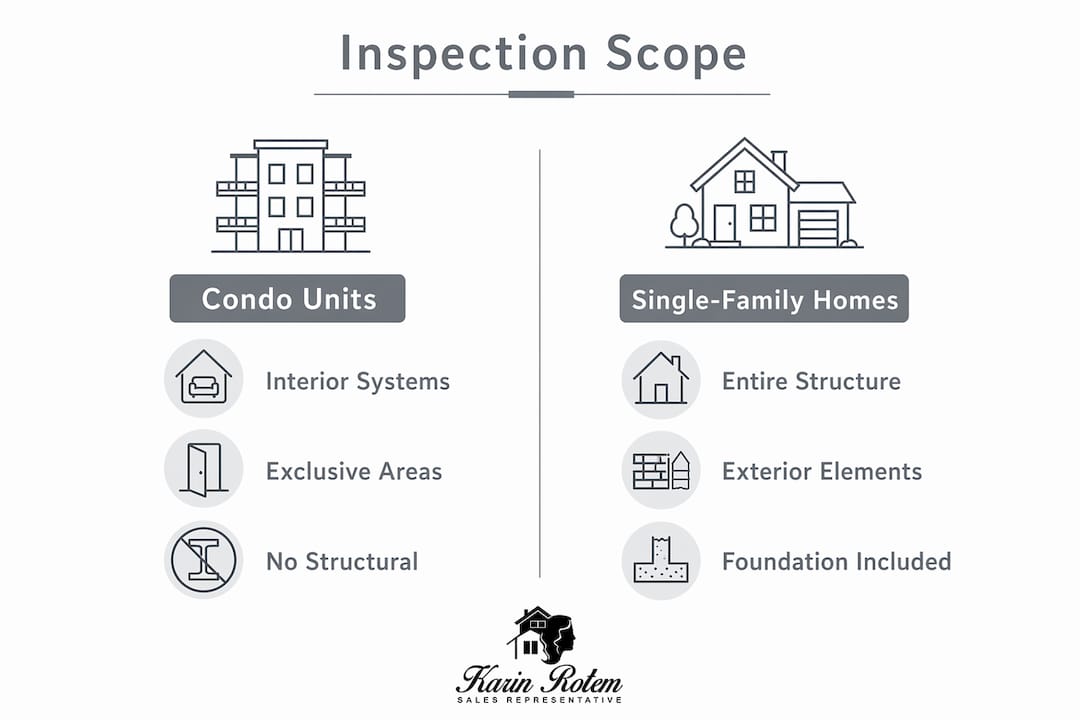
A condo inspection and a house inspection serve different purposes because the ownership boundaries are different. When you buy a condo, you own the private unit. The condo corporation owns and manages the common elements, including the roof, foundation, exterior walls, and shared mechanical rooms.
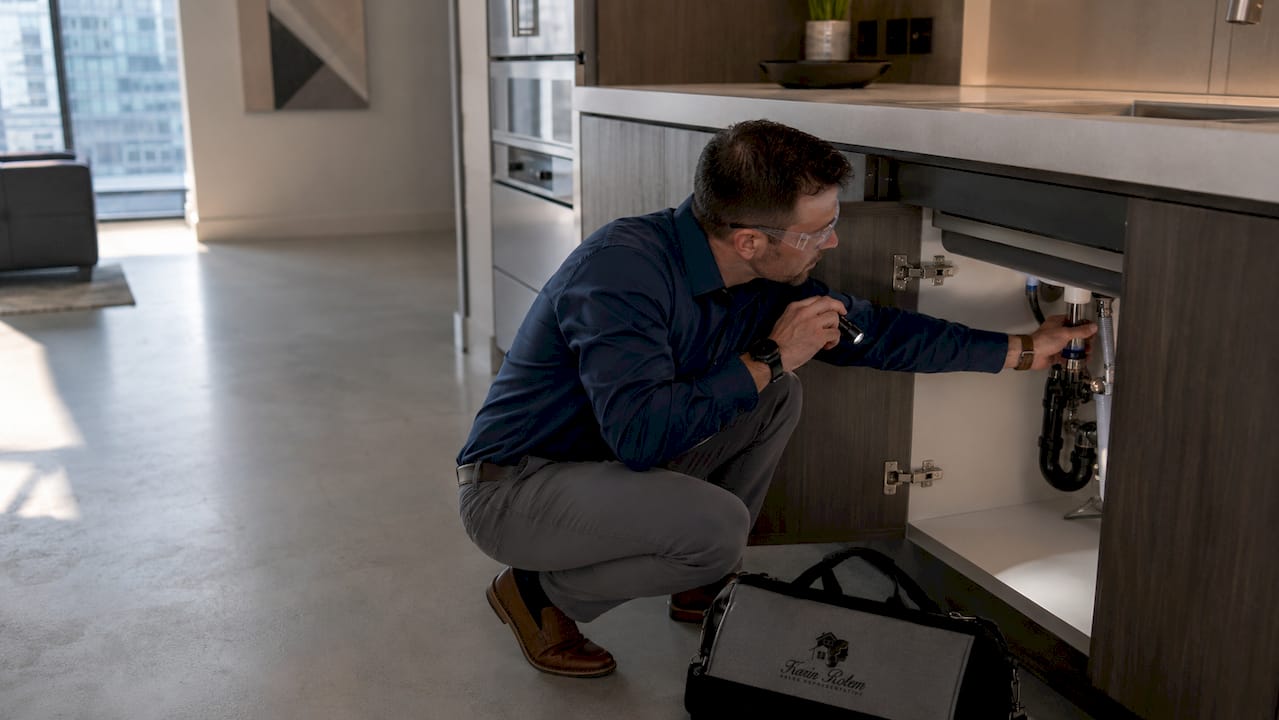
A professional condo inspection covers 100% of the interior visible systems within your unit, plus exclusive-use areas like your balcony. The inspector examines plumbing, electrical panels, HVAC systems that serve only your unit, windows, doors, and interior walls. Locked common areas like rooftops and mechanical rooms are typically excluded unless the condo board grants access. Where accessible, inspectors perform visual common element assessments to flag broader building risks that could affect you.
This distinction matters enormously. Many buyers assume a condo inspection is a scaled-down version of a house inspection. The scope is different, not smaller.
| Inspection area | Condo unit | Single-family home |
|---|---|---|
| Plumbing (in-unit) | ✓ Included | ✓ Included |
| Electrical panel | ✓ Included | ✓ Included |
| HVAC (unit-exclusive) | ✓ Included | ✓ Included |
| Windows and doors | ✓ Included | ✓ Included |
| Balcony or terrace | ✓ Included | ✓ Included |
| Roof and foundation | ✗ Excluded (common element) | ✓ Included |
| Exterior walls | ✗ Excluded (common element) | ✓ Included |
| Shared mechanical rooms | ✗ Usually excluded | N/A |
How much does a condo inspection cost in Canada?
A standard condo inspection in Canada costs between $250 and $650, depending on unit size, building age, and location. That range is meaningfully lower than a full house inspection, which reflects the smaller scope. You are paying for a thorough review of your private unit, not the entire building.
Pricing varies by city. Ottawa buyers typically pay $250–$450. Montreal inspections run $450–$650. Toronto and the surrounding region generally fall within the broader $250–$500+ range depending on unit size and building complexity. Older buildings tend to cost more to inspect because aging systems require closer scrutiny and more inspector time.
| City | Typical cost range | Key pricing factors |
|---|---|---|
| Ottawa | $250–$450 | Unit size, building age |
| Montreal | $450–$650 | Age, HRV requirements, complexity |
| Toronto | $300–$550+ | Square footage, high-rise vs. low-rise |
| General Canada | $250–$650 | All of the above |
Condo inspection costs are lower than house inspections because the inspector does not assess the roof, foundation, or exterior. That said, the cost is not trivial. Factor it into your overall purchase costs from the start so it does not catch you off guard.
Pro Tip: Book your inspection as soon as your offer is accepted and your condition period begins. Inspectors in competitive markets like Toronto book up quickly, and a delayed inspection can cost you your condition window.
Why condo inspections matter despite what buyers assume about fees
The most common misconception I encounter is this: buyers believe that because they pay monthly condo fees, the building’s maintenance covers everything. Condo fees cover common elements and shared building maintenance. They do not cover in-unit repairs, aging plumbing, or mechanical failures inside your private space.
Misreading a condo declaration regarding exclusive-use areas versus common elements is one of the most expensive mistakes a buyer can make. An owner who assumes the condo board will replace a leaking fan coil unit or repair in-wall plumbing often discovers, after closing, that the cost falls entirely on them. Replacing in-unit plumbing can cost $5,000 to $10,000. That is a bill the buyer absorbs alone.
Skipping an inspection in a competitive market also strips you of legal protection. Over 80% of buyers in some Canadian markets waive inspection conditions, exposing themselves to unexpected costs exceeding $30,000. That is not a calculated risk. That is a gamble on a six-figure asset.
A thorough inspection can detect the following risks before you close:
- Leaking or aging fan coil units that require immediate replacement
- Deteriorating in-wall plumbing not visible to the naked eye
- Non-functional heat recovery ventilators (HRVs), which promote mould growth, particularly relevant in Quebec where ventilation requirements tightened in 2020
- Unauthorized renovations that violate condo bylaws and may require reversal
- Electrical panels that do not meet current safety standards
- Water infiltration through windows or balcony doors
- HVAC systems nearing end of life that will need replacement within one to two years
Pro Tip: Always include an inspection condition in your offer, even in a seller’s market. Waiving it to compete is understandable, but the biggest risks when buying a condo almost always surface after closing when you have no recourse.
How does an inspection report support negotiation?
An inspection report is a negotiation tool, not just a record of findings. Inspection findings empower buyers with specific, documented leverage to request repairs or price reductions before finalising the purchase. Vague concerns carry no weight in a negotiation. A written report from a licensed inspector does.
The report becomes even more powerful when you pair it with the condo’s Status Certificate. The Status Certificate provides a financial snapshot of the condo corporation, including reserve fund balances and pending special assessments. But it does not reveal unit-specific issues like unauthorized renovations or aging in-unit systems. The inspection fills that gap. Together, these two documents give you the full picture.
Here is how to use inspection findings effectively during the purchase process:
- Review the report with your agent before responding to the seller. Identify which defects are safety-related, which are cosmetic, and which carry significant repair costs.
- Quantify the cost of major deficiencies. Get a rough repair estimate from a contractor so your price reduction request is grounded in real numbers.
- Prioritise your asks. Requesting repairs on every minor item weakens your position. Focus on the two or three findings that carry the most financial risk.
- Know when to walk away. If the inspection reveals systemic issues, aging plumbing throughout the unit, or evidence of long-term water damage, the cost of ownership may exceed the value of the deal.
- Document everything in writing. Any repair commitments or price adjustments agreed upon must be reflected in the amended offer, not left as verbal assurances.
What I have seen in the Toronto and Innisfil markets is that buyers who arrive at the negotiation table with a detailed inspection report consistently achieve better outcomes than those who rely on general impressions. The report gives you credibility and specificity. Both matter.
Practical tips for condo buyers on inspections and due diligence
Choosing the right inspector is as important as choosing to get an inspection at all. Not every inspector has experience with high-rise or multi-unit buildings, and condo inspections require a different lens than house inspections.
- Verify credentials and insurance. Professional inspectors carry liability insurance under provincial regulations. Ask for proof before hiring. The limitation period for claims on hidden defects is typically three years after discovery, so this coverage matters.
- Confirm the inspection scope in writing. The inspector should cover all unit systems and accessible common elements. Get a written scope of work before the appointment.
- Request the contingency fund study and recent board minutes. These documents reveal whether the building has deferred major repairs or faces upcoming special assessments. Your lawyer can help interpret them.
- Have your lawyer clarify ownership boundaries. Exclusive-use areas like parking spots and storage lockers are not always clearly defined in the condo declaration. Knowing what you own versus what the corporation manages prevents disputes later.
- Attend the inspection in person. Walking through the unit with the inspector gives you context that a written report alone cannot provide. Ask questions. Take notes.
Pro Tip: Ask your inspector specifically about the HRV system if you are buying in Quebec or a building constructed before 2015. A non-functional HRV is a mould risk that is inexpensive to flag but expensive to remediate. For a broader look at what condo ownership involves, the luxury condo amenities guide for Ontario buyers covers what to expect from building features and shared spaces.
You can also find practical contractor and inspection guidance through resources like the HMJ Contracting blog, which covers common building deficiencies and what buyers should watch for.
Key takeaways
A condo inspection is the most direct way to protect your investment before closing, and skipping it in a competitive market creates financial exposure that no amount of due diligence can recover after the fact.
| Point | Details |
|---|---|
| Inspection scope is unit-focused | Condo inspections cover private systems only; common elements are excluded and managed by the condo corporation. |
| Costs range from $250 to $650 | Pricing varies by city, unit size, and building age; Ottawa runs lower, Montreal higher. |
| Condo fees do not cover in-unit repairs | Buyers are solely responsible for mechanical failures and plumbing issues inside their private unit. |
| The report is a negotiation tool | Documented deficiencies give buyers specific leverage to request price reductions or repairs before closing. |
| Pair the report with the Status Certificate | Together, these two documents provide the complete financial and physical risk picture of the purchase. |
What I have learned from watching buyers skip this step
I have worked with buyers across Toronto, Innisfil, and Friday Harbour who were so focused on winning in a competitive market that they treated the inspection as a formality or a risk to waive. Some of them were fine. Others were not.
The ones who were not fine share a common story: they discovered a failing HVAC system, a leaking balcony door frame, or aging plumbing within the first year of ownership. The costs were real. The frustration was real. And the hardest part of those conversations is knowing that a $400 inspection would have changed the outcome.
What most buyers do not realise is that an inspection does not just protect you from bad purchases. It also gives you confidence in good ones. When an inspector walks through a well-maintained unit and finds nothing significant, that report is worth as much as one that uncovers problems. You close with certainty instead of hope.
My honest view is that the inspection condition is one of the few tools buyers have in a seller’s market that actually shifts power back to them. Use it. If a seller refuses any inspection condition on a resale unit, that refusal itself is information worth taking seriously.
— Felix
How Karinrotem supports condo buyers beyond the inspection
Karinrotem works with condo buyers across Toronto, Innisfil, and the Friday Harbour community to make the buying process clear and well-supported at every stage. That includes connecting buyers with trusted, experienced home inspectors who understand condo-specific systems and know what to look for in both high-rise and low-rise buildings. Karin and her team also work closely with real estate lawyers who can review Status Certificates, condo declarations, and exclusive-use boundaries before you commit. If you are considering a waterfront condo or lifestyle property in the area, or want to browse current listings, visit karinrotem.com to connect with the team directly.
FAQ
Is a home inspection required when buying a condo in Canada?
A condo inspection is not legally required in Canada, but industry bodies like the AIBQ strongly recommend it. Skipping it removes your legal protection against hidden defects discovered after closing.
What does a condo inspection not cover?
A condo inspection excludes common elements like the roof, foundation, exterior walls, and shared mechanical rooms, as these are managed by the condo corporation. Inspectors assess only the private unit and accessible exclusive-use areas.
How long does a condo inspection take?
A typical condo unit inspection takes one to two hours depending on unit size and building age. Larger or older units with more complex systems may take longer.
Can I use inspection findings to negotiate the purchase price?
Yes. A written inspection report documenting specific deficiencies gives you documented leverage to request price reductions or repairs before finalising the purchase. Pairing it with the Status Certificate strengthens your position further.
What is the biggest financial risk of skipping a condo inspection?
The biggest risk is inheriting costly in-unit defects with no recourse after closing. Replacing in-unit plumbing alone can cost $5,000 to $10,000, and unexpected repair bills can exceed $30,000 in cases where multiple systems are failing.