
Short-term rentals (STRs) generate 2x to 3x the gross revenue of long-term rentals in supply-constrained, high-tourism markets, making them the stronger income choice for investors in resort-style communities. The industry term for this model is “vacation rental” or “short-term rental,” and the performance gap is real. But it comes with conditions. Occupancy realistically lands between 60–75%, not the 100% some investors assume. Add 2026 federal GST/HST obligations and tightening municipal licensing rules, and the picture gets more nuanced. This guide breaks down why STR outperforms long-term rental in the right conditions, and what you need to know before committing.
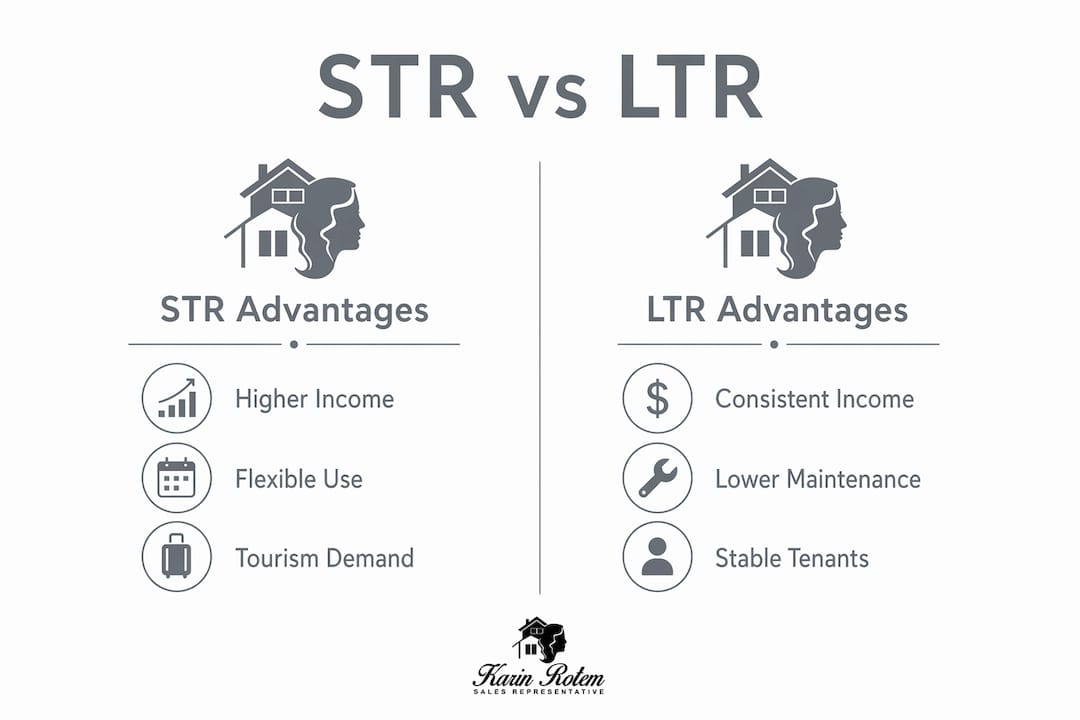
How does short-term rental income compare financially to long-term rental income?
The gross revenue advantage of STRs is real, but net income tells a different story. A property generating $4,500 per month at peak STR rates looks very different after you subtract vacancy, fees, and operating costs.
Understanding gross vs. net revenue
Net operating income for STRs must account for a 25–35% vacancy buffer, platform fees ranging from 3–15%, cleaning costs of $75–$150 per stay, and accelerated furniture depreciation. That is a significant cost stack. A long-term rental with stable monthly income and near-zero turnover costs can close the gap quickly, especially in slower seasons.
The table below illustrates a realistic net income comparison for a two-bedroom property in a resort-style community:
| Category | STR (short-term rental) | LTR (long-term rental) |
|---|---|---|
| Gross monthly revenue | $5,500 | $2,400 |
| Vacancy and platform fees | ($1,375–$1,925) | ($100) |
| Cleaning and turnover | ($600–$900) | $0 |
| Utilities and insurance | ($400) | ($150) |
| Estimated net monthly income | $1,675–$3,125 | $2,150 |
The STR ceiling is higher, but so is the floor risk. In a slow month, a long-term rental can outperform a poorly managed STR.
Pro Tip: Account for furniture replacement cycles when modelling STR returns. High guest turnover accelerates wear on sofas, mattresses, and appliances. Budget a dedicated depreciation reserve, or your year-three numbers will surprise you.
Understanding what qualifies as a short-term rental income property is the first step before running any financial model.
What operational and management factors affect STR performance?
STR ownership is closer to running a hospitality business than collecting rent. Most STR owners underestimate the time required for guest communications, check-ins, maintenance calls, and cleaning coordination. That time has real dollar value, and it directly affects whether the income premium justifies the effort.
Key operational challenges and how to address them
- Dynamic pricing: Dynamic pricing tools are essential for maximising STR revenue during peak seasons and local events. Without them, you leave money on the table in high-demand weeks and overprice during slow periods.
- Guest communication: Responding to inquiries within the hour is standard on major booking platforms. Slow responses reduce booking conversion and damage your listing ranking.
- Cleaning and turnover: Each guest departure triggers a full clean. Coordinating reliable cleaners on short notice, especially in resort areas, is one of the most common operational pain points.
- Maintenance response: Guests expect hotel-level responsiveness. A broken appliance at 10:00 PM needs a solution, not a voicemail.
- Listing quality: Common listing mistakes such as poor photos, vague descriptions, and missing amenity details directly reduce occupancy and revenue.
Professional property management removes most of these burdens, but typically costs 20–30% of gross revenue. That cost must be factored into your net income model before you decide whether the STR premium still holds.
Pro Tip: If you are not prepared to treat your STR like a business, hire a property manager from day one. The cost is predictable. The cost of poor guest reviews is not.

Following room rental best practices from the outset reduces the learning curve and protects your ratings during the critical first months of operation.
How do tax and regulatory requirements influence STR performance in 2026?
Tax compliance is now a direct driver of STR net returns, not a background consideration. Getting this wrong does not just create penalties. It can eliminate your expense deductions entirely.
Federal GST/HST obligations
GST/HST registration is required once your STR revenue exceeds $30,000 in a calendar quarter or over four consecutive quarters. The small supplier exemption applies below that threshold, but many active STR owners in resort markets cross it faster than expected. Once registered, you must collect and remit GST/HST on all bookings.
Municipal and provincial licensing
- Register your property with your municipality before listing. Most Ontario municipalities now require short-term rental registration, and operating without it creates compliance risk.
- Obtain a business licence if your municipality requires one. Friday Harbour and Innisfil have specific rules that differ from Toronto.
- Renew annually. Licences are not permanent. Missing a renewal window can interrupt your ability to operate legally.
- Verify zoning. Not all residential zones permit STRs. Confirm your property’s zoning status before purchasing with STR income in mind.
- Keep records of compliance. The CRA requires proof that your property operated legally. Non-compliant STR operators risk having all expense deductions denied under Income Tax Act subsection 67.7(1). That denial can turn a profitable STR into a tax liability.
The change-of-use trap
Converting an STR to a long-term rental triggers “change of use” provisions under the Excise Tax Act. The CRA treats this as a deemed sale at fair market value, which can generate a GST/HST bill of tens of thousands of dollars. This is one of the most overlooked risks for investors who plan to switch models mid-ownership.
Reviewing how to set up a short-term rental legally in Ontario before you list protects both your income and your deductions.
What are the advantages and drawbacks of STRs vs. long-term rentals for resort-style investors?
The STR income advantage is strongest in specific conditions. Location, property type, and your personal capacity to manage all determine whether the premium holds.
| Factor | STR advantage | LTR advantage |
|---|---|---|
| Income potential | 2x–3x gross revenue in high-tourism markets | Predictable monthly income, lower variance |
| Operational burden | Flexible pricing, personal use windows | Minimal day-to-day management required |
| Vacancy risk | Seasonal gaps can reduce net returns | Near-zero vacancy with quality tenants |
| Regulatory exposure | Licensing and GST/HST compliance required | Governed by Residential Tenancies Act |
| Exit flexibility | Personal use or sale at any time | Tenant rights limit access during tenancy |
Rising ownership costs including municipal taxes, insurance, and maintenance erode STR net returns more in resort communities than in urban markets. A waterfront property in Friday Harbour carries higher insurance premiums and maintenance costs than a downtown Toronto condo. That gap must be modelled honestly.
The STR model suits investors who want flexible personal use, can absorb seasonal income swings, and are willing to manage the property actively or pay someone to do it. The long-term rental model suits investors who prioritise income stability and minimal involvement. Neither is universally better. The right answer depends on your property, your location, and your goals.
What I tell my clients is this: the financial benefits of STR are real, but they are not automatic. A well-located, well-managed STR in a community like Friday Harbour can significantly outperform a long-term lease. A poorly managed one in the same location can underperform it. The 2026 STR checklist is a practical starting point for stress-testing your assumptions before you commit.
Key takeaways
STRs outperform long-term rentals in high-tourism markets when occupancy, compliance, and management costs are all accounted for in the financial model.
| Point | Details |
|---|---|
| Income ceiling is higher for STRs | Gross revenue can reach 2x–3x a long-term rental, but net income depends on vacancy and costs. |
| Compliance protects your deductions | Operating without required licences causes the CRA to deny expense deductions under the Income Tax Act. |
| Change-of-use carries tax risk | Switching from STR to long-term rental triggers GST/HST on fair market value under the Excise Tax Act. |
| Management burden is real | Guest turnover, dynamic pricing, and maintenance require active involvement or a property manager. |
| Location determines the premium | Resort markets with supply constraints and high tourism deliver the strongest STR income advantage. |
What I have learned advising STR investors in resort markets
After working with investors across Friday Harbour and the broader Innisfil waterfront, the pattern I see most often is this: investors overestimate gross revenue and underestimate the cost of getting it. The 2x–3x income headline is accurate for the right property in the right market. But that number assumes strong occupancy, smart pricing, and clean compliance. When one of those three breaks down, the premium shrinks fast.
What most buyers do not realise is that the STR advantage in a community like Friday Harbour is not just about nightly rates. It is about the combination of a supply-constrained market, a loyal visitor base, and the ability to use the property yourself during off-peak periods. That flexibility has real value that a long-term lease cannot offer.
The investors I have seen succeed treat STR as a business from day one. They model conservatively, get their licences in order before listing, and either commit to active management or budget for a professional manager. The ones who struggle tend to list first and figure out compliance later. That approach is increasingly costly in 2026, given how directly licensing status affects CRA deductions.
My honest advice: if the STR income model only works at 80% occupancy with no management costs, the numbers do not hold. Build your model at 65% occupancy with full management fees, and see if it still makes sense. If it does, you have a real investment. If it does not, a well-priced long-term rental in the same location may be the smarter choice.
— Felix
Thinking about an STR investment at Friday Harbour?
Karinrotem works with investors who want to make confident, well-informed decisions about waterfront and resort-style properties in Innisfil and the Friday Harbour community. The team brings local market knowledge, current regulatory context, and honest financial guidance to every conversation. Whether you are evaluating your first STR purchase or reassessing an existing property, the right starting point is understanding what the market actually supports. Explore Friday Harbour real estate listings and connect with Karinrotem to discuss which property type and rental strategy fits your goals.
FAQ
How much more does an STR earn than a long-term rental?
STRs in high-tourism, supply-constrained markets generate 2x to 3x the gross revenue of long-term rentals. Net income depends on occupancy, platform fees, and operating costs.
What is the GST/HST threshold for short-term rentals in Canada?
GST/HST registration is required once STR revenue exceeds $30,000 in a calendar quarter or over four consecutive quarters. The small supplier exemption applies below that threshold.
Can the CRA deny my STR expense deductions?
Yes. Operating without required municipal or provincial licences causes the CRA to deny expense deductions under Income Tax Act subsection 67.7(1), which significantly increases your effective tax burden.
What happens if I convert my STR to a long-term rental?
Converting an STR to a long-term rental triggers “change of use” under the Excise Tax Act. The CRA treats it as a deemed sale at fair market value, which can generate an unexpected GST/HST liability of tens of thousands of dollars.
Is an STR or long-term rental better for Friday Harbour properties?
STRs typically outperform in Friday Harbour due to strong seasonal tourism demand and a supply-constrained market. The right choice depends on your management capacity, occupancy assumptions, and compliance readiness.