
Staging a lifestyle property is the most direct way to attract buyers who are shopping with their emotions as much as their spreadsheets. In waterfront communities like Friday Harbour and Innisfil, buyers are not just purchasing square footage. They are buying a feeling: morning coffee on the dock, summer evenings on the deck, a retreat that works year-round. The good news is that staged homes sell up to 73% faster than unstaged properties, with price premiums of 1–5% translating to thousands more in final sale proceeds. When you know how to stage a lifestyle property to attract buyers, you are not just tidying up. You are telling a story that the right buyer cannot walk away from.
What drives buyers to waterfront lifestyle properties?
Waterfront buyers are motivated by psychology as much as price. Water’s psychological pull causes buyers to prioritise lifestyle over square footage or commute time. They are searching for stress relief, legacy memories, and a place that reflects who they are. That is a fundamentally different purchase decision than buying a downtown condo.
Understanding this motivation changes how you present a property. Staging for a lifestyle buyer means selling the experience first and the floor plan second. A smaller living room matters far less when the buyer is standing on a staged deck looking out at the water.

Recent survey data reinforces this. 61% of Canadians prefer recently renovated recreational properties, and 59% want year-round usability in a lifestyle home. That means buyers are not just picturing July weekends. They want to see that the property works in february and november too.
Here is what lifestyle and waterfront buyers consistently prioritise:
- Unobstructed water views presented without visual clutter or heavy window treatments
- Move-in-ready condition that signals they can start living the lifestyle immediately
- Year-round functionality, including insulated spaces, heating, and winter-ready outdoor areas
- Outdoor living areas that extend the home’s usable footprint to the water’s edge
- Emotional coherence between the interior design and the natural surroundings
“Buyers are willing to overlook smaller floor plans if the lifestyle story is compelling and the interior doesn’t compete with the exterior. The water is the feature. Everything else is the frame.”
Staging for this audience means working with that psychology, not against it. Every design choice should point the buyer’s attention toward the lifestyle the property offers.
How to stage a waterfront lifestyle property step by step
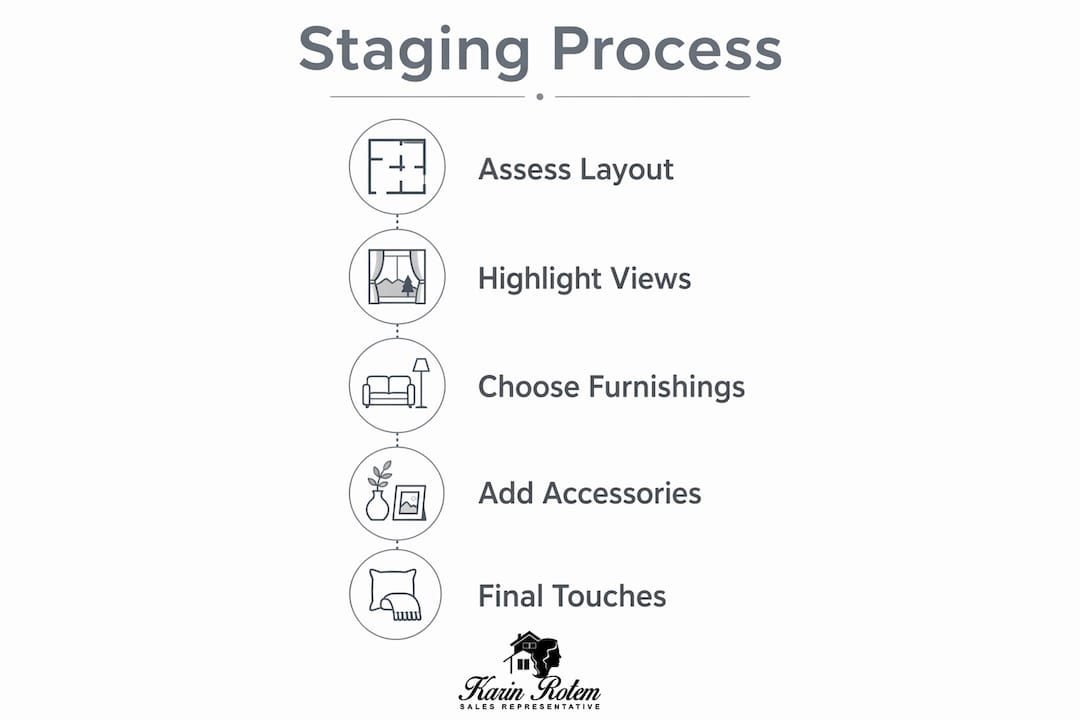
Staging a waterfront home follows a clear logic: remove anything that competes with the view, and add anything that reinforces the lifestyle. Here is how to do it well.
-
Clear the sightlines to the water first. Remove heavy drapes, blinds, and any furniture positioned with its back to the windows. Unobstructed water views command significant premiums, making the view corridor the most valuable asset to stage. Every seat in the main living area should face or angle toward the water.
-
Choose a neutral, coastal-inspired colour palette. Soft whites, warm greys, sandy beiges, and muted blues work with the natural environment rather than against it. Avoid bold accent walls or busy patterns that pull the eye away from the windows. Neutral colours and minimal window treatments keep the water as the centrepiece of every room.
-
Stage outdoor spaces as living rooms. A deck with a weather-resistant sofa, a fire table, and two or three potted plants reads as an outdoor living room. A bare deck reads as a maintenance problem. Shoreline areas, boat docks, and patios all deserve the same attention as interior rooms. Buyers need to picture themselves out there.
-
Show year-round capability. Add a throw blanket to the outdoor seating. Stage the fireplace with logs and a simple mantle arrangement. If the property has a sunroom or three-season porch, set it up as a reading nook with a small side table and a lamp. These details answer the buyer’s unspoken question: “Can I use this in october?”
-
Invest in professional photography, drone footage, and a virtual tour. High-quality marketing photography including drone shots is the baseline for waterfront properties attracting out-of-area buyers. Golden-hour photography captures the water at its most compelling. A virtual tour lets remote buyers fall in love before they book a showing. You can find detailed guidance on this in Karinrotem’s listing photography tips.
-
Edit ruthlessly. Remove personal photos, excess furniture, and any décor that feels inland or suburban. The goal is a space that feels like a curated retreat, not a family home that happens to be near water.
Pro Tip: Stage the primary bedroom to face the water if the layout allows it. A bed angled toward a water-view window, with simple white bedding and a pair of bedside lamps, is one of the highest-impact staging moves in a waterfront property.
What buyers and investors expect from staged properties in 2026
The 2026 Canadian waterfront market rewards well-presented properties and punishes under-prepared ones. In a slow Toronto market in 2025 Q3–Q4, staged properties sold 19 days faster than comparable unstaged listings despite fewer buyers overall. That gap matters enormously when carrying costs are accumulating every week.
The financial case for staging is clear. RESA’s 2025 data shows a $23.34 return for every $1 spent on staging, with average staging costs ranging from $650 to $3,500 for occupied homes. A 1–5% price premium on a $900,000 waterfront property is $9,000 to $45,000 in additional proceeds.
| Staging scenario | Typical outcome |
|---|---|
| Professionally staged, correctly priced | Sells faster, fewer price reductions, stronger offers |
| Unstaged, correctly priced | Longer days on market, buyer objections, price pressure |
| Staged but overpriced | Slower sale, eventual price reduction offsets staging gains |
| Vacant and unstaged | Highest risk of deep price reductions and stale listing stigma |
Vacant properties face the largest price reductions without staging, with sellers often losing 5 to 20 times the cost of staging itself. That is the number that changes minds when sellers push back on staging costs.
Strategic staging tailored to local buyer preferences differentiates listings and reduces aggressive negotiating on price. In active waterfront segments like Friday Harbour, where buyers include both local families and remote investors, a well-staged property signals move-in readiness and reduces the buyer’s perceived risk. You can review current Ontario waterfront market trends to understand how these dynamics are playing out right now.
Pro Tip: If you are selling a vacant waterfront property, virtual staging is a cost-effective option for online listings. But always pair it with at least partial physical staging for in-person showings. Buyers who arrive expecting the photos and find an empty space feel misled.
Common staging mistakes that cost waterfront sellers money
Most staging errors in waterfront properties come from applying generic home-staging rules to a property type that has its own logic. Here are the mistakes worth avoiding.
- Blocking the view. Tall bookshelves, large artwork, or furniture placed in front of windows are the most common and costly errors. The view is the product. Do not obscure it.
- Ignoring outdoor spaces. Buyers touring a waterfront property spend significant time outside. An unstaged deck or overgrown shoreline undercuts the entire interior presentation.
- Using amateur photography. A well-staged home photographed on a smartphone loses most of its staging investment. Poor photos reduce showing requests, which reduces offers, which reduces your final price.
- Staging without pricing alignment. A below-market price without staging still loses to a properly staged and correctly priced property in buyers’ decision-making. Staging and pricing must work together, not independently.
- Ignoring the target buyer profile. A property suited to retirees seeking a quiet retreat needs different staging than one targeting young families or short-term rental investors. Karinrotem’s guidance on lifestyle-driven real estate explains how buyer profiles shape property presentation.
Pro Tip: Walk through your staged property the way a buyer would: start at the front door, move toward the water, and end on the deck or dock. If anything pulls your attention away from the water before you get there, remove it.
Key takeaways
Staging a waterfront lifestyle property works because it aligns the property’s presentation with the emotional and practical expectations of buyers who prioritise lifestyle over floor plan.
| Point | Details |
|---|---|
| View corridor is the priority | Clear sightlines to water first; every staging decision should protect and frame the view. |
| Outdoor spaces close deals | Stage decks, patios, and shoreline areas as living rooms to extend the lifestyle story. |
| Staging ROI is measurable | RESA data shows a $23.34 return per $1 spent; staged homes sell up to 73% faster. |
| Pricing and staging must align | A staged home priced incorrectly still underperforms a staged and correctly priced listing. |
| Photography is non-negotiable | Drone footage and golden-hour photography are baseline requirements for waterfront listings. |
What I have learned staging waterfront properties in Friday Harbour
What most sellers do not realise is that staging a waterfront lifestyle property is less about furniture arrangement and more about permission. You are giving the buyer permission to imagine their life there.
I have seen beautifully renovated properties sit on the market because the staging felt generic, suburban, and disconnected from the water outside. And I have seen modest properties sell quickly and cleanly because every room pointed toward the view and the outdoor spaces felt genuinely liveable.
The budget question comes up constantly. My honest answer is that staging a waterfront property does not require a massive investment if you focus on the right things: clear the views, stage the outdoor areas, and get professional photography. Those three moves deliver the most return. Everything else is refinement.
What I tell my clients in Friday Harbour and Innisfil is this: your buyer is not comparing your property to other properties. They are comparing it to their dream. Staging is how you make your property look like that dream. When the staging is right, buyers stop negotiating on price and start negotiating on possession date. That is the shift you are working toward.
Working with an agent who understands both staging strategy and local buyer psychology makes a real difference. The local expertise advantage in waterfront markets is not just about knowing the prices. It is about knowing what this specific buyer pool responds to.
— Felix
Staging and selling your waterfront property with Karinrotem
Karinrotem works with buyers, sellers, and investors across Friday Harbour, Innisfil, and the broader Toronto waterfront corridor. The team combines staging guidance, professional marketing, and deep local market knowledge to position lifestyle properties for the strongest possible outcome. Whether you are preparing a property for sale or searching for a waterfront lifestyle home that is already well-presented, Karinrotem brings the market intelligence and hands-on experience to guide your decision. Browse current listings to see how well-staged waterfront properties are presented in today’s market, or connect directly with the team for a personalised staging and pricing consultation.
FAQ
How much does staging a waterfront home cost in Canada?
Staging costs for occupied homes typically range from $650 to $3,500, with RESA data showing a return of $23.34 for every $1 spent. Vacant properties may cost more but face the greatest risk without staging.
Does staging actually help sell a lifestyle property faster?
Staged homes sell up to 73% faster than unstaged properties. In the Toronto market during 2025 Q3–Q4, staged listings sold 19 days faster than comparable unstaged homes even in a slower market.
What is the most important staging element for a waterfront property?
The view corridor is the single most valuable asset to stage. Removing anything that blocks or competes with the water view delivers the highest return of any staging decision.
Should I stage outdoor spaces as well as the interior?
Outdoor spaces are critical for waterfront lifestyle properties. Buyers spend significant time outside during showings, and a staged deck or patio communicates year-round liveability far more effectively than an empty or cluttered outdoor area.
How does staging affect the final sale price?
A 1–5% price premium from staging translates to thousands of dollars on a waterfront property. More importantly, staging reduces buyer objections and price negotiations, which protects the asking price throughout the sale process.