
Income property due diligence is the systematic process of verifying every financial, legal, and physical detail of an income-generating property before you commit to a purchase. Think of it as the professional equivalent of looking under the hood before buying a used car, except the stakes are far higher. The process covers net operating income (NOI) analysis, title searches, physical condition assessments, and lease reviews. About 30% of deals fail during this phase alone. That number tells you everything about why skipping steps is never worth the risk.
What are the essential financial documents in income property due diligence?
Financial analysis is the foundation of any property investment due diligence process. Without verified numbers, every projection you build rests on assumptions the seller controls.
Start by requesting 3–5 years of operating expenses and profit and loss statements. That time horizon reveals whether NOI is genuinely growing or whether a seller has temporarily cut maintenance costs to inflate the numbers before listing. A single year of financials tells you almost nothing.

NOI analysis is the core calculation. You take gross rental income, subtract vacancy losses and all operating expenses, and arrive at the true earning power of the property. What most buyers don’t realise is that the NOI figure in a seller’s offering memorandum is almost always a pro forma projection, not a verified result. Your job is to reconstruct the actual NOI from source documents.
Rent roll verification is where many investors catch their first red flag. Reconcile the rent roll with bank deposits to confirm that tenants are actually paying what the lease says they owe. Tenant arrears can quietly reduce your projected income in ways that never appear in a marketing package.
Key financial documents to request:
- Profit and loss statements for the past 3–5 years
- Current rent roll with lease start and end dates
- Bank deposit records to verify actual rent collection
- Capital expenditure history and any deferred maintenance logs
- Utility bills and property tax assessments
- Insurance certificates and claims history
Pro Tip: Cross-reference the offering memorandum’s stated income against actual bank deposits line by line. Experienced investors reconstruct financial histories from source documents rather than accepting marketing materials at face value. Discrepancies of even a few hundred dollars per month compound into significant valuation gaps over a five-year hold.
How do legal and regulatory checks protect investors?
Legal due diligence protects you from liabilities that do not show up in any financial statement. A property can look profitable on paper and still carry title defects, zoning violations, or active litigation that makes it nearly impossible to operate or resell.
A due diligence lawyer verifies title, zoning compliance, lease legality, and checks for liens and active litigation. This is not a task to delegate to a general practice lawyer. You need legal counsel who specialises in commercial real estate and understands the specific regulatory environment in Ontario.
Zoning compliance is particularly critical for income properties. A property operating as a short-term rental or multi-unit dwelling must be zoned to permit that use. If it is not, you inherit the seller’s problem the moment you close. Understanding what your lawyer does at closing is one thing. Understanding what they need to verify before closing is another matter entirely.
Legal documents typically reviewed during this phase include:
- Title search and ownership history
- Zoning certificates and land use compliance records
- All existing leases and any side agreements with tenants
- Estoppel certificates from current tenants
- Liens, encumbrances, and easement registrations
- Any active or pending litigation involving the property
- Permits for renovations or additions
Pro Tip: Ask for estoppel certificates from every tenant. These are signed statements confirming the lease terms from the tenant’s perspective. They protect you if a seller has made verbal promises to tenants that contradict the written lease.
Legal counsel plays a critical role in verifying the property’s legal standing beyond a basic checklist. What looks like a clean title can still carry unregistered agreements or municipal work orders that surface only after closing.
What physical and environmental assessments are involved?
A property’s physical condition directly determines your operating costs and your return on investment. Deferred maintenance that a seller has ignored for years becomes your capital expense the moment you take ownership.
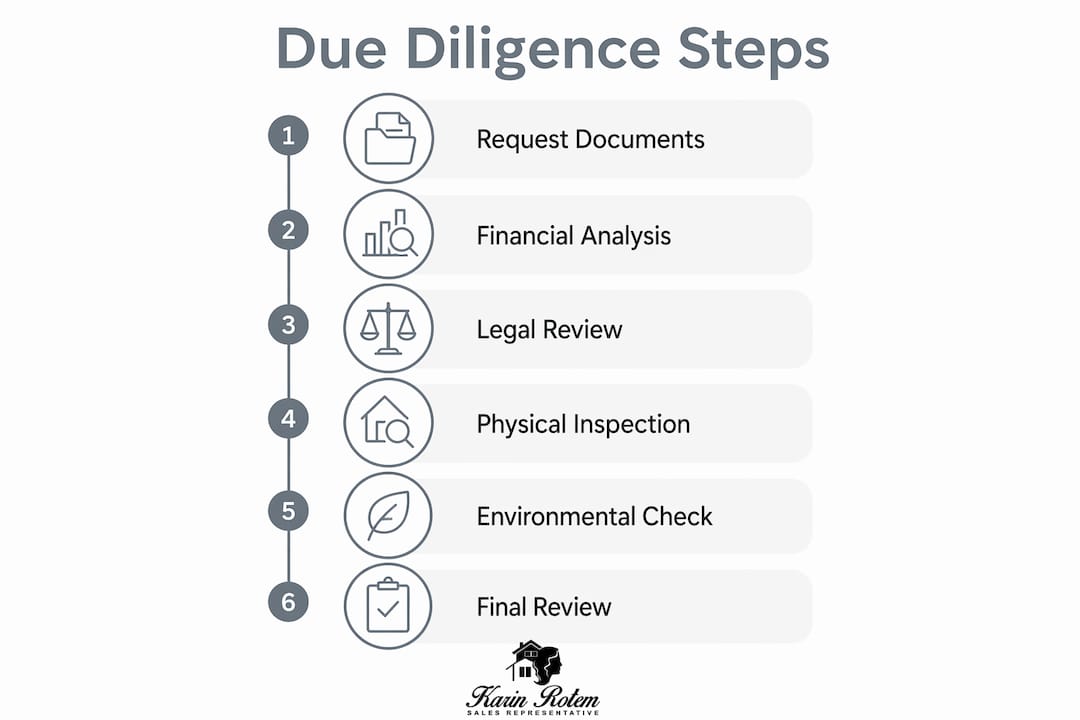
The income property assessment process for physical condition typically begins with a Property Condition Assessment (PCA). A qualified inspector evaluates the roof, HVAC systems, plumbing, electrical, foundation, and individual units. The findings produce a capital needs estimate, which you use to adjust your purchase price or negotiate repairs before closing.
Environmental assessments follow a two-stage process. A Phase I Environmental Site Assessment (ESA) reviews historical land use records and identifies potential contamination risks. Phase I assessments take 2–4 weeks. If the Phase I identifies concerns, a Phase II assessment adds another 3–6 weeks and involves physical soil and groundwater testing. For waterfront or resort properties in Ontario, environmental history is especially relevant.
| Assessment type | Typical timeline | Purpose |
|---|---|---|
| Property Condition Assessment | 1–2 weeks | Identifies deferred maintenance and capital needs |
| Phase I Environmental Site Assessment | 2–4 weeks | Reviews historical land use for contamination risk |
| Phase II Environmental Site Assessment | 3–6 additional weeks | Physical testing if Phase I raises concerns |
| Structural inspection | 3–5 days | Evaluates foundation, roof, and load-bearing systems |
Physical findings affect your deal in two ways. They either reduce the property’s value, justifying a lower offer, or they reveal deal-breaking conditions that make the investment unviable at any price. Either outcome is valuable information.
Pro Tip: Third-party inspections and reports should be ordered on Day 1 of your due diligence window. Their turnaround times are fixed regardless of your deadline. Ordering them a week late can leave you making a final decision without complete information.
How can investors manage the due diligence timeline effectively?
The due diligence window for income properties typically runs 30–60 days, and that clock starts the moment you sign the purchase and sale agreement (PSA). The timeline is unforgiving. A passive approach in the first week can force rushed decisions in the final days.
What I tell my clients is this: treat Day 1 as a sprint, not a warm-up. Request complete documents on Day 1 of PSA signing. Sellers who delay document delivery are often buying time to obscure problems. A well-prepared seller has everything ready before the PSA is signed.
Coordinating your team is as important as the individual tasks. A typical due diligence team includes your real estate broker, a commercial real estate lawyer, a mortgage lender, a property inspector, an environmental consultant, and an accountant. Each specialist works on a parallel track, and your job is to keep them moving without bottlenecks.
A practical sequence for managing the timeline:
- Sign the PSA and immediately send the document request list to the seller.
- Order the Phase I ESA and Property Condition Assessment on Day 1.
- Send financial documents to your accountant for NOI reconciliation within the first week.
- Have your lawyer begin the title search and lease review in the first week.
- Review inspector and environmental reports as they arrive and flag issues immediately.
- Consolidate all findings into a single risk summary before the deadline expires.
- Use the risk summary to decide: proceed, renegotiate, or walk away.
Pro Tip: Build a shared document folder that every team member can access in real time. When your lawyer, accountant, and inspector are all working from the same document set, you eliminate the delays that come from chasing email attachments.
What common pitfalls does thorough due diligence uncover?
The most common problems that property investment due diligence reveals are not dramatic. They are quiet discrepancies that compound into serious financial losses over time.
Due diligence exposes gaps between a broker’s marketed pro forma and the property’s actual financials. A seller might present a 95% occupancy rate while the rent roll shows three tenants who have not paid in four months. The occupancy figure is technically accurate. The income figure is not.
Common red flags that due diligence uncovers:
- Rent roll income that does not match bank deposit records
- Capital expenditure history showing deferred maintenance on major systems
- Leases with below-market rents locked in for several more years
- Zoning violations or unpermitted renovations
- Active liens or unresolved municipal work orders
- Tenant credit risk or pending eviction proceedings
- Environmental concerns flagged in a Phase I ESA
Deferred maintenance is the most underestimated risk. A roof that needs replacement in two years, an aging HVAC system, or outdated electrical panels represent capital costs that your NOI projections must absorb. If the seller has not disclosed these items, your inspection report will. Understanding rental income projections before you close gives you the context to judge whether the property can carry those future costs.
The legal surprises are often the most expensive. An active lien on the property does not disappear at closing unless it is explicitly discharged. A zoning violation can trigger municipal orders that restrict your ability to rent units until the issue is resolved.
Key takeaways
Thorough income property due diligence is the single most effective way to protect your capital and validate projected returns before you commit to a purchase.
| Point | Details |
|---|---|
| Verify financials from source documents | Reconcile rent rolls with bank deposits to confirm actual collected income, not projected income. |
| Order third-party reports on Day 1 | Phase I ESAs and property inspections have fixed turnaround times that cannot be compressed. |
| Legal review goes beyond a checklist | A commercial real estate lawyer must verify title, zoning, leases, and active litigation. |
| Physical findings affect your offer price | Capital needs identified in a Property Condition Assessment justify price renegotiation before closing. |
| About 30% of deals fail in due diligence | That failure rate reflects the process working correctly, not a problem with the deal. |
What I’ve learned about due diligence that most buyers overlook
Working with investors across Toronto, Innisfil, and the Friday Harbour community, I have seen the same mistake repeat itself. Buyers treat due diligence as a formality rather than the most consequential part of the transaction.
The investors who do this well share one habit: they build their team before they make an offer. They already have a commercial lawyer, an accountant familiar with income properties, and a trusted inspector on standby. When the PSA is signed, they move immediately. The investors who struggle are the ones assembling their team after the clock has started.
What most buyers don’t realise is that walking away from a deal based on due diligence findings is not a failure. It is the process working exactly as it should. I have seen clients walk away from properties that looked excellent on paper, only to watch those same properties sit on the market for months after the seller’s problems became public. Protecting your capital is always the right call.
The other lesson I share with every investor: do not let the excitement of a strong property cloud your judgement on the numbers. A beautiful waterfront unit at Friday Harbour is still a business investment. The income property types at Ontario resorts vary widely in their operating costs and regulatory requirements. Know what you are buying before you buy it.
— Felix
How Karinrotem supports income property buyers in Ontario
Karinrotem works with investors across Toronto, Innisfil, and the Friday Harbour community who are serious about making informed acquisition decisions. The team brings deep local market knowledge to every stage of the process, from identifying properties with genuine income potential to guiding clients through the full assessment process with the right professionals in place. If you are evaluating waterfront income properties in Ontario, Karinrotem can connect you with curated listings and the local expertise to assess them properly. Browse available income properties or reach out directly to discuss your investment goals with a team that understands the Ontario market from the inside.
FAQ
What is income property due diligence?
Income property due diligence is the process of verifying the financial, legal, and physical condition of an income-generating property before purchase. It includes NOI analysis, title searches, lease reviews, and physical inspections.
How long does income property due diligence take?
The due diligence window typically runs 30–60 days from the date the purchase and sale agreement is signed. Environmental assessments alone can take 2–4 weeks for a Phase I and an additional 3–6 weeks if a Phase II is required.
What financial documents should I request during due diligence?
Request 3–5 years of profit and loss statements, the current rent roll, bank deposit records, capital expenditure history, utility bills, and property tax assessments. These documents let you reconstruct actual NOI rather than relying on projected figures.
Do I need a lawyer for income property due diligence?
A commercial real estate lawyer is not optional. Legal counsel verifies title, zoning compliance, lease legality, and checks for liens and active litigation, all of which protect you from liabilities that financial analysis alone cannot reveal.
What are the most common red flags in income property due diligence?
The most common red flags include rent roll income that does not match bank deposits, deferred maintenance on major building systems, below-market leases locked in for several years, zoning violations, and active liens or municipal work orders on the property.