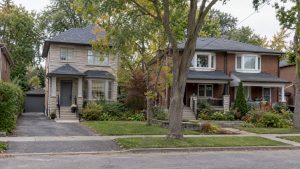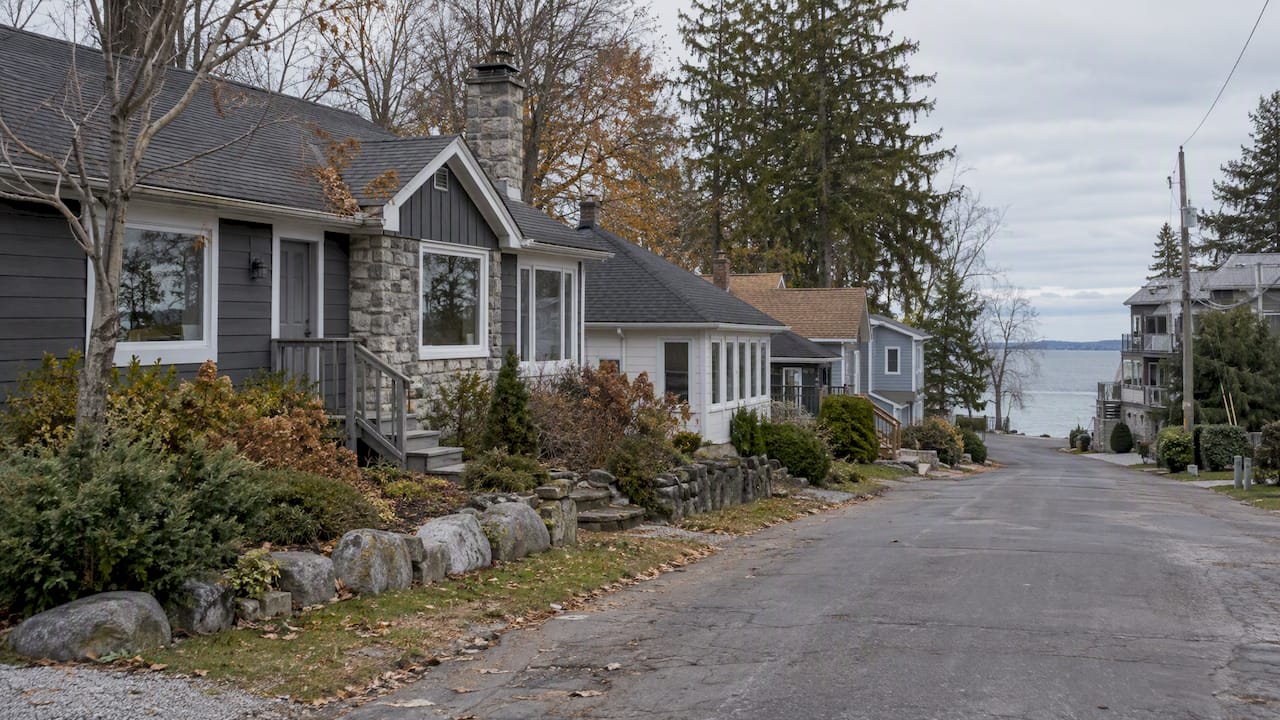
Lake Simcoe cottage communities fall into three types: traditional freehold shoreline cottages, year-round lakeside towns that now work as commuter hubs, and master-planned resort communities like Friday Harbour in Innisfil. They suit different buyers. The right one depends less on the view than on how you plan to use the place, who maintains it, and what the shoreline rules let you do. I’m Karin Rotem, and I work in Innisfil, Friday Harbour and Toronto every week. Below is how I walk my clients through the choice.
TL;DR
- Lake Simcoe sits about one hour’s drive north of Toronto, which makes it a weekend lake and, increasingly, a year-round address.
- Freehold cottages give you land, privacy and control, but also the upkeep and the shoreline rules. Resort condos trade some of that control for a turn-key lifestyle and ongoing fees.
- The lake is a regulated watershed. Check conservation permits and shoreline restrictions before you plan a dock, a renovation or tree removal.
- Innisfil is growing fast, so expect a hybrid of cottage and commuter town rather than the quiet hideaway of decades past.
What “cottage community” means on Lake Simcoe
People searching this phrase usually picture Muskoka. Lake Simcoe is a different proposition, and I tell clients so early. The lake is closer to the city, the shoreline is a patchwork of older cottage lanes, winterized homes and newer developments, and the water supports a real boating and fishing culture.
The lake is also working infrastructure. Ontario describes its watershed as covering 2,899 km² across 22 municipalities, supporting agriculture, tourism and urban development together. It is also the most intensively fished inland lake in Ontario, and ice fishing makes up more than half of fishing activity there. That tells you something about the culture: this is a four-season lake, not a July and August one.
What most buyers don’t realize is that “cottage” here covers very different ownership. Three models cover most of what you will see:
- Traditional freehold cottage. You own the lot and the building. You handle roof, septic or services, dock and shoreline.
- Lakeside house in a year-round town. Often winterized, near shops and schools, and used as a primary residence or a long-weekend home.
- Resort or condo ownership. You own a unit inside a managed community with shared amenities and fees.
If you want the longer comparison of those property types, I put it together in waterfront property types near Toronto.
The three models side by side
| Freehold cottage | Lakeside year-round home | Resort condo | |
|---|---|---|---|
| Upkeep | All yours | All yours | Largely handled by the condo corporation |
| Ongoing fees | Taxes, utilities, insurance | Taxes, utilities, insurance | Condo maintenance fees on top of taxes and insurance |
| Privacy and control | Highest | High | Lower, governed by community rules |
| Best for | Hands-on owners, families wanting space | Relocating families, commuters | Busy professionals, lock-and-leave owners |
| Rental flexibility | Subject to municipal rules | Subject to municipal rules | Depends on the building and any rental program |
| Biggest surprise | Shoreline permits and repairs | Growth around you | Fees and usage rules |
No column wins on every row. What I tell my clients is to decide first how many weekends a year they will truly be there. Fewer than twenty and the lock-and-leave option usually earns its fees. More than that, a freehold place with room for guests often feels better.
Friday Harbour: the resort version of cottage country
Friday Harbour is the community I know best. It is an all-season waterfront destination in Innisfil, one hour north of Toronto, with a marina, golf and resort amenities. It is the clearest example of a shift on the lake toward lifestyle resort living.
The appeal is simple. You are not clearing eavestroughs, hauling a dock in October or cutting a lawn. The trade-off is that you are buying into a managed resort ecosystem rather than a traditional cottage. Some amenities, such as the Lake Club, can be tied to ownership or membership, and the resort’s own materials describe a community with its own facilities and governance. Before you fall for a unit, ask these questions:
- What are the monthly maintenance fees, and what do they cover?
- What does the reserve fund look like, and when was the last study done?
- What does the status certificate say about special assessments or legal matters?
- Is the unit part of a rental program, and what operating rules come with it?
- Which amenities are included with ownership and which are paid separately?
Fees are the concern I hear most, and it is a fair one. A status certificate review before you waive conditions is how you replace worry with numbers. The resort also describes an environmental initiative designed to protect woodlands, wetlands and Lake Simcoe water quality, which is part of why the setting looks the way it does.
If you’re weighing whether a unit suits your plans, these pages go deeper:
- Is it worth buying a condo at Friday Harbour?
- Using a Friday Harbour condo as a vacation property
- How condo prices compare to Toronto
- What a condo hotel unit is
I’ll also be honest about fit. If you want a private dock off your own lot, a workshop and no neighbours within earshot, a resort condo is not that, and I will say so before you spend a weekend viewing units.
Innisfil and the shoreline towns: a cottage lake that became a commuter lake
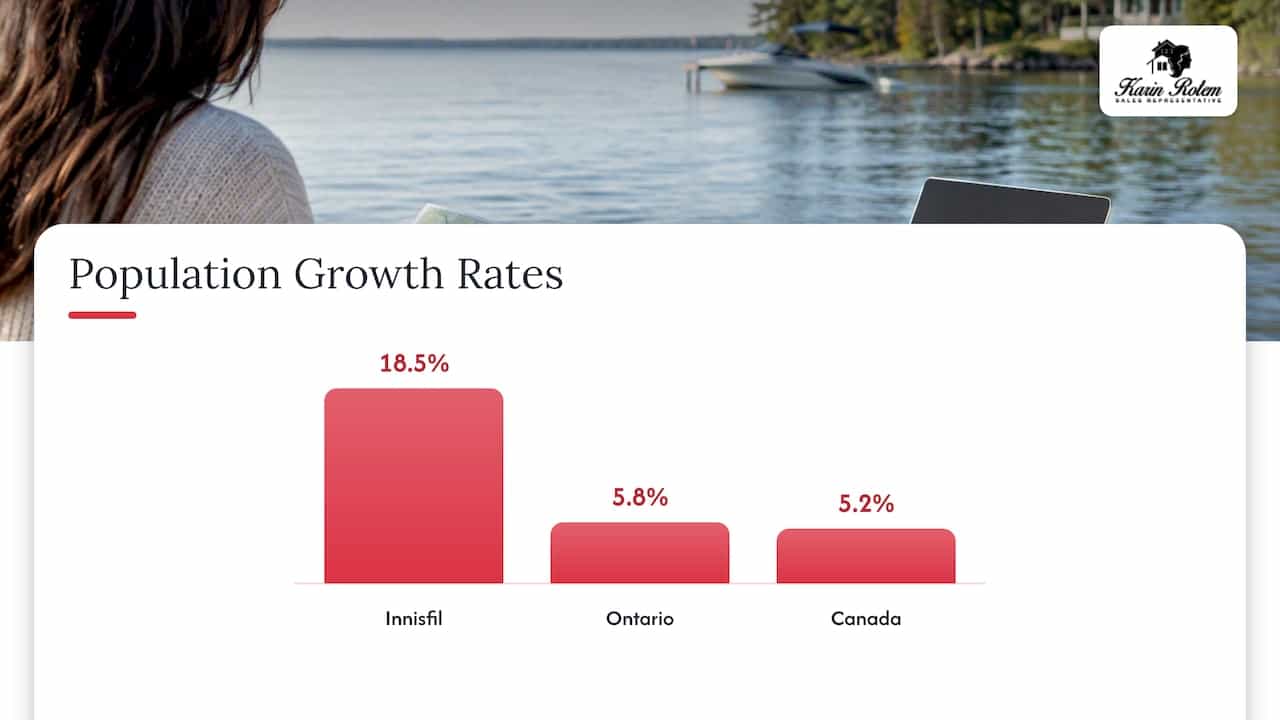
Innisfil’s population reached 43,326 in the 2021 Census, an 18.5% increase from 2016. Statistics Canada’s figures put that well above the provincial (5.8%) and national (5.2%) rates.
What that means on the ground:
- More year-round residents and more services, which helps resale and daily convenience.
- Less of the isolated, hidden-gem feel some older buyers remember.
- A market where you are buying a cottage lifestyle and a stake in a growing GTA-linked town at the same time.
That hybrid character is why many Toronto families now consider Innisfil a place to live, not only to visit. If you’re running the numbers on a move, start with the Toronto vs. Innisfil cost of living guide and the walkthrough on selling your Toronto home and buying in Innisfil. If development matters to you, the Innisfil new developments page covers the files I watch.
Elsewhere around the lake, the character shifts. The wider shoreline includes Barrie on the northwest, Orillia and Oro-Medonte to the north and east, Georgina and Keswick on the south shore, and smaller communities such as Beaverton and Lagoon City. Each differs in price, services and commuting distance, and I would not generalize about them without looking at current listings. Mara Provincial Park, for example, sits 6 km south of Orillia, a reminder that public shoreline and day-use areas are part of the picture too. My own day-to-day focus is Innisfil, Friday Harbour and Toronto, and I’d rather be clear about that than pretend to be an expert on every bay.
Shoreline rules every buyer should know
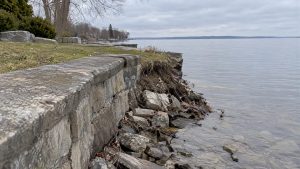
This is the part cottage listings skip. Ontario treats the lake as a protected resource. Its Lake Simcoe Protection Plan is aimed at water quality, including phosphorus loading, and shoreline owners can face restrictions on shoreline modifications, tree removal or fertilizer use.
In practice, before you plan any of the following, check what applies to the property:
- A new or rebuilt dock. Permits and exemptions turn on size and location. I explain the common pitfalls in dock permits on Lake Simcoe.
- Shoreline work or erosion control. Read erosion control on the Ontario waterfront first.
- Renovations or additions. Ask whether the lot is under site-plan control or needs a conservation authority permit.
- Insurance and market cues. My guide to Lake Simcoe waterfront for GTA buyers covers shoreline, permits and insurance.
For Innisfil waterfront in particular, see what to check before buying waterfront in Innisfil, and for daily life on the lake, living on Lake Simcoe covers commutes and shoreline rules.
There is an upside buyers rarely hear. The same protections keep the water, fish and shoreline healthy, and that health underpins the lifestyle demand for the lake. Ontario’s fisheries management also ties the lake’s economic value to the health of its ecosystem. Rules cost you flexibility, but they also protect the thing you are paying for.
Our perspective
We see Lake Simcoe cottage communities as a decision about time, not only about property. Most of the buyers we sit down with are Toronto professionals who started out wanting a cottage and ended up needing a plan: how often they will go, who will look after the place when they don’t, and whether it should earn income when it sits empty.
Our honest view is that the resort model at Friday Harbour suits people who value ease and amenities, and who go in with their eyes open on fees and rules. A freehold shoreline property suits people who want land and are ready for the permits and the maintenance. Neither is better. The wrong choice is the one made on a sunny Saturday viewing without reading the status certificate or the shoreline rules.
We also tell investors plainly that a rental program can offset costs but comes with operating rules, and that projections are not promises. Our job is to put the real numbers next to the dream, then help you negotiate well once you know which one fits.
— Felix
How to choose your community: a short checklist
When clients ask me where to begin, I give them five steps.
- Count your real weekends. Be honest about how many you will use, in all four seasons.
- Set the total cost, not the price. Add taxes, insurance, condo or association fees, utilities, and the yearly cost of docks, roofs and services.
- Decide who maintains it. If the answer is “someone else,” look at managed communities. If it is “me, happily,” look at freehold.
- Check the rules before the offer. Shoreline permits, rental restrictions and status certificates belong in your conditions, not your regrets.
- Test the commute and the winter. Visit on a January weekday as well as in July. Innisfil is about an hour from Toronto on paper, and traffic decides the rest.
If investment is part of the plan, read why buy a vacation home near Toronto and the notes on resale opportunities for a Friday Harbour condo. If you plan to rent before you buy, Friday Harbour rentals is a low-risk way to test the lifestyle.
Looking at Friday Harbour or Innisfil?
If you’re ready to see what is available, browse Friday Harbour condos for sale or the exclusive listings. We help buyers, sellers and investors across Innisfil, Friday Harbour and the GTA, and you can start a conversation on our home page. Tell us how you plan to use the place, and we will tell you honestly whether it fits.
FAQ
How far is Lake Simcoe from Toronto?
Ontario describes the lake as roughly one hour’s drive north of Toronto. Actual time depends on your shore, the day and the traffic on the way out of the city. Friday Harbour in Innisfil also describes itself as one hour from Toronto.
Is Lake Simcoe real cottage country?
It is, with a different feel from Muskoka. It is closer to the city and more built up, and communities like Innisfil are growing quickly. You get four-season recreation, including boating and ice fishing, along with year-round town amenities.
Is a Friday Harbour condo a cottage?
In lifestyle terms it can serve as one, but legally it is a condo unit in a managed resort community. That means maintenance fees, a reserve fund, a status certificate and community rules. Ask about any rental program and how it works before you buy.
Can I build or change a dock on a Lake Simcoe property?
Often yes, but not automatically. Shoreline work can need conservation authority permits or fall under site-plan control, and size thresholds matter. Confirm with the authority and your lawyer before you buy or build, and read our dock permit guide.
Sources
- Introduction, Lake Simcoe 15-Year Monitoring Report (Ontario)
- Fisheries Management Zone 16 (Ontario)
- Protecting Lake Simcoe (Ontario)
- Mara Provincial Park Management Plan (Ontario)
- Focus on Geography Series, 2021 Census, Innisfil (Statistics Canada)
- Innisfil population, 2021 and 2016 censuses (Statistics Canada)
- Friday Harbour Resort
- Friday Harbour Resort, About
- Friday Harbour media kit 2026