Septic means you own the system and pay less month to month; municipal sewer means the city treats your waste and bills you for it, but you’re rarely on the hook for the treatment side. The real surprise for most buyers isn’t the tank or the pipe. It’s who’s responsible for repairs when something breaks. This guide walks through how each system works, what it costs, and exactly how to check which one you’re dealing with before you write an offer.
TL;DR:
- Septic systems require regular pumping every three to five years, and drainage issues or chemical dumping can cause early failure.
- Municipal sewer lateral pipes are usually owned and maintained by homeowners, making them a significant upcoming repair responsibility.
- Septic installation costs range from $10,000 to $20,000 depending on soil and site conditions, while municipal sewer connection fees vary by municipality.
- A well-maintained septic system lasts 20 to 40 years, but poor maintenance or soil conditions can drastically reduce its lifespan.
- Buyers should verify system status with inspections, permit records, and repair history before completing a rural property purchase.
How septic systems and municipal sewer actually work
A septic system is a private, on-site treatment plant sitting in your backyard. Wastewater flows into a septic tank, where solids settle and baffles stop scum and sludge from escaping into the drain field, also called a leaching bed. From there, partially treated effluent seeps into the soil, where natural filtration finishes the job. That’s why soil quality and lot size matter so much for septic performance, and why groundwater dynamics directly affect how well a drain field can absorb and treat effluent over time.
Municipal sewer works on a completely different model. Your home connects through a private lateral pipe to a municipal main line running under the street, and everything flows to a centralized treatment plant operated by the city. Some rural and semi-rural properties use advanced treatment units instead of a conventional septic system. These are engineered systems with extra filtration stages, often required where lot size or soil conditions won’t support a standard drain field.
Who is responsible for maintenance and repairs
If you own a septic system, the maintenance list is yours alone. Tanks need pumping roughly every three to five years under normal household use, and you’re also responsible for protecting the drain field from vehicles, extra structures, and root intrusion. Skip the pumping schedule or dump the wrong chemicals down the drain, and you can kill the bacteria that actually treat the waste, which is one of the fastest ways to force an early system failure.
Municipal sewer shifts most of that burden to the city, but not all of it. What most buyers don’t realize is that the sewer lateral, the pipe running from your house to the property line, is typically owned and maintained by the homeowner, not the municipality, which usually owns only the main line. A cracked or root-clogged lateral is your bill, not the city’s. Before you close on any property, ask the seller or the local building department for permit records and any past inspection or repair history. It’s one of the easiest things to overlook and one of the costliest to discover after possession day.
Costs: upfront, ongoing, and financing
A conventional septic system in Canada typically runs between $10,000 and $20,000 installed, with the spread driven mostly by soil conditions, tank size, and how much excavation and site work the lot demands. Rocky or clay-heavy soil pushes costs toward the top of that range fast. That number is a one-time hit, and beyond routine pumping and the occasional pump replacement, ongoing costs stay relatively low.
Municipal sewer flips the cost structure. Connecting to the main usually involves a municipal connection fee, then recurring wastewater charges show up on your utility bill for as long as you own the home. Those fees vary by municipality and are often billed alongside water usage rather than as a flat charge, so they scale with how much water your household actually uses.
Neither system wins outright on lifecycle cost. Experts generally agree that septic trades independence and lower recurring bills for maintenance responsibility, while municipal sewer trades that independence for predictable monthly fees and professionally managed treatment. If you’re buying a rural or cottage property with an aging septic system, check with the municipality early. Many rural municipalities offer financing or grant programs specifically for septic upgrades, and finding that out during due diligence, not after closing, can change your negotiating position. It’s also worth factoring any potential upgrade cost into your overall closing cost budget before you finalize an offer.
Environmental risks, health concerns, and typical lifespan
A well-maintained septic system typically lasts 20 to 40 years, though poor soil, overloading, or skipped pumping can cut that lifespan dramatically. Municipal sewer infrastructure, by contrast, is built and maintained by the city and generally lasts far longer, but that doesn’t mean municipal homes are risk-free.
A failing septic system can leak untreated effluent into groundwater, contaminating nearby wells and surface water, which is a genuine health hazard for anyone drawing water from a private well nearby. On the municipal side, backups are common and often preventable. Fats, oils, grease, and non-flushable items are leading causes of sewer backups, and figuring out who’s responsible for the fix, homeowner or municipality, depends on where in the pipe the blockage occurs. If you notice slow drains, sewage odours, or unusually lush patches of grass over a drain field, get a licensed inspector out immediately and contact the municipality if the issue involves the main line.

How to tell whether a home is on septic or sewer
Before you tour a rural or semi-rural property, run through this quick checklist. It takes minutes and can save you from an unpleasant surprise after closing.
- Check the utility bill. A line item for sewer or wastewater charges means the home is on municipal service; its absence usually points to septic.
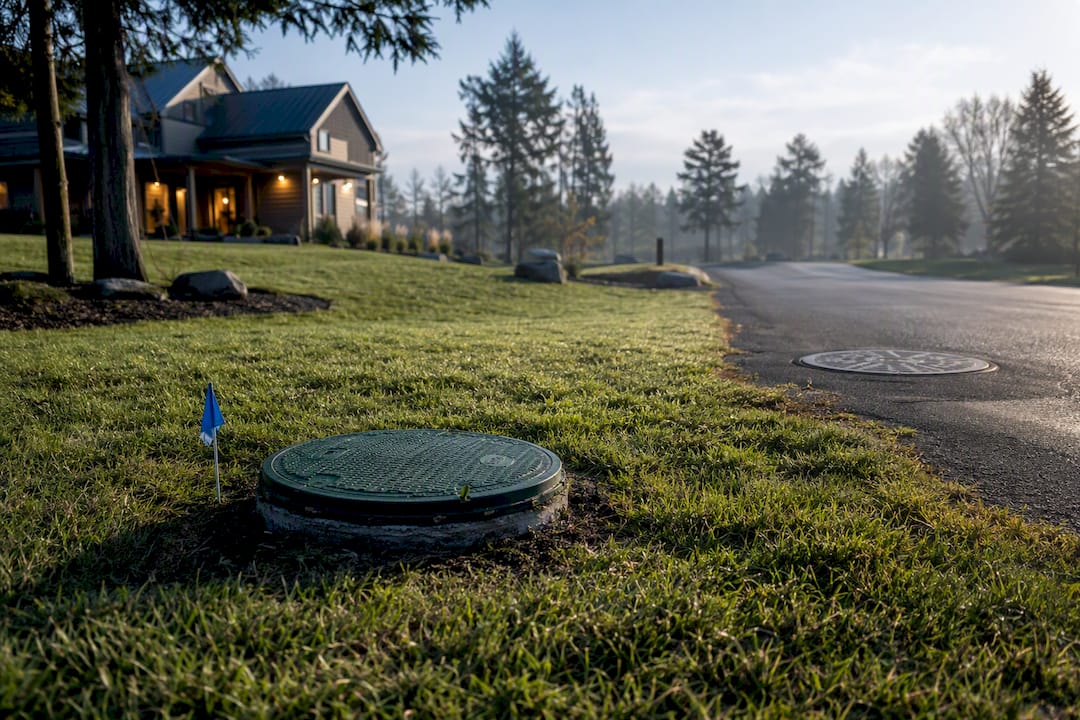
- Walk the yard. Look for round or rectangular access lids, a raised or unusually green rectangular area (the drain field), or a visible septic vent pipe.
- Find the cleanout. A sewer cleanout, a capped pipe near the foundation, generally signals a municipal connection.
- Ask for the paper trail. Request permit records from the seller or the local municipal building or health office to confirm which system is actually in place and when it was last serviced or inspected.
Converting from septic to municipal sewer
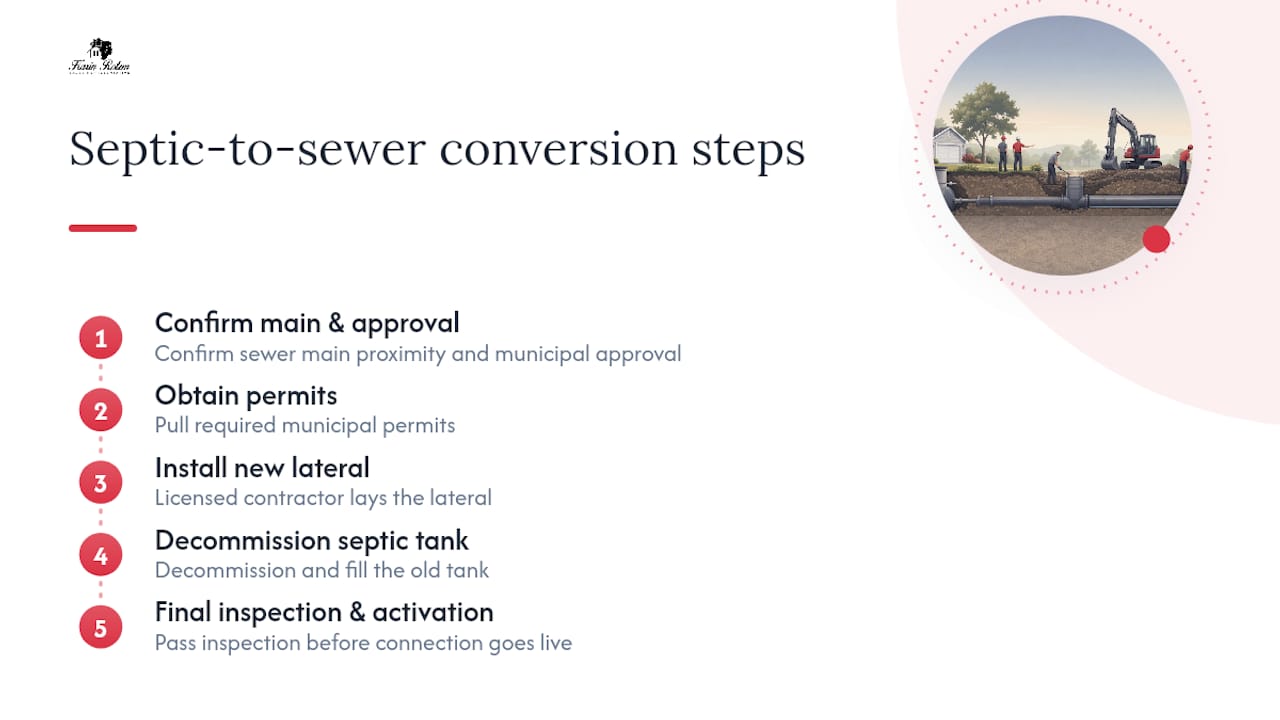
Feasibility comes down to one question first: is there a sewer main close enough to connect to, and will the municipality actually approve the hookup? If both check out, the process generally follows a predictable sequence: confirm main availability with the municipality, pull the required permits, have a licensed contractor lay the new lateral, properly decommission and fill the old septic tank, and pass final inspection before the connection goes live.
Budget for more than the connection fee itself. Trenching across a yard, restoring landscaping, and potential driveway or hardscape disruption can add real cost and a few weeks of inconvenience. For buyers eyeing a property where conversion looks like a future project, get a contractor estimate before you finalize your offer, not after.
What I tell my clients about septic vs sewer when they buy
What I tell clients shopping in rural or semi-rural properties is to get the septic inspection report or written municipal confirmation of sewer connection before you remove conditions, not after. I always advise asking for tank pumping history, permit records, and any prior repair invoices, as these documents provide important insight into a property’s future costs.
Septic status also shapes financing and resale more than most buyers expect. Some lenders and new-home warranty programs treat septic-equipped homes differently, and warranty coverage can exclude onsite systems installed by a previous owner, especially on seasonal or cottage properties. In waterfront markets, a well-documented, recently serviced septic system can actually support your asking price at resale. An undocumented one raises buyer questions fast. When a system’s age or condition is unclear, I always recommend budgeting for a professional inspection or a conversion feasibility estimate before you commit. It’s a small cost that protects a much bigger decision, and it’s exactly the kind of check I walk through with clients on waterfront purchases across Ontario.
— Felix
How my team helps you confirm system status and manage due diligence
Verifying whether a property runs on septic or municipal sewer isn’t something you should leave to chance once you’re under contract. My team helps buyers order septic inspections, pull municipal permit and service records, and, where relevant, get a realistic read on conversion feasibility before conditions come off. We also lean on trusted due-diligence partners, including standardized due diligence reporting frameworks used to keep verification steps organized and consistent, so nothing falls through the cracks between offer and closing.
If you’re looking at a rural property, a cottage, or anything around Friday Harbour where septic is common, this is exactly the kind of groundwork we build into every transaction. Browse our current available properties or reach out directly, and we’ll walk you through what to check before you make an offer.
Where to check permits, technical guidance, and financing programs
Start with your local municipal building or health department for permit records and inspection requirements, since rules vary by region. Provincial building codes set the technical standards for private sewage systems, and many rural municipalities post septic financing or grant program details directly on their websites. Always request the most recent inspection report alongside any permit history.
Sources
- Living on a well vs municipal water: understanding wells, septic systems and municipal services in Canada
- How to Finance a Septic System in Canada: Rural Property Costs & Loans – Credit Resources
- Sewage backup factsheet (York Region)
- A New Homeowner’s Guide to Septic Systems
- Sewer vs. Septic: The Truth | Plumbing Medic
FAQ
Which is better, septic or municipal sewer?
Neither is universally better. Septic offers independence and lower recurring costs, while municipal sewer offers centralized, professionally managed treatment in exchange for recurring fees and less control over the system itself.
Which is more expensive, septic or sewer?
Septic carries a higher upfront cost, typically $10,000 to $20,000 installed, but lower ongoing bills. Municipal sewer has lower upfront connection costs but adds a recurring wastewater charge to your utility bill for as long as you own the home.
What are the disadvantages of having a septic tank?
You’re solely responsible for periodic pumping, protecting the drain field, and covering any repair or replacement costs. A neglected system can also fail and contaminate nearby groundwater or wells.
How many years will a septic system last?
A well-maintained conventional septic system typically lasts 20 to 40 years. Poor soil conditions, overloading, or skipped pumping schedules can shorten that lifespan considerably.