Use video on every listing. For volume listings and vacant homes, an AI photo-to-video tour gets you a polished result in minutes; for luxury, waterfront, or lifestyle properties where flow and feel matter, book a filmed walkthrough. The evidence backs both moves: video drives far more buyer inquiries, and even a modest, well-produced tour tends to nudge final sale price upward.
TL;DR:
- Video tours significantly increase inquiry volumes by up to 403 percent, making it essential for every listing regardless of price or market conditions.
- AI photo-to-video tools are ideal for fast turnarounds and high-volume portfolios on vacant or tenant-occupied homes, while filmed walkthroughs excel in showcasing light, flow, and lifestyle.
- Proper staging and lighting are crucial, as poorly prepared scenes can diminish the impact of high-quality footage and reduce buyer interest.
- The typical full property tour runs between 90 and 180 seconds, with social reels optimized at 15 to 60 seconds to maximize engagement.
- Pricing generally ranges from $150 to $1,500 depending on complexity, with AI options offering the most cost-effective solution for volume and speed.
Why real estate video tours matter: benefits, evidence, and limits
Listings with video draw dramatically more attention than photo-only listings, with industry guides citing inquiry increases as high as 403% for properties that include video. That is the single strongest reason to make video a baseline deliverable rather than a luxury upsell.
The number that matters: a working paper using MLS and marketing data found virtual tours lift final sold price by roughly 1% on average, though the effect varies widely by market and property type, and has shrunk since virtual tours became routine after COVID.
Video tends to move the needle most in competitive markets, for less-experienced agents building credibility, and on lifestyle or waterfront properties where a photo simply can’t convey how a space feels. It matters less where buyer pools are thin or where the home itself is the constraint, not the marketing. The trade-offs are real: production costs money and time, viewers fatigue quickly on overlong footage, and video should qualify interest for a showing, not replace it. A meaningful share of buyers still insist on walking a property before writing an offer.
What types of real estate video tours should you choose?
Match the format to the property, not the trend. Here’s how the main types break down:
- Guided walkthrough tours move room to room in a continuous or lightly cut sequence, running 90 to 180 seconds. Best for standard resale homes and condos.
- Cinematic tours add mood lighting, music, and slow-motion detail shots. Best for architecturally distinct or luxury homes.
- Drone aerials show lot size, waterfront access, and neighbourhood context. Best for acreages, waterfront, and rural properties.
- AI photo-to-video tours stitch existing listing photos into a moving, narrated sequence in minutes. Best for vacant homes, tight timelines, and high-volume listing portfolios.
- Short social reels run 15 to 60 seconds and highlight one or two standout features. Best for driving traffic on Instagram and TikTok.
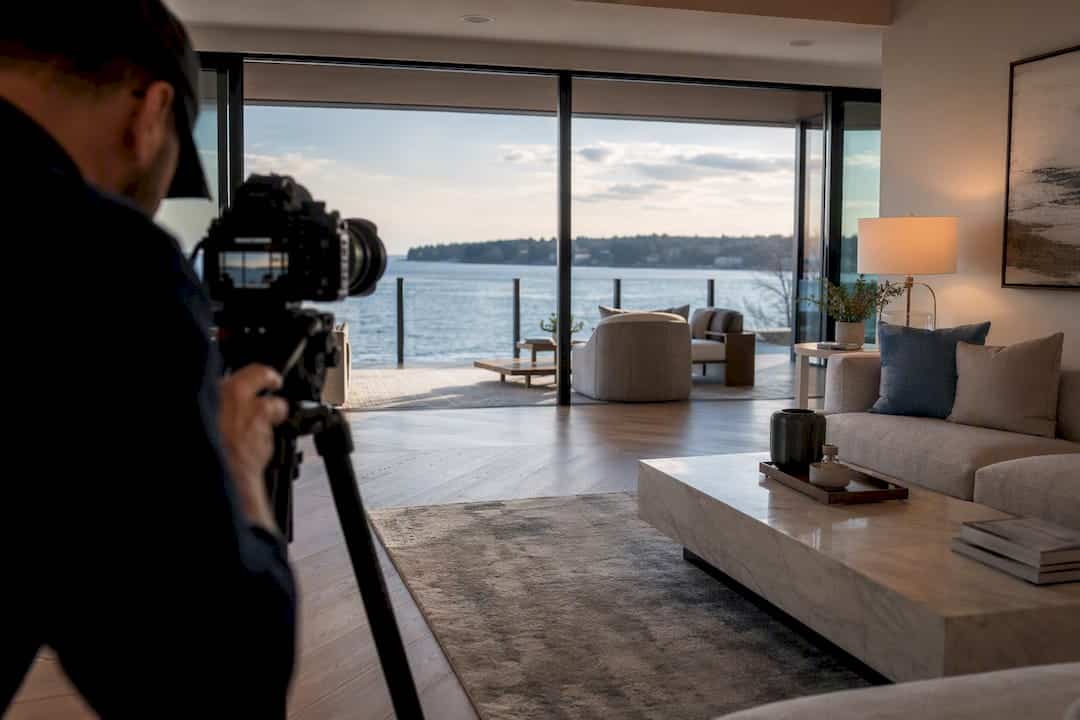
The decision rule I use is simple: reach for AI when you need speed and volume, especially on an empty or tenant-occupied unit. Book a filmed shoot when spatial flow, light, or lifestyle is the actual selling point, which is exactly where filmed walkthroughs outperform AI tools.
Production checklist and shot sequence for one on-site visit
Get the order right and you avoid a second trip. Before anyone picks up a camera, run through this checklist:
- Confirm timing for best natural light, ideally mid-morning or late afternoon.
- Stage and declutter every room the camera will enter, including closets left ajar.
- Turn on every light fixture and open every blind.
- Confirm access, permissions, and any tenant or occupant notice requirements in writing.
- Silence phones, remove pets and vehicles from view, and stage fresh flowers or towels as a final pass.
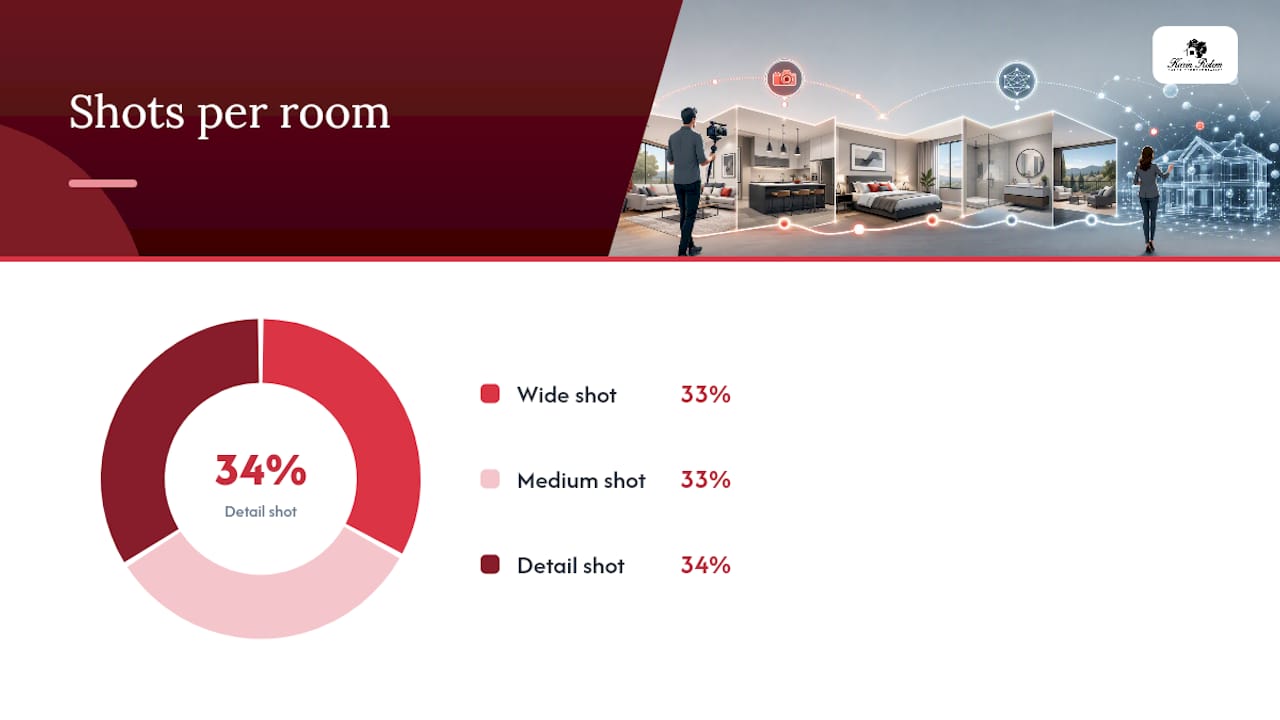
Once you’re filming, follow this sequence: exterior opener, front entry, main living space, kitchen, primary bedroom, secondary bedrooms, bathrooms, outdoor living space, then one or two signature shots (a waterfront view, a chef’s kitchen island). Capture a wide shot, a medium shot, and one detail shot in each room, and pause half a second to one second at every doorway before moving through. That small pause is what makes footage read as professional instead of amateur.
Build the full tour edit on-site if you can, then go back through for a second pass shooting vertical clips for reels. That second pass is what keeps your social content from looking like a cropped afterthought.
Pro Tip: Shoot every room’s clips in the same lighting condition and white balance setting. Mixed light temperatures between rooms are the fastest way to make an otherwise good tour look unedited.
Gear and camera settings for every budget
You don’t need a cinema rig to produce a usable tour, but you do need consistency across the shoot.
- Entry tier: a modern smartphone paired with a phone gimbal. This handles most standard listings well, though low-light performance and lens distortion in tight rooms are real limitations.
- Mid tier: a mirrorless camera with a 16 to 24mm wide lens on a 3-axis gimbal, shooting 4K at 30 frames per second, or 60 fps if you want slow-motion detail cuts. Set your aperture between f/4 and f/5.6 to keep more of the room in focus.
- Pro tier: full-frame camera bodies paired with a licensed drone operator for aerial work, particularly for acreage, waterfront frontage, or gated communities where flight rules apply.
- Non-negotiable rule at every tier: lock in one resolution and one frame rate before you start, and don’t switch mid-shoot. Mixed frame rates create jarring edits that no amount of post-production can fully smooth out.
Editing, exports, and platform-specific formats
The edit is where a decent shoot becomes a good tour. Keep pacing brisk, add subtle background music, use text overlays sparingly for addresses or feature callouts, and blur any visible personal documents, photos, or license plates before export.
Export settings should match where the video lives:
- Social reels: 15 to 60 seconds, vertical format
- Instagram feed posts: 60 to 90 seconds
- Full property tour for MLS or website: 90 to 180 seconds, horizontal format
Shoot in 4K once and repurpose from there. Crop the horizontal master down to vertical for reels, add burned-in captions since most viewers watch muted, and design a thumbnail and a clear call-to-action that points back to the listing every time you repurpose the footage.
What does a real estate video tour cost?
Pricing scales with production complexity, not just runtime. Industry rate cards put social-only reels at $150 to $250, standard walkthroughs at $300 to $500, and cinematic or premium packages with drone footage and narration at $600 to $1,500.
AI photo-to-video tools sit well under the social-reel price point and turn photos into a finished tour in minutes, making them the better value for vacant listings, rental turnovers, or a large portfolio where you need volume more than polish. A hired videographer earns their fee back on properties where flow, light, and craftsmanship are the actual sales argument, particularly anything over $1 million.
Bundle photography and video into one coordinated shoot whenever you hire a professional. Sellers prefer one visit over two, and agents typically see better margins from a combined package than from booking each service separately.
Where should you publish your video and what should you track?
Host the full tour on your website, the MLS listing, and YouTube, then cut the same footage into shorter clips for Instagram Reels, TikTok, and YouTube Shorts. A simple cadence works well: publish the full tour the day the listing goes live, then release one short reel per week while the listing is active.
Track four numbers to know if the video is working:
- Inquiry volume compared to your photo-only listings
- Saves and shares on social platforms
- Average watch time, which tells you where viewers drop off
- Click-through rate from the video back to the listing page or inquiry form
If a video underperforms, test one variable at a time: swap the thumbnail, trim the runtime, or change the call-to-action wording before touching anything else.
What I tell my clients need to know about video tours
What I tell my clients is that the format decision should follow the property, not the budget alone. For a waterfront listing at Friday Harbour, I always push for a filmed walkthrough with drone aerials, because the water view and the dock access are the whole story, and a static photo or an AI stitch simply cannot carry that. For a standard three-bedroom condo resale in Barrie, an AI-generated tour gets the listing live faster and captures the inquiry volume just as well.
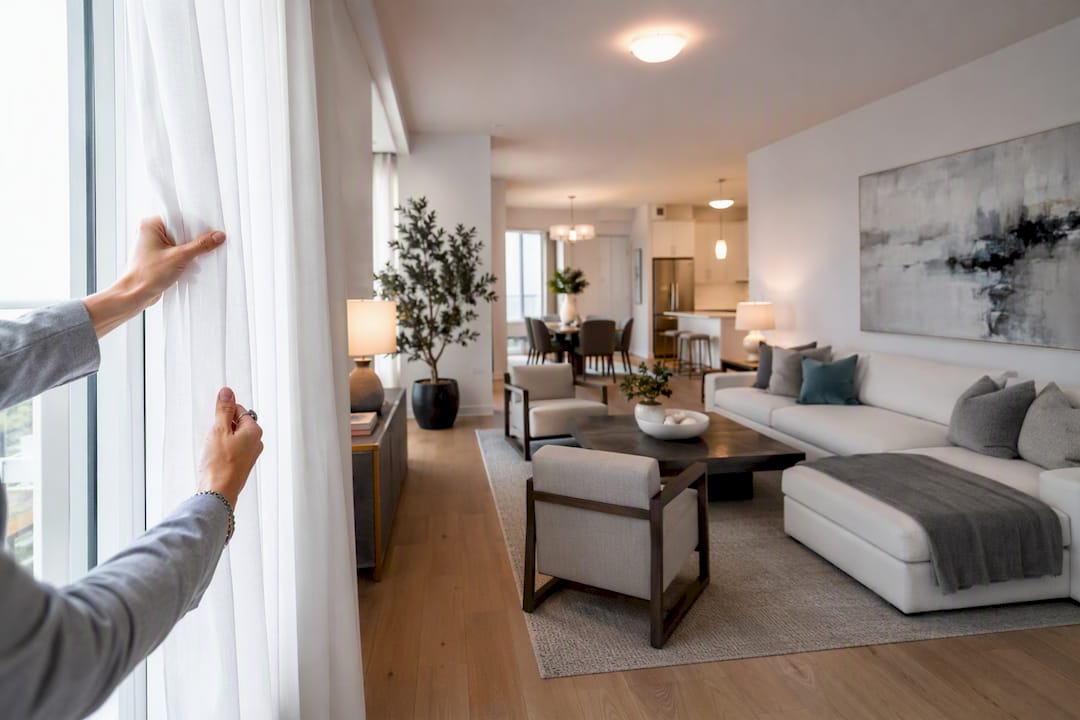
What most sellers don’t realize is that staging and light matter more on camera than they do in person. A room that photographs fine can look flat and cramped on video if the blinds are closed or the lamps are off. I’ve had sellers spend $400 on a videographer only to lose half the impact because nobody opened the curtains before the crew arrived.
The gap between video hype and video results
The conventional advice treats video as a universal upgrade. It isn’t. The research shows a real but modest average price effect, roughly 1%, and that effect has softened as virtual tours became standard practice rather than a differentiator. Video’s biggest win isn’t price. It’s inquiry volume, and a 403 percent jump in inquiries is worth chasing on nearly every listing regardless of price point.
Where most agents get it wrong is treating AI tours and filmed walkthroughs as competing choices instead of complementary tools. The honest read of the evidence is that AI belongs on the majority of listings simply because it removes the excuse of skipping video altogether, while filmed production earns its cost back specifically where spatial flow or lifestyle appeal drives the buyer’s decision. Prioritize getting some form of video on every active listing first. Worry about upgrading production quality second, and only where the property actually justifies it.
— Felix
How Karin Rotem’s team handles listing video and marketing
If you’d rather not manage shot lists, gimbals, and export settings yourself, that’s exactly where my team can assist. We coordinate photography and video as one shoot for listings, matching the format to the property as described above: filmed walkthroughs and drone aerials for waterfront and luxury homes, and faster AI-driven tours for standard resale and rental turnovers. Reach out and we’ll walk through what your specific property needs before you spend a dollar on production. Browse our current listings to see the approach in action, or get in touch to talk through your listing’s marketing plan before you book anyone.
Sources
- Working paper on virtual tours and sales performance (doi:10.3386/w33204)
- Real Estate Video Production: The Complete Guide (2026) | StudioBinder
- Real Estate Video Walkthrough Guide: Equipment, Movement, and Editing Workflow | PhotoFounder
- How to Make a Real Estate Tour Video That Converts: Expert Guide (2026) | BetterSpace
FAQ
Are real estate video tours worth the cost?
Yes, for nearly every listing. Video-equipped listings draw far more inquiries, and even a basic tour tends to lift final sale price by a modest, measurable amount.
Should I use AI video or hire a videographer?
Use AI photo-to-video for vacant homes, quick turnarounds, and high-volume portfolios; hire a videographer when spatial flow, light, or lifestyle appeal is the property’s main selling point, such as waterfront or luxury listings.
How long should a real estate video tour be?
A full walkthrough should run 90 to 180 seconds, while social reels perform best between 15 and 60 seconds.
Do I need permission to film inside someone else’s home?
Yes. Always confirm written permission from the seller and, where a tenant occupies the property, give proper notice before filming, since privacy and access rules vary by situation.
What’s the typical cost range for a professional real estate video?
Expect $150 to $250 for a social-only reel, $300 to $500 for a standard walkthrough, and $600 to $1,500 for a cinematic or drone-inclusive package.