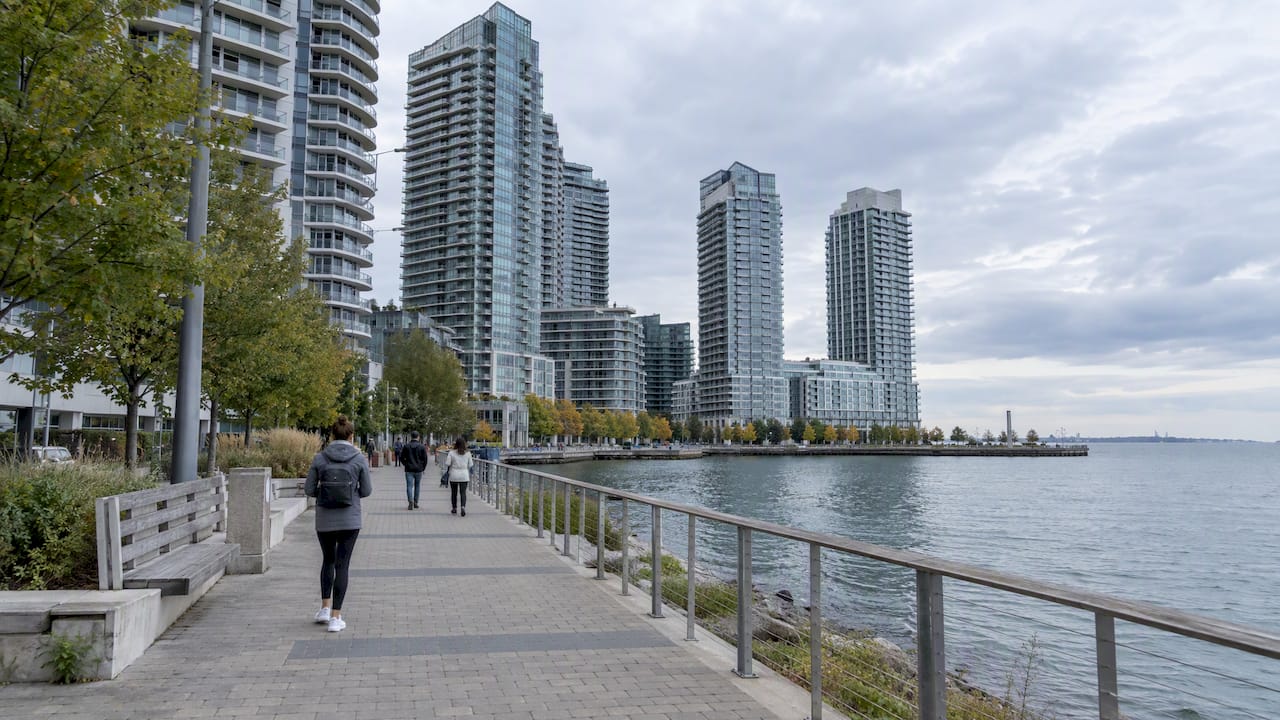
The Toronto waterfront condo market is in a correction, and that has shifted real negotiating power to buyers while compressing returns for pure speculators. We’re seeing genuine opportunities for owner-occupiers who plan to hold for years, but we’d tell any investor chasing a quick flip to slow down and run the numbers twice before signing.
TL;DR:
- In Q2 2026, GTA condos averaged $634,972 as sales rose 8.8% year over year to 4,783, while 8,061 active listings preserved buyer choice.
- Toronto’s condo vacancy rate was 0.9% in 2025, but that figure masks weaker demand for micro units; two bedroom layouts face less direct competition.
- Older C1 buildings with larger floorplans have held value better than newer C8 towers, where small units face softer prices and longer selling times.
- Before a presale closing, get lender approval based on the appraised value, since a lower valuation can leave a financing shortfall.
- Stress test renewal payments at least 1.5 points above today’s rate, and avoid entering unless you can hold the property for five or more years.
What the current data says about prices, sales, and vacancy
The headline number is simple: the Greater Toronto Area condo average selling price sat at $634,972 in the second quarter of 2026, with the City of Toronto averaging $667,916. Sales volume actually improved, with 4,783 condo transactions reported in the quarter, up 8.8% year over year, while active listings closed the quarter at 8,061 units.
That combination tells a clear story: more buyers are stepping back into the market, but prices haven’t caught up to the renewed activity yet. That gap is where negotiating room lives right now.
On the rental side, CMHC’s Toronto market dashboard shows the secondary rental market for condominium apartments holding a vacancy rate near 0.9% in 2025, though availability varies a lot by unit size and neighbourhood.
A few things stand out from this snapshot:
- Sales momentum is returning faster than pricing is recovering.
- Listings remain elevated relative to pre-2022 norms, which keeps pressure on sellers.
- Rental vacancy stays tight overall, but small investor-style units face softer demand than family-sized ones.
Why prices moved: rates, supply, and the pre-construction glut
Waterfront and downtown condo prices didn’t fall in a straight line. They climbed through 2021 and early 2022, then gave background as borrowing costs rose and a wave of pre-construction units hit completion at the same time. Bank of Canada analysis describes this as a structural correction, driven by slower population growth, higher interest rates, and an oversupply of small, investor-oriented units rather than a short-term blip.
A key figure to watch: the Bank of Canada’s Financial Stability Report for 2026 notes that mortgage arrears remain low across the country, but an additional 10% price decline could expose a minority of borrowers, roughly 12%, to renewal stress. That’s a meaningful number for anyone who bought a waterfront unit at or near the 2022 peak and is coming up for mortgage renewal soon.
On the supply side, CMHC’s June 2025 report on condominium apartment market risks documents record completions in Toronto alongside rising unsold inventory, particularly among smaller units built for investors rather than long-term residents. Months-of-inventory for pre-construction projects rose sharply, and both prices and rents for many small units fell as a result.
| Driver | Direction | Source |
|---|---|---|
| Interest rates | Pushed affordability down, cooled investor demand | Bank of Canada |
| Pre-construction completions | Record volume, concentrated in small units | CMHC |
| Population growth | Slowed, reducing absorption pace | Bank of Canada |
| Resale listings | Elevated, giving buyers more choice | TRREB |
Three indicators will tell us where this goes next: the pace of policy rate cuts, immigration-driven rental demand, and how quickly the current glut of small units gets absorbed. Until those move meaningfully, we expect a slow stabilization rather than a sharp rebound.
Inventory pressure and what it means for investor returns
The imbalance isn’t evenly spread. CMHC’s report is specific about where the risk concentrates: small, investor-targeted units carry the steepest downward pressure on both resale price and achievable rent, because so many of them completed around the same time and compete for the same renter pool.
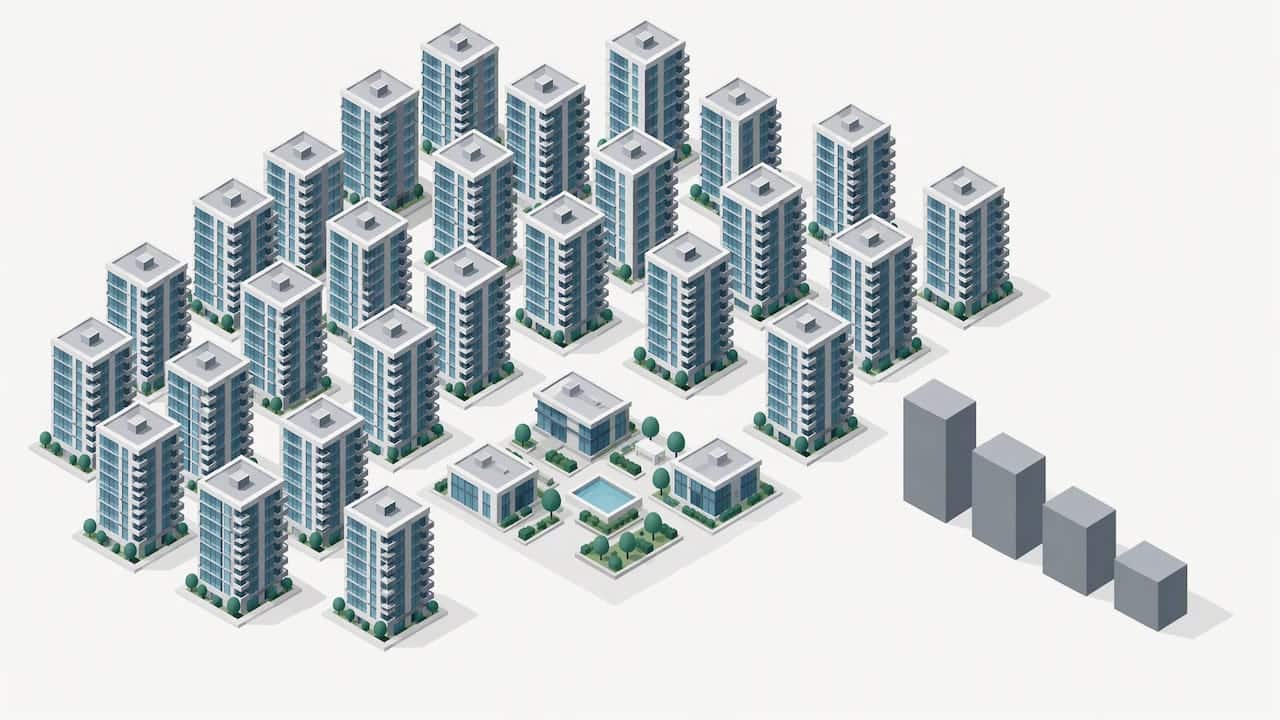
Developers who presold these units years ago now face buyers walking into closing with units worth less than their purchase price, a gap that lenders factor into financing approval. That’s a real closing risk, not a hypothetical one, and it’s worth budgeting for.
A few practical implications follow from this:
- Smaller, investor-grade units face the steepest price and rent pressure.
- Larger, livable layouts have held demand better because owner-occupiers compete for them too.
- Buyers with presale closings should expect lenders to revalue the unit before funding, which can create a shortfall between the contract price and the appraised value.
- Vacancy stays low overall at roughly 0.9% in 2025, but that average masks softer demand for micro-units specifically.
For anyone weighing a hold strategy, the resilient end of the market right now is the two-bedroom, functional-layout segment, not the compact studio built purely for yield.
How waterfront pockets compare: C1, C8, and nearby stretches
Toronto’s waterfront isn’t one market. TRREB’s community-level reporting shows Waterfront Communities C1 averaging roughly $720,000 to $730,000, while Waterfront Communities C8 sits closer to $716,000. Both pockets have seen price softening from their 2022 highs, but the pace and depth differ by building age and unit mix.
Older, established buildings with larger unit footprints in C1 have generally held value better than newer towers packed with studio and one-bedroom inventory. C8, which skews toward more recently completed projects, has absorbed a larger share of the investor-grade supply CMHC flagged, and that shows up in softer pricing and longer days on market for smaller units there.
Here’s how we’d sort the pockets by buyer intent:
- Owner-occupiers tend to gravitate toward older C1 buildings with larger floorplans and established amenity packages.
- Investors chasing yield have concentrated in newer C8 towers, where unit prices are lower but so is rent growth.
- Family-oriented buyers increasingly look slightly west along the waterfront corridor, where two-bedroom supply is more plentiful relative to demand.
If you’re comparing Toronto waterfront pricing against a nearby alternative, our analysis of Friday Harbour condo prices versus Toronto walks through that cost gap in detail.
A practical checklist before you make an offer
Buying into a correction means your due diligence has to work harder than it did in 2021. We walk every client through the same sequence:
- Stress-test your mortgage against a renewal rate at least 1.5 points higher than today’s, and model what happens if the unit’s appraised value comes in below your purchase price at closing.
- Check the floorplan for genuine livability: usable balcony space, sensible storage, and a layout that works for more than photographs.
- Review the building’s reserve fund study and ask about any special assessments in the past three years; our guide on condo special assessments in Ontario explains what to look for.
- Ask how many comparable units are still completing nearby, since fresh competing inventory can cap your resale price for years.
- Set a realistic exit timeline. If you can’t comfortably hold for five or more years, a correction market is a riskier entry point.
Negotiation leverage has shifted toward buyers on list-to-sale price gaps and closing flexibility, though deposit structures on resale purchases haven’t loosened much.
Pro Tip: Ask your lender for a pre-approval based on the appraised value, not just the contract price, especially on any pre-construction closing.
For a deeper investor-focused breakdown, our Toronto waterfront investor playbook covers sales volume and listing trends in more detail.
What I tell my clients about buying waterfront right now
What I tell my clients is this: buy the layout you’d actually want to live in, not the cheapest unit in the building. I’ve watched investor-grade studios sit on the market for months while a well-laid-out two-bedroom three floors up sold in weeks, because real demand follows real livability, not just a low entry price.
One client last year was set on a compact waterfront studio purely for rental yield. We walked through the CMHC data on small-unit oversupply together, and she pivoted to a slightly larger unit in an older building instead. It rented faster and held its value better through the correction.
Buy the floorplan, not just the view. The view doesn’t pay your mortgage when the market softens.
When a client’s budget only stretches to a micro-unit on the waterfront, I’ll often suggest they look at a non-waterfront alternative with better space instead, or wait a cycle.
— Felix
How our team helps you navigate this market
We built our approach around exactly this kind of market: one where data matters more than enthusiasm. We work through pricing, building history, and negotiation strategy with every waterfront buyer and investor we take on, drawing on current TRREB and CMHC figures rather than guesswork.
- We run a tailored search against your budget, timeline, and whether you’re buying to live in or to hold as an investment.
- We pull comparable sales and building-specific data before you make an offer, not after.
- We negotiate deposit terms, closing timelines, and price based on what’s actually moving in your target building.
Reach out through our main site to start a conversation, or browse current Toronto and GTA listings to see what’s available in your price range today.
This article is general information, not a substitute for advice from a qualified financial advisor. Consult a qualified financial professional about your own circumstances before acting on anything here.
FAQ
Are condo prices going up in Toronto?
Toronto condo prices remain below their 2022 peak, though sales volume rose 8.8% year over year in the second quarter of 2026, according to TRREB. That mix of rising sales and flat-to-soft pricing suggests a market stabilizing rather than one in clear decline or clear growth.
Where can I find waterfront condo listings for sale in Toronto?
TRREB’s member listing network and brokerage sites are the most reliable sources for active waterfront inventory. Our team also maintains current GTA waterfront listings and Friday Harbour listings for buyers comparing nearby waterfront options.
What is the most expensive housing market in Canada?
The Greater Toronto Area and Metro Vancouver consistently rank among Canada’s most expensive housing markets, with condo averages in Toronto reaching $667,916 in the second quarter of 2026 according to TRREB. Detached home prices in both cities typically run well above those condo averages.
Where to buy a condo in Toronto?
The right pocket depends on your goal: owner-occupiers have generally found better value retention in older waterfront buildings with larger floorplans, such as parts of Waterfront Communities C1, based on TRREB community data. Investors focused on yield have leaned toward newer towers, though those units face steeper price pressure from oversupply.
Do I need extra documentation if I’m buying from outside Canada?
International buyers often need notarized and authenticated documents for a Canadian property purchase, including identification and financial records. Services like Speedy Apostille Services handle the authentication process for documents used in cross-border transactions.
Sources
- TRREB condo report Q2 2026
- CMHC — Condominium apartment market risks, Toronto and Vancouver
- Sparks at Bank — What’s behind the slowdown in Toronto’s condo market