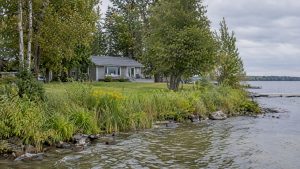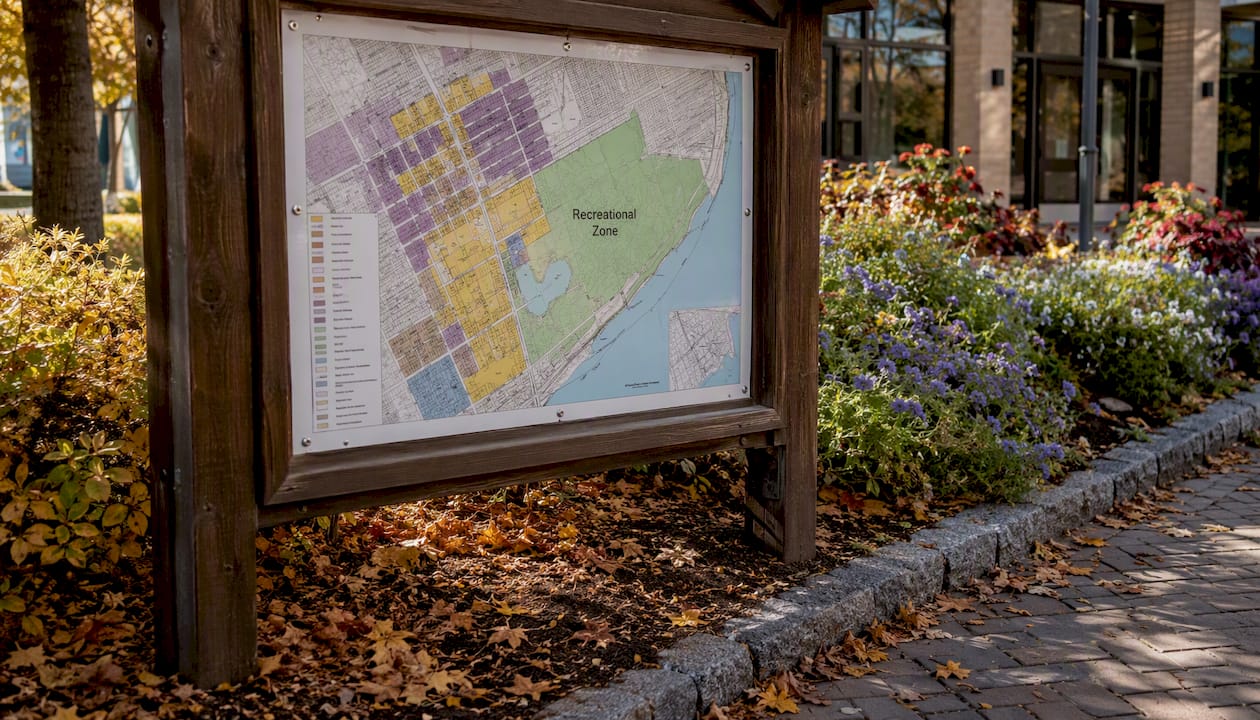
Recreational zoning normally limits a property to non-residential, seasonal, and designated recreational activities and forbids any use not explicitly listed in the permitted-uses table. That single rule has major consequences: no permanent year-round residence, no unrelated commercial or industrial operations, and strict technical controls on what you can build and how you can operate. Here is what that means in practice.
Core restrictions at a glance:
- Permitted uses only. Anything not listed in the bylaw’s permitted-uses table is prohibited by default.
- Seasonal occupancy. Many recreational lots allow only seasonal use; a municipality will refuse a building permit for a permanent dwelling on a seasonally zoned lot.
- Technical controls. Maximum building height, lot coverage, front/side/rear setbacks, parking ratios, minimum landscaped open space, and signage rules all apply.
- Operational limits. Noise restrictions, permitted hours of operation, and prohibitions on certain commercial entertainment or industrial activities are common.
Pro Tip: When you pull up a zoning bylaw, go straight to the permitted-uses table for the specific zone designation (look for “REC,” “CR,” or a numbered variation). If your intended use is not on that list, ask the municipal planner one question: “Is there a zone variation or overlay that would permit this, and what is the process to apply?”
What does recreational zoning mean, and who sets the rules?
Recreational zoning is a category within a municipal zoning bylaw, which is a legally enforceable document that determines how land, buildings, and structures may be used. As Ontario’s Citizens’ Guide to Land Use Planning explains, zoning bylaws are the day-to-day implementation of a municipality’s official plan. The official plan sets the long-term vision; the zoning bylaw translates that vision into specific rules for each parcel of land.
Municipalities create and enforce zoning bylaws through their planning departments and councils. In British Columbia, the Province of British Columbia’s guidance on zoning bylaws confirms that local governments commonly use bylaws to control the location of buildings, permitted building types, lot sizes, parking requirements, setbacks, and densities. The same framework applies across Canada, though the specific rules differ by province and municipality.
Three points matter most for buyers:
- Provincial instruments can override local bylaws — A Minister’s Zoning Order (MZO) in Ontario, for example, can supersede a municipal designation, though this is uncommon for individual lots.
What uses are typically permitted in recreational zones?
Recreational and commercial recreation (CR) zones share a common core of permitted uses, though the exact list varies by municipality and zone variation. Most bylaws allow:
- Parks, playgrounds, and conservation areas
- Community centres, arenas, and sports facilities
- Golf courses and driving ranges
- Outdoor activity facilities (trails, boat launches, picnic areas)
- Commercial recreation establishments (fitness centres, indoor climbing, batting cages)
- Private clubs and membership facilities
- Accessory structures and, in some bylaws, a caretaker’s dwelling
The Oxford County Recreational Zone (REC) bylaw provides a concrete example of how a permitted-uses table works: it lists specific activities and applies numerical regulations to each. Some bylaws distinguish between indoor and outdoor recreational uses, with different technical rules for each category.
Zone variations matter. A CR1 designation in one municipality might permit hotels and banquet halls, while a base CR zone in the same city excludes them. London, Ontario’s zoning bylaw section 38 illustrates this well, with CR zone variations that add or remove uses such as casinos, motels, and amusement parks.
Pro Tip: Never assume that because one recreational property in a neighbourhood has a certain use, yours can too. Zone variations within the same general area can differ significantly. Always look up the exact zone code on the municipal zoning map, then read that specific section of the bylaw.
Common technical and use restrictions in recreational zones
Beyond the permitted-uses list, recreational zoning applies a set of technical controls that govern what you can build and how you can operate. These are not suggestions; they are enforceable standards tied to numeric tables in the bylaw.
Typical technical controls include:
- Maximum building height — London’s CR zone, for instance, sets a maximum height of 16 metres for certain uses.
Operational restrictions layer on top of the physical ones. Noise bylaws, permitted hours of operation, and prohibitions on motorised racing or heavy commercial entertainment are common. Non-conforming uses, meaning uses that existed legally before a bylaw changed, are generally allowed to continue but cannot be expanded or intensified.
The Oxford County REC bylaw also applies minimum distance separation (MDS I) formulas for developments outside settlement areas, which can affect how close a recreational facility can be to agricultural operations.
Can you live full-time on recreationally zoned land?
This is the question I hear most often from buyers looking at waterfront and cottage properties, and the answer is usually no. Most recreational and seasonal zoning designations prohibit permanent year-round residential occupancy. The municipality will not issue a building permit for a permanent dwelling on a lot where the zoning does not permit it.
What most buyers don’t realise is that there are two separate gates to clear before a seasonal property can become a full-time home:
- The building code gate (structure) — Even if zoning permits permanent occupancy, the structure must meet the Ontario Building Code standards for a permanent dwelling, including insulation, mechanical systems, and structural requirements.
Zoning fails first, and it fails often. Before making an offer on a waterfront property near Toronto, confirm the zoning designation, check the permitted residential uses in the bylaw, verify municipal servicing (water, sewer, or well and septic), and ask about year-round road access. A property that looks like a year-round home may be legally restricted to seasonal use.
How waterfront and shoreland rules layer on top of zoning
Municipal zoning is not the only approval you need for a waterfront or shoreland property. In Ontario, provincial permit regimes add a second layer that can block an otherwise permitted activity.
Ontario’s Crown land and shore land work permit rules prohibit certain activities on public lands and shorelands without a provincial work permit. These include constructing a building on public land, dredging or filling shorelands, and constructing a trail or road on public land. Municipal zoning may permit a structure, but if the land is public land or a shoreland, the provincial permit is still required.
Ontario Regulation r26124 sets out the specific exemptions and circumstances where those exemptions do not apply, including archaeological sites, lands subject to a land-use plan, and areas with leased mining rights. These are not edge cases; they come up regularly on waterfront lots in Simcoe County and Muskoka.
Common overlay restrictions that compound recreational zoning include:
- Protected habitat and Species at Risk buffers
- Floodway and flood fringe setbacks (Conservation Authority jurisdiction)
- Minimum distance separation from sensitive land uses
- Public access requirements along shorelines
- Shoreline alteration restrictions under provincial policy
The practical implication: a buyer who clears municipal zoning approval may still face a provincial work permit requirement before breaking ground. Always check both layers.
How to confirm your property’s zoning and permitted uses
Verifying zoning before you make an offer is not optional. Here is the sequence I walk my clients through:
- Look up the municipal zoning map — Most Ontario municipalities publish interactive zoning maps online. Enter the property address and note the exact zone code (e.g., REC, CR1, OS2).
Pro Tip: When you call the planning department, ask specifically: “Are there any provincial overlays, Conservation Authority permits, or shoreland work permit requirements that apply to this property?” Municipal planners know their local overlays and will tell you if there is a second layer to navigate.
How to change a permitted use: rezoning, variances, and amendments
If your intended use is not permitted under the current zoning, you have formal options. None of them are fast or guaranteed, but understanding the process helps you set realistic expectations.
- Temporary use bylaw — Permits a use for a defined period (typically up to three years in Ontario) while a longer-term solution is pursued.
As Ontario’s Citizens’ Guide notes, variances are intended for unique circumstances, not routine bypassing of a zone’s land-use intent. A rezoning application that conflicts with the official plan faces a steep uphill climb. Application fees vary by municipality but can range from a few hundred to several thousand dollars, and professional planning and engineering fees add significantly to the total cost.
A Minister’s Zoning Order (MZO) can override local zoning, but this is a provincial instrument used for significant projects, not individual cottage conversions.
How recreational zones are defined across Canadian provinces
Recreational zoning definitions are not uniform across Canada. What one municipality permits, another explicitly excludes.
- Ontario (Oxford County REC zone). The Oxford County REC bylaw lists parks, conservation projects, golf courses, and similar uses, with numerical regulations for lot area, frontage, and setbacks. MDS I formulas apply outside settlement areas.
- Ontario (London CR zone). London’s CR zone permits commercial recreation uses with detailed technical rules. Zone variations (CR1, CR(1)) add uses like hotels, motels, or casinos, while the base zone excludes them.
- Ontario (Hamilton Township). The Hamilton Township zoning bylaw illustrates how municipalities separate active and passive recreational uses in definitions, which directly affects what structures and activities are permitted. A riding stable or go-cart track may be permitted in one bylaw and explicitly excluded in another.
- British Columbia. The Province of BC’s zoning bylaw guidance confirms that local governments set their own permitted uses and technical rules; there is no provincial template for recreational zones.
- Manitoba. The Municipal Planning Guide to Zoning Bylaws in Manitoba describes recreation intent zones as land used for public parks or recreation areas and as buffers between uses, instructing municipalities to define their own permitted uses and regulations.
Pro Tip: If you are comparing properties in different municipalities, do not assume the recreational zone in one town works the same way as in another. Pull both bylaws and compare the permitted-uses tables side by side before drawing conclusions.
Key takeaways
Recreational zoning restricts land to listed permitted uses only, commonly prohibits permanent year-round residency, and layers technical controls and provincial overlays that buyers must verify before purchasing or developing a property.
| Point | Details |
|---|---|
| Permitted uses only | Anything not listed in the bylaw’s permitted-uses table is prohibited by default. |
| Seasonal occupancy limits | Most recreational zones prohibit permanent year-round residency; municipalities typically refuse building permits for non-compliant dwellings. |
| Two gates to clear | Converting a seasonal lot requires both zoning approval (land gate) and building code compliance (build gate). |
| Provincial overlays apply | Ontario shoreland and Crown land work permits are required for certain waterfront activities, independent of municipal zoning. |
| Karinrotem’s local guidance | The Karinrotem team verifies zoning designations and overlays for buyers in Innisfil, Friday Harbour, and the greater Toronto area before offers are made. |
The trade-off most buyers underestimate
Recreational lots are genuinely appealing. The price point is often lower than a comparable residential property, the lifestyle is real, and in the right location the rental demand is strong. But the regulatory restrictions are not a technicality you can work around later; they are the defining feature of the asset.
What I see repeatedly is buyers who fall in love with a property and then try to retrofit their plans around the zoning, rather than confirming the zoning first and then deciding whether the property fits. A seasonal lot that cannot be converted to year-round use is not a stepping stone to a permanent cottage; it is a seasonal lot, and the resale market will price it accordingly.
The honest trade-off is this: recreational zoning often protects the character and environment that made the property attractive in the first place. The same rules that prevent your neighbour from building a warehouse also prevent you from building a year-round home. When the restrictions align with your actual plans, a recreational lot can be an excellent investment. When they don’t, no amount of enthusiasm changes the bylaw.
If you are in a borderline situation, involve a land-use planner and a real estate lawyer before you make an offer, not after. The cost of a pre-offer consultation is a fraction of the cost of owning a property you cannot use the way you intended.
The Karinrotem team can help you check zoning before you commit
Zoning surprises are among the most common and most costly mistakes buyers make on recreational and waterfront properties. The Karinrotem team works specifically in Innisfil, Friday Harbour, and the greater Toronto area, and zoning verification is a standard part of how we guide buyers through every offer. We pull the permitted-uses table, flag any provincial overlays, and connect you with the right planning or legal professionals when a situation needs deeper review.
If you are considering a waterfront or recreational property, reach out to the Karinrotem team before you make an offer. A quick zoning check at the start of your search can save you from a very expensive discovery at the end.
Useful sources to consult
These are the primary references for zoning bylaw text and permit rules in Canada:
- Zoning bylaws | Citizen’s guide to land use planning | ontario.ca
- Zoning by‑law section 38 — recreational (London)
- Crown land and shore land work permits | Ontario.ca
- The Municipal Planning Guide to Zoning Bylaws in Manitoba
- Hamilton Township zoning by‑law — recreational definitions and uses
FAQ
Can you live full-time on recreational property in Canada?
Usually no. Most recreational and seasonal zoning designations prohibit permanent year-round occupancy, and municipalities will not issue a building permit for a permanent dwelling on a seasonally zoned lot.
Can you build on recreational land in Ontario?
You can build structures that are permitted under the zone’s bylaw, but permanent residential dwellings are typically not permitted on recreationally zoned lots. Provincial work permits may also be required for any construction near shorelands or on public land.
What do recreational zoning restrictions affect in practice?
Recreational zoning restrictions affect what activities and structures are allowed on a property, how buildings can be sized and placed, operating hours, and whether the land can be used for residential, commercial, or industrial purposes.
Can you build a house on rural or recreationally zoned property?
Only if the zoning designation explicitly permits residential use. Rural zoning and recreational zoning are distinct categories, and each municipality’s bylaw defines what is permitted. Confirm the exact zone code and read the permitted-uses table before assuming residential construction is possible.
How does recreational zoning affect property taxes and insurance?
Seasonally or recreationally zoned properties are often assessed differently than residential properties, which can affect municipal tax rates. Insurance providers also treat seasonal-use properties differently from year-round homes, typically requiring specific seasonal or cottage policies. Confirm both with your insurer and municipality before purchasing.