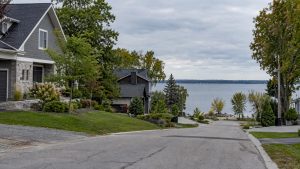
Choosing the right waterfront property near Toronto is genuinely exciting, but it can also feel overwhelming. The market offers an impressive range of options, from classic lakeside cottages on Lake Simcoe to polished resort-style condos in communities like Friday Harbour in Innisfil. Each type comes with its own lifestyle appeal, earning potential, and regulatory considerations. Whether you are searching for a family retreat, a passive income property, or a personal getaway with rental upside, understanding the real differences between property types is the most important step you can take before making an offer.
Key Takeaways
| Point | Details |
|---|---|
| Know local regulations | Waterfront rules change by municipality and shape rental or usage options. |
| Cottage vs. condo essentials | Cottages offer privacy and tradition, while condos bring amenities and lower-maintenance living. |
| Not all rentals are legal | Short-term rental legality is not guaranteed for every waterfront property. |
| Budget for hidden costs | Factor in taxes, insurance, fees, and shoreline maintenance before you buy. |
| Align with your goals | Choose a property type that fits your personal use and investment strategy. |
Key criteria for evaluating waterfront properties near Toronto
Before falling in love with a particular property, it pays to establish a clear set of evaluation criteria. Not all waterfront is equal, and the differences go well beyond the view.
Here are the most important factors to assess:
- Zoning and rental licensing: Short-term rental licensing rules vary significantly by municipality, even within the Lake Simcoe, Muskoka, and Georgian Bay corridor. A property that looks like a strong rental candidate may sit in a zone where short-term rentals are restricted or outright prohibited. Always verify the specific rules before purchasing. You can learn more about legalising short-term rentals in Ontario before you commit.
- Water access and lifestyle features: The presence of a private dock, boathouse, or sandy beach can meaningfully increase both lifestyle value and property price. These features also add maintenance obligations and permitting complexity.
- Rental income potential: Gross rental yields vary considerably between property types, locations, and seasons. A resort-style condo may attract consistent short-stay renters through a managed programme, while a traditional cottage may generate stronger per-night revenue but require more active management.
- Resale market strength: Newer resort developments tend to appeal to a different resale buyer pool than classic cottages. Understanding the liquidity of each type in your target area protects your investment long-term.
- Hidden ownership costs: Property taxes, insurance, seasonal maintenance, and for condos, monthly maintenance fees and reserve fund contributions, can add thousands of dollars annually to your carrying costs.
Pro Tip: Before visiting any property, request the local municipality’s current zoning by-law and short-term rental licensing framework. This single step can save you from purchasing a property that cannot legally generate rental income.
With a foundation of key decision points in mind, we can now look closely at the most popular waterfront property types near Toronto.
Cottages and cottage-style homes: traditional waterfront retreats
The classic waterfront cottage holds a special place in Ontario’s recreational property market. These are typically standalone bungalows or older seasonal homes situated on private shoreline, often with mature trees, gradual water access, and a sense of seclusion that modern developments simply cannot replicate.

Lake Simcoe waterfront cottages, including bungalows and cottage-style homes with private shoreline and docking access, are among the most sought-after property types in the GTA’s recreational corridor. Buyers in this space tend to be families looking for multigenerational use, long-term investors valuing land appreciation, or buyers seeking a primary retreat from city life.
Key features that define waterfront cottages include:
- Direct water frontage: Owned shoreline, as opposed to shared or deeded water access, is a premium feature that significantly affects price and usability.
- Accessory structures: Docks, boathouses, and bunkies are common selling points that raise both lifestyle value and ownership complexity, including engineering assessments, permitting, and seasonal maintenance.
- Privacy and flexibility: A standalone cottage gives you full control over the property, its appearance, its modifications, and how you use it personally.
“A traditional waterfront cottage is not just a property purchase. It is an investment in a lifestyle, a legacy, and in many cases, a multi-decade family asset.”
Pros of cottage ownership:
- Strong historical demand and land value appreciation in desirable areas
- Full personal use flexibility with no condo board restrictions
- Lifestyle amenities like water access, boating, and natural surroundings
- Potential for long-term rentals in areas where short-term rules are restrictive
Cons of cottage ownership:
- Higher maintenance burden, especially for older structures and marine infrastructure
- Municipal short-term rental rules may restrict income-generating use
- Engineering and permitting requirements for docks and shoreline structures add cost and complexity
- Riskier for investors who underestimate carrying costs or regulatory shifts
You can explore some of the waterfront amenities and features that buyers consistently prioritise when evaluating cottage-style properties.
Pro Tip: Before purchasing a cottage with a dock or boathouse, commission a marine structure assessment. Aging docks often require significant investment within the first few years of ownership, and some require full replacement.
Now that we have covered traditional options, let us examine how modern resort-style waterfront properties are shaping the rental and investment landscape.
Resort-style condos and developments: modern waterfront living with rental potential
Resort-style waterfront condos represent a different ownership model entirely. Communities like Friday Harbour in Innisfil offer turnkey units within master-planned developments that include marinas, restaurants, fitness facilities, event programming, and maintained common areas. For buyers who want waterfront living without the burden of property upkeep, this model is genuinely appealing.
Friday Harbour waterfront condo units are actively marketed for both personal use and rental income, including short-term vacation-rental scenarios. This dual-purpose positioning is a major draw for investors who want to offset ownership costs with rental revenue while still enjoying personal access during preferred seasons.
Who typically purchases resort condos?
- Investors seeking passive income supported by professional management
- Snowbirds who want a seasonal Ontario retreat without year-round maintenance
- Urban professionals drawn to curated lifestyle amenities within a managed community
- Buyers who want to enter the waterfront market at a lower price point than standalone cottages
| Feature | Resort-style condo | Traditional cottage |
|---|---|---|
| Purchase price entry | Moderate to high | Moderate to very high |
| Maintenance responsibility | Low (shared/managed) | High (owner-managed) |
| Short-term rental suitability | Often supported by community | Varies by municipal zoning |
| Lifestyle amenities | Extensive (marina, restaurant, trails) | Private and natural |
| Monthly fees | Yes, condo/maintenance fees apply | No, but seasonal costs accumulate |
| Privacy level | Moderate | High |
Pros of resort condo ownership:
- Turnkey lifestyle with managed amenities and common area upkeep
- Rental income potential in communities where short-term use is permitted
- Lower entry-level maintenance commitment
- Attractive to a broad pool of vacation renters
Cons of resort condo ownership:
- Monthly maintenance fees and reserve fund contributions reduce net returns
- Condo boards may impose rental restrictions or occupancy limits
- Less privacy than a standalone waterfront cottage
- Rental income profitability still depends on licensing legality and net operating costs
Exploring the resort condo community benefits and reviewing waterfront condo listings in Friday Harbour can give you a concrete sense of what this lifestyle actually looks like on a day-to-day basis.
Pro Tip: Study the condo’s status certificate carefully before purchasing. It will disclose the reserve fund balance, any pending special assessments, current maintenance fees, and any restrictions on rental use. This document is your most important due diligence tool in a condo purchase.
While both traditional and modern waterfront options exist, making an informed purchase often means directly comparing the key features, earning potential, and suitability for your goals.
Cottages vs. condos: how the main property types compare
Let us put the two major property types side by side in a direct comparison to help clarify which aligns with your situation.
| Factor | Waterfront cottage | Resort-style condo |
|---|---|---|
| Ownership complexity | High | Low to moderate |
| Rental income variability | High (depends on local STR rules) | Moderate (often supported, but condo-governed) |
| Personal use flexibility | Very high | Moderate (may have rental pool minimums) |
| Legal compliance burden | High (municipal zoning, dock permits) | Moderate (status certificate, condo rules) |
| Ongoing costs | Variable, often seasonal | Predictable monthly fees plus taxes |
| Resale demand | Strong in premium locations | Growing, especially in resort communities |
When it comes to short-term rental setup and income strategies, municipal rules can materially restrict what property types and uses are permitted. In areas like Muskoka, short-term rental licensing frameworks can include occupancy caps and summer booking restrictions that directly affect investor returns.
Here are the three core considerations to weigh when comparing options:
- Ownership complexity: Cottages demand more active management, from seasonal winterising to dock maintenance and municipal compliance. Condos shift much of that burden to a property management structure.
- Rental income variability: Both property types can generate rental income, but the legal pathway and reliability differ significantly by location and property governance.
- Personal use flexibility: If you plan to use the property frequently and spontaneously, a cottage with no rental pool obligations gives you more freedom. A condo in a managed rental programme may require advance scheduling of your own stays.
With the direct comparison in hand, you are nearly ready to consider which property type is most suitable in each common situation.
Which type fits your goals? Situational recommendations for buyers and investors
Choosing between a waterfront cottage and a resort-style condo is ultimately a question of lifestyle priorities, investment strategy, and risk tolerance. Here is how we typically guide clients through that decision.
Best for families seeking a personal retreat:
A traditional waterfront cottage with private shoreline, a dock, and space for multiple generations is hard to beat. Families benefit from privacy, outdoor recreation, and the ability to modify the property over time. The management burden is real, but for families committed to seasonal use, it is a worthwhile trade-off.
Best for short-term rental-focused investors:
Resort-style condos in communities with established rental frameworks, like Friday Harbour real estate, often provide a more legally straightforward path to short-term rental income. The amenities attract vacation renters, and the condo management structure can simplify operations significantly.
Best for hands-off investors:
If your priority is generating income with minimal personal involvement, a professionally managed resort condo is the stronger option. Some communities offer formal rental pool programmes where management handles bookings, cleaning, and guest services on your behalf.
Important regulatory note:
Municipal short-term rental rules can restrict or prohibit short-term rentals in residential-zoned areas. Wasaga Beach, for instance, has adopted licensing and compliance requirements that limit where short-term rentals can legally operate. This reality has meaningfully reduced the pool of legally compliant short-term rental properties across several popular Ontario communities, making due diligence on Ontario rental rules more critical than ever.
Armed with these situational recommendations, let us step back and consider what many buyers overlook entirely.
Beyond the brochure: what most buyers miss when choosing a waterfront property
Here is something I want to share directly from experience. Many buyers arrive focused almost entirely on the waterfront lifestyle itself, the dock, the sunsets, the investment return projections. What they underestimate is the ongoing effort required to protect those returns and that lifestyle.
Local short-term rental rules are shifting rapidly. Municipalities across Ontario have introduced or tightened licensing frameworks in recent years, and a property that was legally rentable when you toured it may face new restrictions by the time you close. Understanding local regulations is not a one-time task. It is ongoing homework that successful waterfront investors build into their ownership routine.
Marine infrastructure is another area where buyers consistently underestimate costs. A dock that looks perfectly functional during a spring showing may need full replacement within two seasons. Boathouses carry structural, permitting, and insurance complexities that add real dollars to your annual budget.
For resort condos, special assessments are a risk that many first-time condo buyers fail to anticipate. A reserve fund that looks adequate today may require a large one-time payment from all unit owners if a major capital repair is needed. Budget for this possibility from day one.
The most successful waterfront buyers I have worked with share a common trait: they do not rush. They study the municipality, review the financials, talk to neighbours, and partner with advisors who know the local market deeply. In a fast-moving market, patience and preparation are genuinely competitive advantages.
Explore top waterfront listings and expert guidance
If you are ready to take the next step toward a waterfront property near Toronto or Innisfil, we are here to help you move forward with confidence. Our team brings deep knowledge of Friday Harbour, Lake Simcoe, and the broader GTA waterfront corridor, giving you an informed advantage whether you are buying for lifestyle or investment. You can explore Friday Harbour properties to get a feel for what resort-style waterfront living looks like, or browse our full range of current listings to find options across different property types and price points. Reach out to our team directly and we will make sure you have the information, context, and guidance to make a sound decision for your goals.
Frequently asked questions
Are short-term rentals legal for all waterfront properties near Toronto?
No. Municipal zoning and licensing rules differ widely and can restrict or prohibit short-term rentals, especially in residential neighbourhoods without specific approvals. Always verify the rules for the exact property and municipality before purchasing.
What is the main difference between a waterfront cottage and a resort-style condo near Toronto?
Cottages are typically standalone homes with private shoreline and docking access, while resort-style condos offer shared amenities, a managed environment, and often a more straightforward path to short-term rental income.
Does resort condo ownership guarantee rental income?
No. While many owners rent their units, actual income depends on market demand, community rules, and legal compliance. Profitability hinges on licensing legality and net carrying costs, not just occupancy rates.
What are the common added costs with waterfront property ownership?
Budget for property taxes, insurance, dock and marine structure maintenance, and for condos, monthly maintenance fees and potential special assessments. Accessory structures like boathouses add engineering, permitting, and ongoing upkeep costs that many buyers underestimate.
Do local by-laws limit how waterfront properties are used seasonally?
Yes, in some areas. Muskoka’s short-term rental licensing framework includes occupancy limits and summer booking restrictions that affect how and when owners can rent their properties, making advance research essential.
Recommended
- Friday Harbour Real Estate | Luxury Waterfront Living
- How Do Friday Harbour Condo Prices Compare to Toronto? | See the Cost Difference – Karin Rotem Real Estate Agent
- The Benefits of Living in a Friday Harbour Condo Community – Karin Rotem Real Estate Agent
- Which Friday Harbour Condos Are Waterfront? | Top Listings with Lake Views – Karin Rotem Real Estate Agent