A pre-listing home inspection is a professional property assessment conducted before a home goes on the market, designed to uncover defects and maintenance issues before buyers see them. Think of it as the real estate equivalent of a medical exam: it gives you a clear picture of your home’s condition so you can act on your terms, not a buyer’s. Inspection-related issues are the leading cause of failed contracts, accounting for 15% of deal cancellations. That single statistic tells you everything about why sellers and agents in competitive markets like Toronto and Innisfil are making this a standard part of their listing preparation.
What is a pre-listing home inspection and what does it cover?
A pre-listing inspection follows the same process as a standard buyer’s inspection. A licensed home inspector conducts a thorough, visual assessment of the property’s major systems and structural elements. The goal is to identify defects, safety concerns, and deferred maintenance before a buyer’s inspector does.
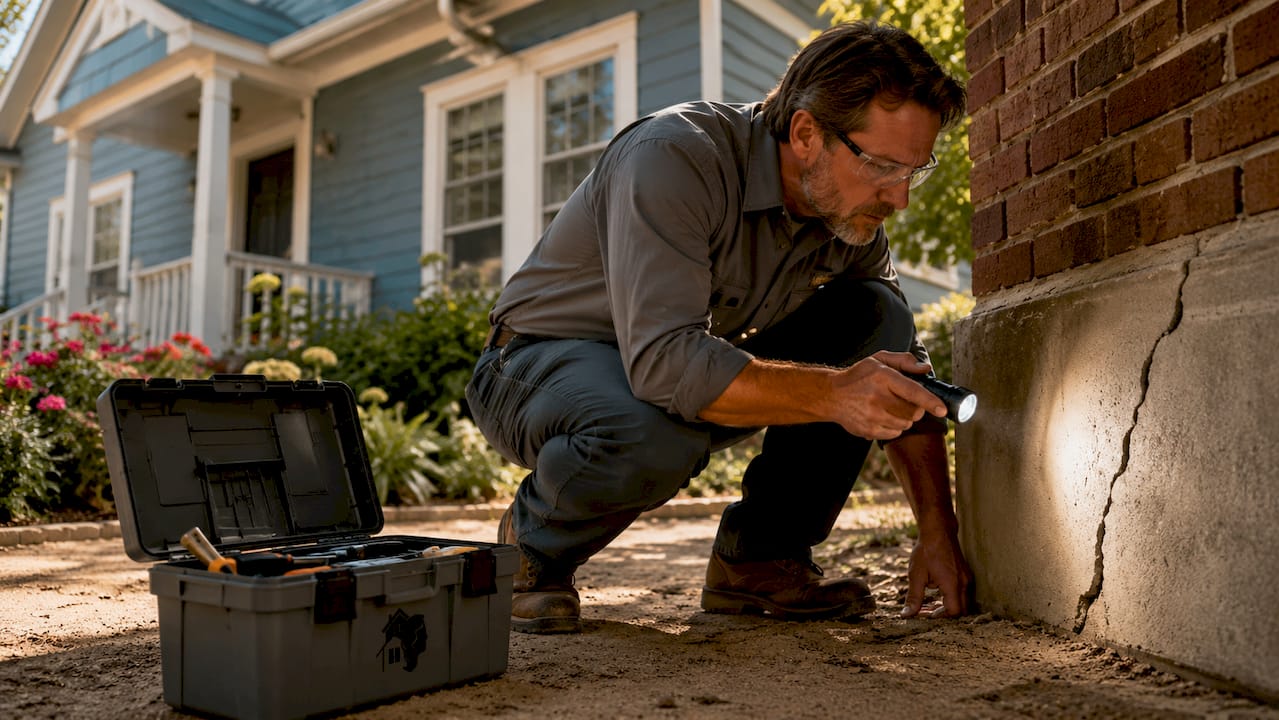
Approximately 25% of homes contain at least one critical defect. That means one in four sellers is sitting on a problem they may not know about until a buyer’s inspector finds it at the worst possible moment.
What the inspector examines
A standard pre-listing inspection covers:
- Roof and attic — shingles, flashing, ventilation, and signs of water infiltration
- Foundation and structure — cracks, settling, moisture intrusion, and framing integrity
- Electrical system — panel condition, wiring age, grounding, and safety hazards
- Plumbing — pipe condition, water pressure, drainage, and visible leaks
- HVAC systems — furnace, air conditioning, ductwork, and filters
- Windows and doors — sealing, operation, and signs of moisture damage
- Insulation and ventilation — energy efficiency and moisture control
- Interior surfaces — walls, ceilings, floors, and stairs for visible defects
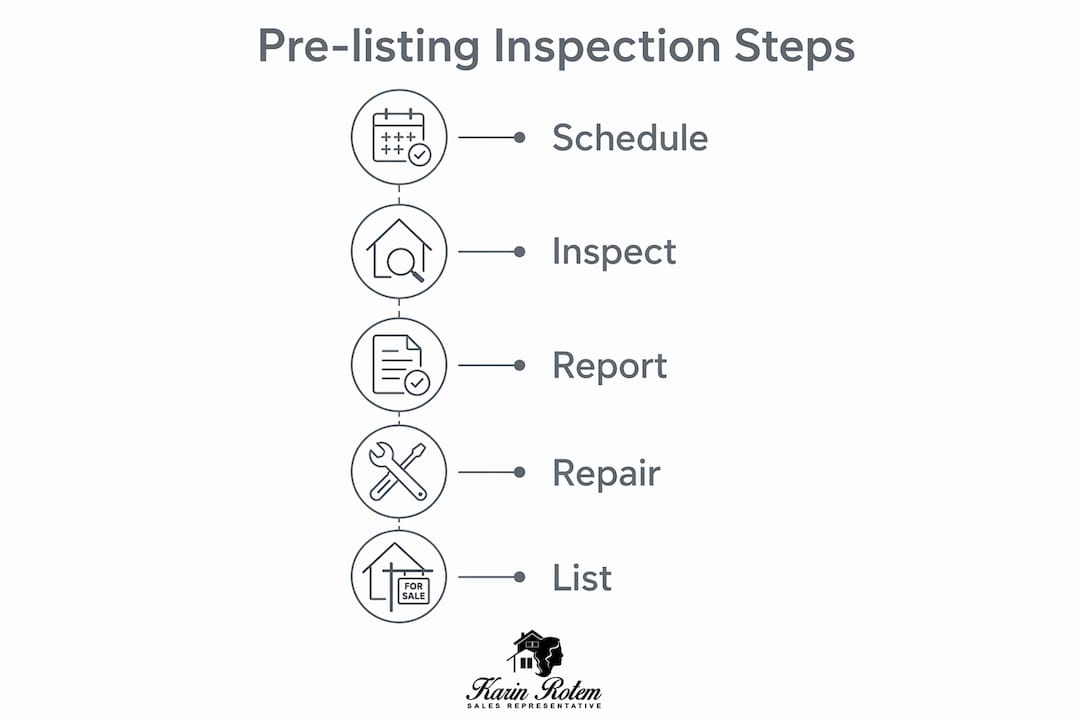
The inspection typically takes 2–4 hours to complete, depending on the size and age of the home. After the visit, the inspector delivers a written report with photos, descriptions of findings, and recommendations for repair or monitoring.
Pro Tip: Be present during the inspection if possible. Inspectors often explain findings verbally in plain language, and that context helps you prioritise repairs far more effectively than reading the report alone.
What are the benefits of a pre-listing home inspection?
The benefits of a pre-listing home inspection go well beyond simply knowing what needs fixing. They change the entire dynamic of your sale.
Fewer surprises, fewer cancelled deals
The most direct benefit is deal protection. Inspection-related issues are the leading cause of contract cancellations, and a pre-listing inspection removes the element of surprise that causes buyers to walk. When a buyer’s inspector finds a cracked heat exchanger or knob-and-tube wiring mid-transaction, panic sets in. When you have already disclosed it and priced accordingly, there is nothing left to panic about.
Stronger buyer confidence
Homes marketed with an inspection report are 22% more likely to close successfully than those without one. Buyers feel more confident making offers when they know what they are buying. That confidence reduces the likelihood of low-ball offers driven by fear of the unknown.
Key benefits at a glance
- Repair control: You choose the contractor and the timeline, rather than scrambling during escrow
- Pricing accuracy: Inspection findings inform your listing price strategy so you price with confidence, not guesswork
- Negotiation leverage: Disclosing known issues upfront reduces a buyer’s ability to use them as renegotiation tools after the fact
- Marketing advantage: “Pre-inspected” status signals transparency and professionalism to buyers and their agents
- Faster closing: Fewer surprises mean fewer delays, conditions, and back-and-forth negotiations
Pre-listing inspections build buyer confidence by fostering transparency and proactively addressing potential deal breakers. That transparency matters even more in financially stretched markets where buyers are cautious and conditions are common.
Common misconceptions about pre-listing inspections
Sellers often have questions and concerns about this process. A few persistent misconceptions can lead to poor decisions, so it helps to address them directly.
What sellers get wrong
- “It replaces the buyer’s inspection.” It does not. Most buyers will still conduct their own inspection, and that is their right. The pre-listing inspection complements the process by reducing unknowns, not eliminating the buyer’s due diligence.
- “I have to fix everything on the report.” You do not. Sellers should focus on fixing deal-breakers identified by the inspection rather than every minor defect. A dripping faucet is not the same as a failing foundation. Prioritise what will kill a deal.
- “It guarantees no renegotiations.” A pre-listing inspection reduces renegotiation friction significantly, but a buyer’s inspector may still flag items yours missed. The goal is to minimise surprises, not eliminate all possibility of negotiation.
- “Timing doesn’t matter.” Timing matters enormously. Early inspection provides a time buffer to obtain competitive repair quotes and avoid costly rush jobs. Booking an inspection two weeks before listing leaves you scrambling. Booking it two months out gives you options.
Pro Tip: Ask your inspector to flag items by severity: safety hazards, deal-breakers, and cosmetic issues. That triage makes your repair decisions much cleaner and keeps your budget focused where it counts.
How to use your pre-listing inspection report effectively
Getting the report is only the first step. What you do with it determines how much value it actually delivers.
Four steps to turn findings into sale-ready action
-
Triage the findings. Separate safety hazards and structural issues from cosmetic defects. Address the former before listing. Disclose the latter in writing. A thorough pre-listing report leaves little for the buyer’s inspector to find, which reduces inspection-contingency stress for everyone.
-
Get repair quotes early. Early inspection improves repair pricing and quality because you have time to compare contractors rather than accepting the first available quote under deadline pressure. A rushed HVAC repair during escrow costs significantly more than one scheduled six weeks in advance.
-
Align your pricing with the findings. Your inspection report is a pricing tool. If you choose not to repair a known issue, adjust your asking price to reflect it. Buyers who understand the trade-off are far less likely to renegotiate later. Karinrotem works with sellers to build a pricing strategy that accounts for inspection findings honestly and competitively.
-
Use the report as a marketing asset. Make the inspection report available to serious buyers before they submit an offer. This signals confidence, reduces conditional offers, and attracts buyers who are ready to move quickly.
Repair vs. disclose: a practical framework
| Finding type | Recommended action | Reason |
|---|---|---|
| Safety hazard (e.g., faulty wiring) | Repair before listing | Liability risk and deal-killer |
| Structural defect (e.g., foundation crack) | Repair or price-adjust and disclose | Major buyer concern |
| Mechanical issue (e.g., aging furnace) | Disclose and credit or replace | Negotiation clarity |
| Cosmetic defect (e.g., worn flooring) | Disclose only | Low buyer impact |
Key takeaways
A pre-listing home inspection is the most effective tool sellers have to reduce deal cancellations, control repair costs, and build buyer confidence before listing.
| Point | Details |
|---|---|
| Inspection-related cancellations | Failed contracts from inspection issues account for 15% of all deal cancellations. |
| Critical defects are common | Approximately 25% of homes contain at least one critical defect sellers may not know about. |
| Closing success improves | Homes with inspection reports close successfully at a 22% higher rate than those without. |
| Fix deal-breakers, disclose the rest | Sellers do not need to repair every finding. Focus repairs on safety hazards and structural issues. |
| Timing is everything | Booking an inspection two or more months before listing gives you time for competitive repair quotes. |
What I’ve learned from watching sellers skip this step
Sellers in the Toronto and Innisfil markets often ask me whether a pre-listing inspection is really worth the cost. My answer is always yes, and here is why.
I have watched deals collapse at the eleventh hour because a buyer’s inspector found a cracked heat exchanger or evidence of past water damage in a basement. The seller had no idea. The buyer panicked. The deal died. Every one of those situations was preventable.
What I tell my clients is this: a pre-listing inspection is not about perfection. It is about control. When you know what is in your home, you decide how to handle it. You choose the contractor, the timeline, and the disclosure strategy. When a buyer’s inspector finds it first, you lose that control entirely.
The cost of a pre-listing inspection typically runs $300–$500. That is a small number relative to the cost of a collapsed deal, a rushed repair, or a renegotiated sale price. In the Friday Harbour market, where properties carry significant value and buyers conduct thorough due diligence, transparency is not just a nice-to-have. It is a competitive advantage.
The sellers I work with who invest in a pre-listing inspection consistently report smoother transactions and fewer last-minute surprises. That outcome is not accidental. It is the direct result of knowing your home before a buyer does.
— Karin Rotem
Selling with confidence starts with preparation
Karinrotem works with sellers across Toronto, Innisfil, and Friday Harbour to prepare homes for market with clarity and confidence. That preparation includes connecting you with trusted local inspectors, helping you interpret findings, and building a negotiation strategy that reflects your home’s true condition. Our current property listings show what market-ready preparation looks like in practice. Whether you are listing a waterfront property or a family home, we guide you through every step so nothing catches you off guard. Reach out to Karinrotem to start your pre-listing preparation with a team that knows your market.
FAQ
What does a pre-listing home inspection cost?
A pre-listing home inspection typically costs $300–$500, depending on the size and age of the property. That cost is generally far lower than the financial impact of a collapsed deal or a rushed repair during escrow.
Does a pre-listing inspection replace the buyer’s inspection?
No. Most buyers will still conduct their own inspection as part of their due diligence. The pre-listing inspection complements the process by reducing unknowns and minimising negotiation friction.
What should sellers fix after a pre-listing inspection?
Sellers should prioritise safety hazards and structural defects, as these are the most likely deal-breakers. Cosmetic issues and minor maintenance items can be disclosed rather than repaired, with pricing adjusted accordingly.
How long does a pre-listing home inspection take?
A standard pre-listing inspection takes 2–4 hours, depending on the home’s size and complexity. The inspector delivers a written report with photos and repair recommendations after the visit.
When is the best time to book a pre-listing inspection?
Book the inspection at least two months before your planned listing date. That timeline gives you room to get competitive repair quotes, complete necessary work, and avoid costly last-minute fixes.