
Ontario sellers must disclose known latent defects and any facts that make a property dangerous, unfit for habitation, or that materially affect its use. That obligation comes from case law, not a single statute, which is why so many sellers are caught off guard by it. Patent defects — things a buyer can see on a normal walkthrough — generally fall under caveat emptor and are the buyer’s responsibility to spot. Hidden problems you know about are yours to disclose.
Three things to do right now:
- Tell your agent about any known issues and whether you plan to complete an OREA Seller Property Information Sheet (SPIS). That conversation shapes how your agent manages buyer inquiries from day one.
- Gather your documentation. Pull together permits, contractor invoices, warranties, insurance claims, and any prior inspection reports before you list.
- Consider a pre-listing inspection if you suspect complex or hidden issues. A licensed inspector’s report shifts the burden of proving property condition to a professional rather than leaving it on your verbal representations.
The 2026 Ontario Superior Court decision in Austin v. MacFarlane (2026 ONSC 463) is a useful reminder of what’s at stake: the court found liability for negligent misrepresentation where defects were latent, not discoverable through a standard inspection, and the seller knew or ought to have known about them. Getting your disclosure right before listing is far less costly than defending a claim after closing.
What do Ontario sellers actually have to disclose?
The seller disclosure requirements Ontario checklist covers more ground than most sellers expect. The categories below reflect what courts and RECO Bulletin 7.4 treat as facts a seller has a legal obligation to address.
| Category | What to disclose | Why it matters |
|---|---|---|
| Structure and major systems | Foundation cracks, roof leaks, chronic drainage failures, extensive mould or rot, HVAC/electrical/plumbing failures | Hidden structural problems are the most litigated latent defect category in Ontario |
| Water, moisture and basement | History of flooding, sump pump installation, French drain work, basement seepage | Moisture history directly affects habitability and resale value |
| Infestations and life-safety hazards | Active or past pest infestations, UFFI or asbestos, knob-and-tube wiring, concealed fuel tanks | These affect safety and can void insurance coverage |
| Renovations, permits and code compliance | Unpermitted additions, non-compliant wiring, missing building permits | Buyers inherit permit problems; undisclosed work can trigger municipal orders |
| Environmental and zoning matters | Underground storage tanks, contamination history, easements, heritage designations, by-law restrictions | Affects permitted use and future development rights |
| Condo-specific items | Ongoing litigation, special assessments, declared structural problems, reserve fund shortfalls | Condo buyers rely on status certificates, but seller knowledge supplements those |
| Property use and occupancy | Illegal suites, short-term rental status, existing tenancy or occupancy agreements | Tenancy rights survive a sale; illegal suites create municipal and insurance exposure |
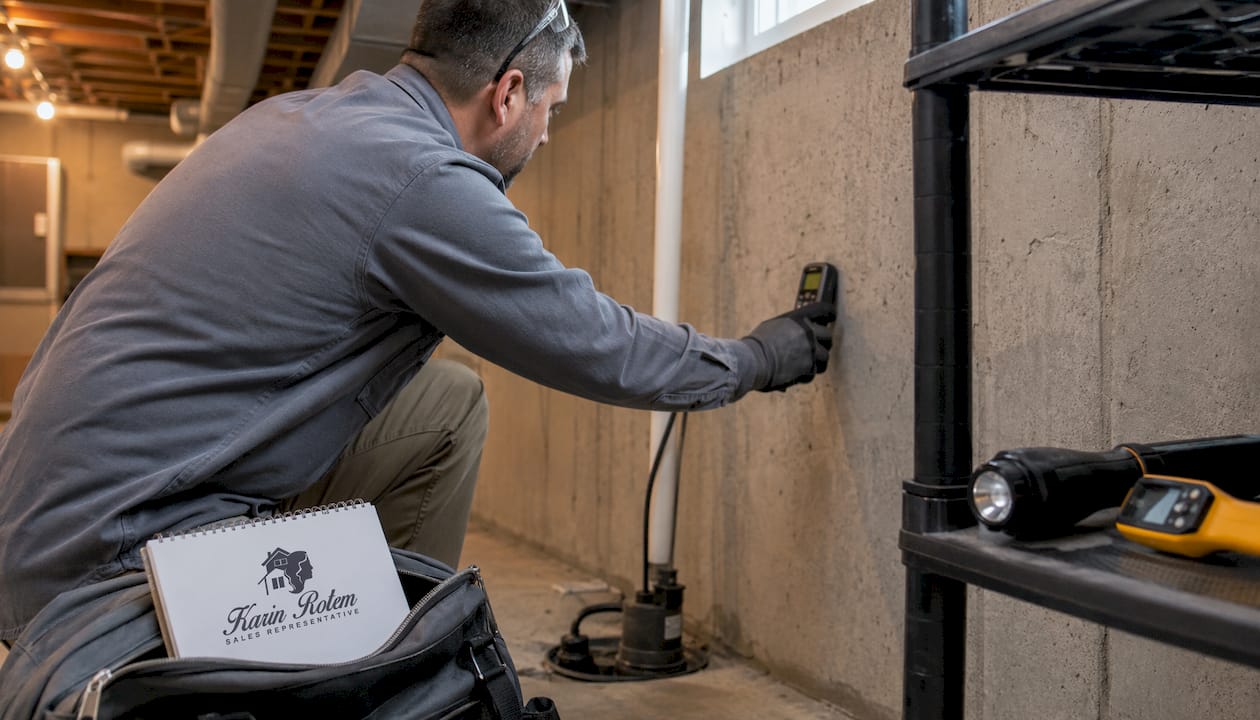
A word on water and moisture: this is the category sellers most often underestimate. If you installed a sump pump five years ago because the basement was wet, that history needs to be disclosed even if the basement has been dry since. The pump’s existence is itself a signal of a past problem.
Infestations follow the same logic. A treated termite infestation from three years ago is still a known latent defect. Buyers can’t see the prior damage without invasive testing, and courts have found sellers liable for staying silent on treated-but-disclosed pest history.
Permits and renovations are a common blind spot for sellers who bought a property that already had an addition or finished basement. If you don’t have a permit for work done before your ownership, say so. Claiming you don’t know is defensible only if you genuinely checked and found nothing.
Pro Tip: When you genuinely don’t know the answer to a disclosure question, document how you checked: save contractor emails, pull the municipal permit history online, and keep any inspection reports. “I checked and found no record” is a far stronger position than leaving a question blank or guessing.
Patent versus latent defects: what’s the difference and why does it matter?
The distinction between patent and latent defects is the legal foundation of Ontario’s disclosure framework. Getting it wrong is one of the most common home seller mistakes that leads to post-closing disputes.
| Feature | Patent defect | Latent defect |
|---|---|---|
| Discoverability | Visible or discoverable by ordinary inspection | Hidden; not discoverable without invasive testing |
| Classic example | Cracked driveway, missing roof shingles, peeling paint | Structural rot behind finished drywall, buried fuel tank, concealed mould in wall cavities |
| Who bears the risk? | Buyer (caveat emptor applies) | Seller, if the seller knew or was willfully blind |
| Disclosure duty | Generally none, unless actively concealed | Yes, if the seller has knowledge and the defect affects safety, habitability, or material use |
| Home inspection impact | Inspection typically catches patent defects | Inspection may not find latent defects; does not protect a seller who knew |
How the legal test works in practice. Courts look at four things: whether the seller had actual knowledge of the defect, whether the seller was willfully blind (deliberately avoiding finding out), whether the defect makes the property dangerous or unfit for habitation, and whether it materially affects the property’s use or value. Willful blindness is treated the same as knowledge. If you suspected a problem and chose not to investigate, a court may find you knew.
The Austin v. MacFarlane (2026 ONSC 463) decision illustrates this precisely. The court found liability for negligent misrepresentation even though the buyer had commissioned an inspection. Because the defects were latent and the seller knew of them, the inspection didn’t shield the seller from the claim. That outcome surprises sellers who assume a buyer’s inspection closes the file.
When to get a specialist report. If you have any doubt about whether a known issue is latent or patent, a structural engineer’s report or an environmental consultant’s assessment removes the uncertainty. It also gives you neutral, professional language to use in your disclosure rather than your own characterisation of the problem.
The SPIS and your agent’s disclosure duties under RECO
The OREA Seller Property Information Sheet (SPIS) is a voluntary questionnaire that goes well beyond what Ontario law requires sellers to disclose. Completing it can speed up offers by giving buyers more information upfront. It can also expand your legal exposure significantly.

What the SPIS is. The SPIS is a standardised form drafted by the Ontario Real Estate Association. It covers defects, renovations, and other property details based on the seller’s knowledge. Sellers are not required by law to complete it. However, once you complete one, the rules change: your agent must disclose the existence of that statement to every interested buyer and provide a copy on request.
The key trade-offs:
- Completing an SPIS creates a legal relationship between you and the buyer. Courts treat SPIS representations seriously because they generate reasonable buyer reliance, even with the disclaimer at the top of the form.
- An incorrectly completed SPIS can create unintended exposure. Lawyers commonly advise sellers to seek legal guidance before filling one in when past repairs, insurance claims, or complex defect history is involved.
- A pre-listing inspection report is often a safer way to give buyers confidence. It shifts the burden of proving property condition to a licensed professional rather than to your own written statements.
- If a buyer makes their offer conditional on receiving an SPIS, you face a practical choice: complete the form or lose that buyer.
The “as is” question. Marking items “as is” on an SPIS does not eliminate liability for known latent defects. Courts have found that buyers still rely on the form’s representations, and an “as is” notation doesn’t override a seller’s duty to disclose facts that affect safety or habitability.
Your agent’s obligations under RECO Bulletin 7.4. If an information statement is intended for buyers, RECO requires your agent to tell every interested buyer it exists and to use best efforts to obtain written buyer acknowledgements when a copy is provided. Agents must also clarify with you whether the statement is for internal use only or intended to be shared with buyers. That conversation needs to happen before you list.
Sample neutral phrasing for SPIS items where you’re uncertain:
- “Seller has no personal knowledge of flooding in the basement during their period of ownership. A sump pump was installed by a previous owner; seller has no records of the original installation.”
- “Seller is not aware of any unpermitted renovations completed during their ownership. Seller has not verified permit history for work completed prior to their purchase.”
Pro Tip: Before your agent shares any information statement with buyers, confirm in writing how it will be used and documented. Ask your agent: “Will you be tracking buyer acknowledgements for every copy shared?” That paper trail protects you if a dispute arises later.
What can happen if you don’t disclose?
Non-disclosure in an Ontario real estate transaction carries real legal and financial consequences. The risks don’t disappear at closing.
Primary legal remedies buyers can pursue:
- Rescission: The court unwinds the sale entirely, returning the property to the seller and the purchase price to the buyer. This is the most serious outcome and is typically reserved for fraud or fundamental misrepresentation.
- Monetary damages: The buyer keeps the property but recovers the cost of remediation, diminution in value, or other losses caused by the undisclosed defect.
- Negligent misrepresentation: The seller made a false statement (or omission) without reasonable grounds for believing it was true, and the buyer relied on it to their detriment. This is the most common claim in Ontario latent defect cases.
- Fraudulent misrepresentation: The seller knew the statement was false or was reckless about its truth. Courts treat this more seriously and damages can be higher.
How courts assess liability. The analysis centres on what the seller knew, whether the seller was willfully blind, whether the buyer actually relied on the seller’s representations, and whether the defect was latent. A buyer who had their own inspection is not automatically barred from claiming: if the defect was genuinely hidden and the seller knew, the inspection doesn’t break the chain of reliance.
Timing and survival of claims. Representations made in an SPIS or in a seller’s disclosure memo can survive closing. Ontario’s basic limitation period is two years from the date the buyer discovered or ought to have discovered the defect. For latent defects concealed by a seller, that clock may not start until the buyer finds the problem, which can be years after closing.
Practical consequences beyond court. Even without litigation, non-disclosure can derail a sale at the worst possible moment: a buyer who discovers an undisclosed issue during their inspection period will typically demand a price reduction, a repair credit, or walk away entirely. Delayed closings, renegotiated prices, and salvage costs are far more common outcomes than full court proceedings, but they are costly and stressful.
When you’re uncertain about your legal exposure, consult a real estate lawyer before signing or sharing any disclosure documents. One conversation before listing is worth considerably more than defending a claim after closing.
Step-by-step checklist: from pre-listing to closing
A clear sequence reduces both risk and stress. Here’s what I walk my clients through at each stage.
-
Before you list: gather your evidence file. Pull together every permit, contractor invoice, warranty card, insurance claim, and prior inspection report related to the property. If you’ve had work done without a permit, find out now rather than at offer time. Commission a pre-listing inspection if you suspect hidden issues — a professional report gives you neutral language and shifts the burden of accuracy to a licensed third party.
-
Decide on the SPIS before listing, not during offers. Have the conversation with your agent and, if your situation is complex, with a real estate lawyer. If you decide to complete one, do it carefully and accurately. If you decide not to, be prepared for buyers who may ask for one as a condition of their offer.
-
Prepare a concise disclosure memo. Even if you don’t complete a full SPIS, a brief written summary of known issues, past repairs, and permit status gives buyers clear information and creates a paper trail for you. Upload supporting documents (permits, invoices, inspection reports) to a secure shared folder that your agent can provide to serious buyers.
-
When offers arrive: disclose immediately. If a known latent defect becomes relevant during offer negotiations, disclose it in writing before the Agreement of Purchase and Sale is signed. Don’t wait to see if the buyer’s inspection catches it.
-
Manage buyer acknowledgements. When your agent shares an information statement with a buyer, RECO requires best efforts to obtain written acknowledgement. Confirm with your agent that this is happening for every buyer who receives a copy.
-
Before closing: review your Agreement of Purchase and Sale. Check what representations and warranties survive closing. Keep your evidence file intact and dated. If anything has changed about the property’s condition between the offer date and closing, disclose it.
Sample neutral disclosure phrases you can adapt:
- Past flooding: “The property experienced water infiltration in the basement in [year]. Remediation work was completed by [contractor name] in [year]; invoice available. No recurrence has been observed since.”
- Renovation without permit: “A basement finishing project was completed prior to the seller’s ownership. Seller has no record of a building permit for this work and has not verified permit history with the municipality.”
- Unknown: “Seller has no personal knowledge of [issue] during their period of ownership and has not conducted invasive testing to verify.”
Pro Tip: What I tell my clients: transparency presented with documentation is almost always better than silence. A buyer who finds a problem you disclosed, with receipts and a repair history, is far less likely to pursue a claim than one who discovers you knew and said nothing.
Key takeaways
Ontario sellers must disclose known latent defects and life-safety hazards; documentation and a pre-listing inspection are your strongest tools for managing that obligation.
| Point | Details |
|---|---|
| Disclose latent defects you know about | Patent defects are generally buyer responsibility; hidden defects you know of must be disclosed, especially those affecting safety or habitability. |
| The SPIS is voluntary but carries real risk | Completing an SPIS expands your legal exposure; decide after consulting your agent and, for complex situations, a real estate lawyer. |
| Documentation is your best defence | Dated receipts, permits, contractor emails, and inspection reports create a defensible audit trail that reduces post-closing dispute risk. |
| A pre-listing inspection shifts the burden | A licensed inspector’s report provides neutral, professional language for disclosures and reduces reliance on your own representations. |
| Karinrotem guides sellers through every step | Karin Rotem’s team helps sellers prepare disclosure documentation, manage SPIS decisions, and navigate buyer acknowledgements in Toronto and Innisfil. |
A local agent’s perspective on disclosure in Toronto and Friday Harbour
What I tell my clients, consistently, is this: the disclosure conversation is not the scary part of selling. The scary part is discovering after closing that you stayed quiet about something you knew.
In Toronto, the properties I see most often generate disclosure questions around older mechanical systems, basement finishing done without permits, and knob-and-tube wiring that was partially updated but never fully replaced. Sellers sometimes assume that because the work was done years ago, it’s no longer their problem. Courts don’t see it that way. If you knew, the clock on your obligation doesn’t expire just because time has passed.
At Friday Harbour and along the Innisfil waterfront, the issues are different in character. Seasonal freeze-thaw cycles put real stress on foundations, shoreline structures, and dock connections. Older cottage renovations, particularly those done before the community’s current building standards were established, often lack permits and sometimes lack proper structural support. I’ve seen sellers genuinely surprised to learn that a deck addition or a boathouse modification they thought was routine actually falls into the category of unpermitted work that needs to be disclosed.
What we do in those situations is document everything we can find: the contractor who did the work, any photos from the time, the current condition, and a structural assessment if the work is load-bearing. That package gives buyers real information and gives sellers a defensible position. A buyer who receives a complete picture, including the imperfect parts, is a buyer who closes with confidence rather than one who comes back with a lawyer.
The negotiation angle matters too. A pre-listing inspection report, shared proactively, tends to keep buyers at the table. It signals that you’re not hiding anything, and it gives the buyer’s agent something concrete to work with rather than a list of unknowns. In competitive markets, that transparency can actually strengthen your position rather than weaken it.
Selling with confidence: how Karin Rotem’s team supports your disclosure process
Disclosure preparation is one of the most practical services Karin Rotem’s team provides to sellers in Toronto, Innisfil, and the Friday Harbour community. Before a property lists, the team walks sellers through the full property disclosure requirements for Ontario, helps identify which issues warrant specialist reports, and assists in preparing a clear, documented disclosure memo that buyers and their agents can rely on.
For waterfront and lifestyle properties, where seasonal conditions and older renovations create specific latent-defect considerations, that local knowledge makes a real difference. The team coordinates pre-listing inspections, manages SPIS decisions alongside legal counsel when needed, and tracks buyer acknowledgements so sellers have a complete paper trail from listing to closing.
If you’re preparing to sell and want a confidential conversation about your disclosure obligations, connect with Karin Rotem’s team or explore current listings to see the standard of preparation the team brings to every transaction.
Sources and further reading
The sources below are the primary references sellers and their agents should consult directly. Bring copies of relevant documents to your lawyer or agent appointment.
- RECO Bulletin 7.4: Facts a seller has a legal obligation to disclose — the primary RECO guidance on seller disclosure duties and how agent obligations mirror them.
- RECO: Property information statements — RECO’s consumer guidance on when and how information statements must be disclosed to buyers.
- RECO Bulletin 7.3: Material facts — companion bulletin on how agents determine and disclose material facts to clients.
- SPIS and real estate disclosures in Ontario — Larson Lawyers — legal commentary on SPIS liability and when to seek counsel before completing the form.
- Latent defects vs patent defects (Ontario) — Cordingley — plain-language explanation of the patent/latent distinction and the Austin v. MacFarlane (2026 ONSC 463) findings.
- What is a Seller Property Information Sheet (SPIS) in Ontario? — RealBlog — practical overview of SPIS trade-offs and the case for pre-listing inspections.
What to bring to your lawyer or agent appointment:
| Document | Why it matters |
|---|---|
| Building permits for any renovations | Confirms work was done to code; absence flags disclosure risk |
| Contractor invoices and warranties | Establishes repair history and dates; supports neutral disclosure language |
| Prior home inspection reports | Shows what was known at purchase; relevant to latent defect timeline |
| Insurance claims related to the property | Water, fire, or structural claims are material facts buyers rely on |
| Any SPIS completed for a prior sale | Courts may treat prior representations as relevant to current seller knowledge |
This article is general information about Ontario real estate disclosure obligations, not legal advice. Confirm your specific obligations with a qualified real estate lawyer or your RECO-registered agent before signing or sharing any disclosure documents.
FAQ
What do you have to disclose when selling a house in Ontario?
Ontario sellers must disclose known latent defects — hidden problems not discoverable by ordinary inspection — especially those affecting safety, habitability, or the property’s material use. Patent defects visible on a normal walkthrough are generally the buyer’s responsibility under caveat emptor.
Is completing an SPIS required when selling in Ontario?
The OREA Seller Property Information Sheet is voluntary, but completing one expands your legal exposure because courts treat its representations as creating reasonable buyer reliance. Sellers should decide whether to complete an SPIS after consulting their agent and, for complex situations, a real estate lawyer.
What are the most important documents in an Ontario property sale?
The Agreement of Purchase and Sale, any completed Seller Property Information Sheet, and the title transfer documents are the three most consequential records. Sellers should also maintain a supporting evidence file of permits, contractor invoices, and inspection reports, since those records directly affect post-closing dispute risk.
What is the most common complaint filed against realtors in Ontario?
RECO receives a significant volume of complaints related to disclosure failures, including agents who did not adequately advise sellers on their obligations or failed to disclose the existence of an information statement to interested buyers as required by RECO Bulletin 7.4.
Can a buyer sue after closing for an undisclosed defect in Ontario?
Yes. Ontario’s basic limitation period is two years from the date the buyer discovered or ought to have discovered the defect. For latent defects a seller concealed or was willfully blind to, that clock may not start until the buyer finds the problem, which can be well after closing.