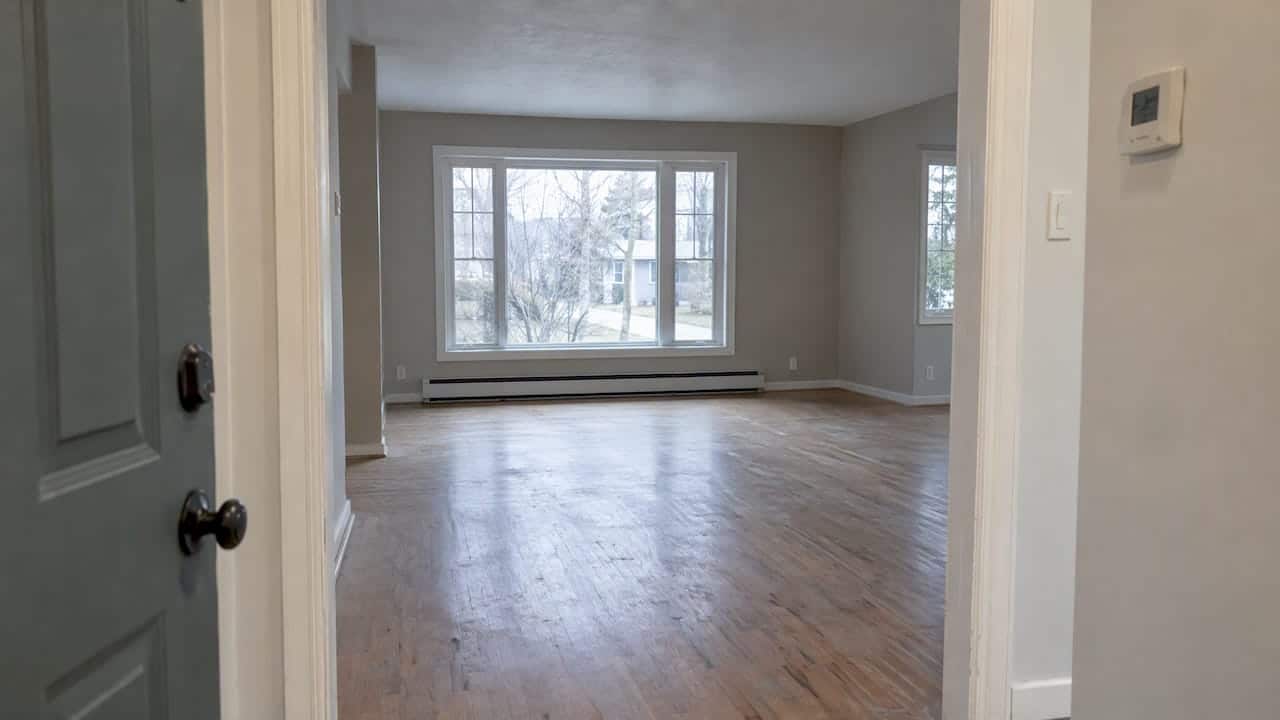
If your Ontario home will sit empty, tell your insurer before the 30-day mark. Most standard home policies are written for a house someone lives in. Once it is empty for long enough, coverage can shrink or stop unless you add a vacancy endorsement (often called a vacancy permit) or move to a policy built for empty properties. The right fix depends on whether your home is vacant or only unoccupied. Those two words mean different things to an insurer, and the difference decides what you buy.
I’m Karin Rotem. I work with sellers, buyers and investors in Toronto, Innisfil and Friday Harbour. Empty homes come up in my work all the time: a Toronto condo between tenants, a house closed before the move, an estate waiting to be sold. Here is what I tell my clients.
TL;DR
- Vacant and unoccupied are not the same. Vacant generally means nobody lives there and nothing says they will return. Unoccupied usually means you still live there but are away.
- The Insurance Bureau of Canada says to notify your insurance representative if a home will be unoccupied for more than 30 days.
- Ask about a vacancy endorsement or a dedicated vacant property policy. Both may limit which perils are covered.
- Expect conditions: heat or a drained plumbing system, regular documented inspections, and possibly a higher premium than a lived-in home.
- Call your broker before the home goes empty, not after a loss.
Vacant vs. unoccupied: why the word matters
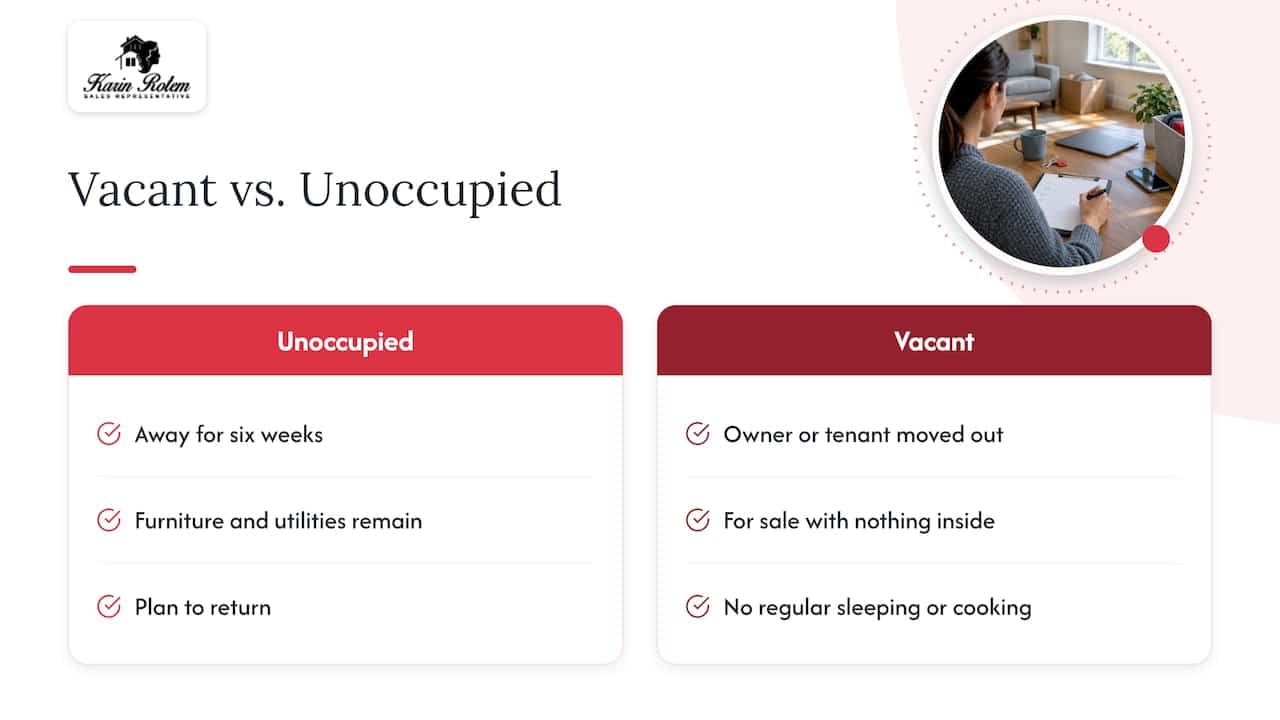
What most owners don’t realize is that “empty” is not one status. Insurers draw a line between two situations.
Unoccupied is the everyday absence. You are travelling for six weeks, wintering somewhere warm, or spending months at a work posting. The furniture is there, utilities run and you plan to come back.
Vacant is closer to abandoned or between lives: the owner has moved out, the tenant has left, the house is for sale with nothing in it, or an estate is being settled. Nobody sleeps or cooks there as their regular home.
Courts have looked at how strictly this is read. In an Ontario-linked discussion of a rental-property policy, furniture and frequent visits did not make a property occupied. Someone would have had to be living there as their habitual home. So a staged house with a sofa and a visit every Sunday may still be “vacant” in the policy’s eyes.
The exact wording is in your own policy and the definitions can vary by insurer. Read the definitions page, not the marketing summary.
Common situations and where they usually land
| Situation | Usually treated as | What to do |
|---|---|---|
| Two-week vacation | Occupied | Nothing special, but check your policy |
| Winter away, planning to return, 30+ days | Unoccupied | Notify your insurer, ask about conditions |
| Home bought, closing done, you haven’t moved in yet | Vacant until you move in | Tell your broker before possession |
| Rental unit between tenants beyond 30 days | Vacant | Ask about a vacancy permit |
| House emptied for sale | Vacant | Confirm coverage with your broker before listing |
| Estate home after an owner passes | Vacant | Contact the insurer promptly |
| Seasonal cottage you use in summer | Often rated as a seasonal property | Confirm how your policy classifies it |
These are typical patterns, not guarantees. Your insurer’s wording rules.
The 30-day notice
The number you will hear most is 30. The IBC says most homeowner, tenant and condominium policies continue during a vacation, but if a home will be unoccupied for more than 30 days you must notify your insurance representative. The IBC also advises that if you plan to be away for an extended period, you should check your policy and tell your agent or broker.
Two practical points:
- The clock can start before you think. A renovation, a delayed move or a tenant leaving mid-month all count. Note the date the last person left.
- Notifying is not the same as being covered. The insurer may add a condition, charge more, restrict perils or decline to continue. Get the answer in writing.
The courts have also dealt with what happens when notice is missed. In Royal Bank of Canada v. State Farm, the Supreme Court of Canada found a mortgagee’s coverage remained in force despite the borrower’s failure to notify the insurer of vacancy, because of the specific mortgage clause. That protected the lender, not the homeowner. Do not read it as a reason to skip the call.
Your options when a home will be empty
There are usually three routes. Which one fits depends on how long and why.
Option 1: Stay on your current policy with notice
For a normal absence by an owner who is returning, your existing insurer may simply note the file or attach conditions, such as someone checking the home at set intervals. This is typically the cheapest path.
Option 2: A vacancy permit or endorsement
A vacancy permit is an add-on to your home policy that lets coverage continue on an empty property, usually for a defined period. It is commonly needed when a rental sits empty or a house is waiting to sell. Insurers can attach limits to it. Perils such as vandalism, glass breakage or water damage may be excluded or restricted, so ask exactly what stays covered. Buy it before the vacancy threshold passes, not after.
Option 3: A dedicated vacant property policy
If your insurer will not extend your policy, a broker can look at specialty markets. Canadian Underwriter reported that vacant-property coverage commonly has limited availability. Named perils such as fire, wind and hail may be available, while broader coverage depends on the owner’s loss-prevention efforts. Think of it as a short-term bridge that protects the building, not as a full replacement for the policy you had.
If you own several properties or rent units out, our guide to landlord insurance in Ontario covers what an investor’s policy should include before a unit ever goes empty.
What vacant coverage often covers and excludes
The fine print is where owners get hurt. Here is how to read it.
- Fire: Usually the core peril that remains.
- Wind and hail: Often available on named-peril policies.
- Water damage and frozen pipes: The big one. The IBC says standard home insurance covers resulting damage from frozen pipes only if the pipes are in the heated part of the home and you took reasonable steps to keep it heated. An unheated vacant house in January is exactly where that condition fails.
- Vandalism and theft: Often restricted or excluded on vacant properties.
- Liability: Ask separately. You can still be responsible if someone is hurt on an empty property, such as an icy walkway.
A policy can look fine until a claim, so ask your broker three questions: Which perils are covered while vacant? What conditions must I meet? What happens to my claim if I miss one?
What insurers usually require you to do
This is the part where the practical work comes in. Insurers want proof that a competent person is looking after the house.
One Canadian insurance program’s vacant location checklist is a useful picture of the standard. It calls for heat kept above 10°C throughout the heating season, or the plumbing shut off and drained and the hot-water heater turned off. It also calls for checks every 72 hours, or every 24 hours if water stays on for heating-system needs, recorded in a written log. Your insurer’s terms will differ, but expect something in this family.
The IBC gives the same direction: shut off the water and drain the lines in a vacant home to help prevent frozen pipes, and note that most policies specify how often a competent person must check the home.
A simple vacant-home routine
- Decide the water plan. Either keep heat on and steady, or shut off the main, drain lines and fixtures, and turn off the water heater. Don’t half-do either.
- Set an inspection schedule that matches your policy, whether weekly or more often, and name who does it.
- Keep a log. Date, time, who, what they saw, with photos. If you ever claim, this is your evidence.
- Make the home look lived in. Clear mail and flyers, keep snow shovelled, use timers on lights.
- Maintain the outside. Overflowing gutters in a house nobody visits can send water into the walls for weeks. Gutter cleaning twice a year, more with heavy tree cover, is a sensible baseline for an empty property, and the visit can double as a documented check.
- Remove valuables and anything that attracts attention, like packages at the door.
The problem with an empty house is time. Canadian Underwriter notes that issues such as burst pipes may go unnoticed for weeks or months when nobody checks regularly. That is why insurers care about the log as much as the lock.
What it costs
I can’t give you one number, and anyone who does without seeing your property is guessing. Pricing depends on the home’s age and condition, the heating and plumbing systems, how long it will be empty, the reason, location, and the protective steps you take. The same Canadian Underwriter piece quotes an Ontario broker saying pricing can sometimes be higher than for a primary home.
What moves the price in your favour:
- A clear end date, such as a listing with a target closing.
- Updated plumbing, roof, wiring and heating.
- A documented inspection schedule.
- A monitored alarm and water-leak sensors, if your insurer recognizes them.
- A home that is move-in ready rather than mid-renovation.
Get quotes through a broker who can approach more than one market, and compare conditions and exclusions, not only the premium. A cheap policy that excludes water damage on a house with old pipes is not cheap.
Perspective: what we see with empty homes
We see vacant-home problems at three predictable moments.
The gap between closing and moving in. Buyers often finish a purchase, then spend weeks painting or renovating. That house can be vacant for insurance purposes. We tell buyers to ask their broker about this before possession, the same week they arrange their mortgage. Our mortgage and affordability calculators help you budget, and insurance for the gap should be in that budget.
Selling an empty house. Many sellers move first and list after. We understand the appeal, since an empty house shows cleanly. But an empty house can carry its own insurance conditions, a heating bill and regular checks. If you can stage with rented furniture and still live in the home until closing, you may avoid the vacancy issue. If the move comes first, we plan the listing date, the inspection schedule and the insurer call together. If you are selling in Toronto and buying in Innisfil, our Toronto-to-Innisfil guide walks through the sequencing so you are not paying for two homes longer than needed.
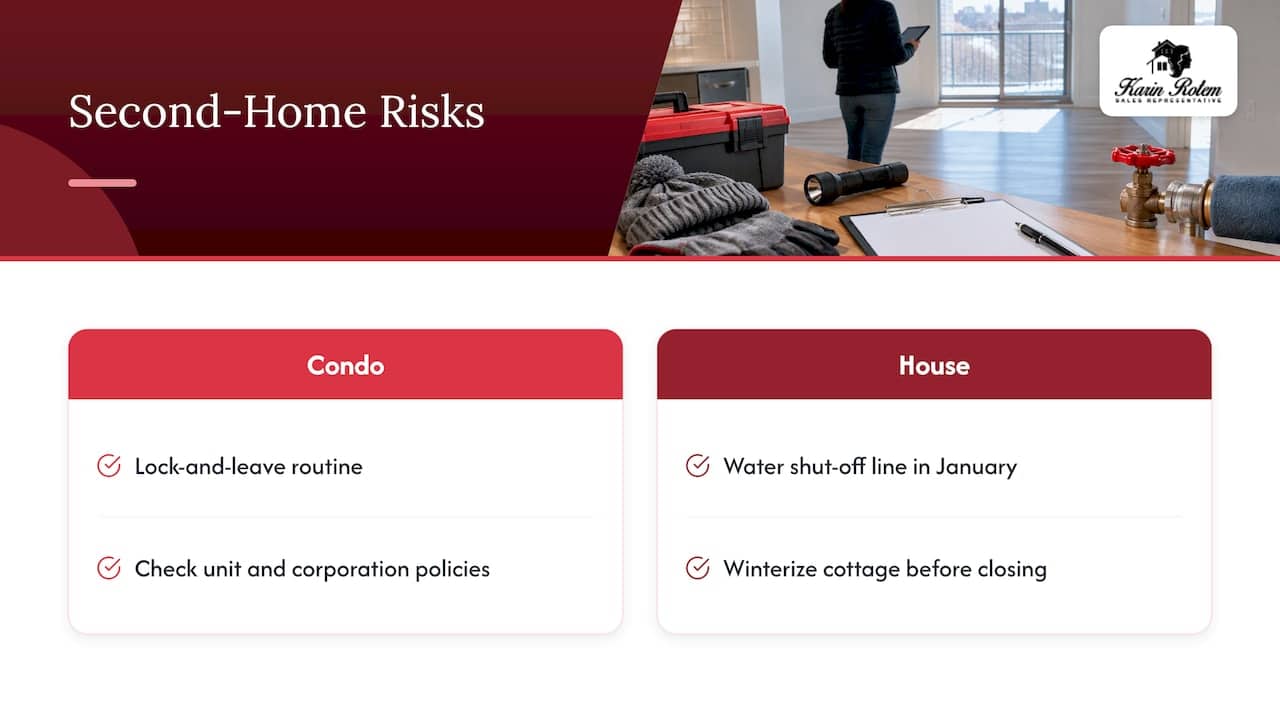
Second homes and waterfront. In Friday Harbour and around Lake Simcoe, owners are often away for weeks. A condo owner with a lock-and-leave routine has different risks than a house owner with a shut-off water line in January. A condo’s insurance and the building’s own policy do different jobs, so check what your unit policy covers and what the corporation insures. If you rent the unit part of the year, read our Friday Harbour rental rules for owners and tell your insurer how the unit is used. A unit that is sometimes rented, sometimes empty and sometimes yours is exactly the kind of property that needs a precise conversation with a broker. For cottages, our guide to winterizing an Ontario cottage covers closing it up properly.
What I tell my clients: call your broker first, ask what is excluded rather than what is included, and write down every answer. Insurance is not something we sell, and we won’t pretend to replace your broker. But we plan around it every time a property will be empty.
— Felix
Investors: empty units between tenants
For landlords, vacancy is a business reality, not an exception. A unit sitting empty for more than 30 days after a tenant leaves is the situation most likely to trigger vacancy conditions. Plan for it:
- Ask your broker whether your landlord policy already has a vacancy clause and what the time limit is.
- Re-rent quickly: a furnished, well-prepared unit shows better. See our list of furnished rental property features investors need.
- If you operate short term, be sure your policy matches the use. Our guide on setting up a short-term rental in Ontario legally covers the rules, and your insurer needs to know the unit is rented by the night.
- If the vacancy will run long, ask for the permit before day 30.
Lenders also look at how your property performs. How lenders count rental income shows why long vacancies matter beyond insurance.
Planning a purchase or sale with an empty home in mind
If you are buying a home you won’t occupy right away, or you are selling a property that will be empty, we can help you plan the timeline so insurance doesn’t catch you off guard. Browse Friday Harbour condos for sale or contact us through our main site and tell us your move date. We will build the plan around it, including when to bring your broker in, and we will say plainly if a particular property or timeline is not the right fit for you.
FAQ
Does my home insurance cover an empty house in Ontario?
Often only for a limited time. The IBC says most policies continue during a vacation, but you must notify your insurer if the home will be unoccupied for more than 30 days. After that, coverage may be restricted or need an endorsement, so confirm with your broker.
What is the difference between a vacant and an unoccupied home?
Unoccupied usually means the owner is away but intends to return and the home is furnished and ready to live in. Vacant means nobody lives there and there is no clear plan to return, such as a home between tenants or waiting to sell. Policies define these terms differently, so check yours.
Do I need a vacancy permit?
You may if the home will be empty beyond your policy’s limit, commonly 30 days. It is an endorsement added to a homeowner policy so coverage can continue on an empty property. Ask what perils it covers and buy it before the limit passes.
Will frozen pipes be covered in a vacant home?
Not automatically. The IBC says standard coverage applies to frozen-pipe damage only when the pipes are in the heated part of the home and reasonable efforts were made to keep it heated. Many insurers require a drained system or steady heat plus regular checks.
Is vacant home insurance more expensive?
It can be. An Ontario broker quoted by Canadian Underwriter said pricing can sometimes exceed that for a primary home. Your cost will depend on the property, the reason for vacancy and your loss-prevention steps, so get quotes from a broker.
Sources
- IBC: What is covered when I go on a March Break vacation?
- IBC: Does my insurance cover damage caused by extreme cold?
- IBC: Winter storm warning, what homeowners should do now
- Canadian Underwriter: How to talk to your clients about vacant home policies
- SUMAssure: Vacant/Unoccupied Location Reporting Form
- Royal Bank of Canada v. State Farm Fire and Casualty Co. (2005)
- Dentons: Insurance and Reinsurance in Canada