
A home inspection contingency lets you renegotiate or walk away from a deal if the inspection turns up problems, without losing your deposit. The moment your offer is accepted, book a qualified inspector and set a realistic conditional deadline. From there, you have four paths: ask for repairs, negotiate a credit, proceed as-is, or terminate.
TL;DR:
- A home inspection contingency allows buyers to renegotiate or walk away from a deal if serious issues are found, without risking their deposit, within a 5 to 7 business day window.
- Critical inspection focus includes foundation movement, water intrusion, outdated electrical systems, and roof lifespan, but inspectors cannot detect hidden or non-visible problems.
- Negotiating a price reduction or closing credit is often more advantageous than requesting repairs, as it gives buyers control over contractor selection and timeline.
- Shortening the conditional period below the inspector’s recommended timeframe or waiving the contingency entirely significantly weakens buyer protection.
- Proper clause wording and strategic negotiation during the deadline are essential, and buyers should consider expert assistance to maximize their safety and leverage.
What is a home inspection contingency?
A home inspection contingency is a clause in the Agreement of Purchase and Sale that makes your offer conditional on getting a satisfactory inspection report, at your own expense, within a set number of days. It exists for one reason: to protect you, the buyer, from discovering a cracked foundation or knob-and-tube wiring after you already own the problem.
Here’s what most buyers don’t realize: the word “satisfactory” is doing a lot of legal work. Most standard clauses give you sole and absolute discretion to decide whether the report satisfies you. You don’t need to prove the house is falling down. You just need to say, in good faith, that you’re not comfortable proceeding.
In competitive markets, some buyers waive this clause entirely to make their offer stronger. I understand the temptation, but it’s one of the riskiest moves in a transaction:
- You lose the legal right to walk away or renegotiate based on what an inspector finds.
- Sellers with something to hide are more likely to accept a waived offer.
- You’re betting your deposit, and sometimes your down payment, on a house you haven’t properly assessed.
How long does a home inspection contingency last?
Most conditional periods run 5 to 7 business days, which gives you enough runway to book an inspector, get the report, and negotiate if needed. Anything under three business days is a gamble. You risk not finding an available inspector, let alone having time to review findings and respond before your deadline lapses.
Inspections themselves typically cost $400 to $600 and take a few hours on-site. A written report usually follows within a day or two.
| Step | Typical timeframe |
|---|---|
| Book the inspector | Same day to 1 day after offer acceptance |
| Inspection itself | 3–5 days into the conditional period |
| Written report delivered | Within 24–48 hours of inspection |
| Decision and negotiation | Remaining days before deadline |
Pro Tip: If you’ve fallen in love with a listing before writing an offer, call an inspector before you submit. Booking ahead means you can move within a tight conditional window instead of scrambling on day one.
What does a standard home inspection cover?
A qualified inspector walks the property assessing structure and major systems: foundation, roof, electrical panel and wiring, plumbing, HVAC, insulation, and windows and doors. This is a visual, non-invasive assessment, not a forensic investigation.
The red flags that matter most:
- Foundation movement or active cracking
- Moisture intrusion and mould, especially in basements
- Outdated or unsafe electrical systems (aluminum wiring, undersized panels)
- Roof age nearing the end of its service life
Here’s the limitation buyers consistently misunderstand: inspectors don’t perform destructive testing and only assess visible, accessible areas. An inspector can’t cut into a wall to check for hidden water damage behind drywall, and a clean report doesn’t mean there’s nothing wrong. It means nothing was visible on inspection day. Code compliance is also a separate question entirely. A furnace can be perfectly legal when it was installed and still be nearing failure today.
If the inspection finds problems, what are your options?
Once the report lands on your desk, you have four realistic paths forward, and the right one depends on what was found and how badly you want the house.
- Proceed as-is. Fine for cosmetic issues or minor deferred maintenance you were already expecting to handle.
- Request specific repairs before closing. Works when the fix is straightforward, but you’re trusting the seller to hire the contractor and control quality.
- Negotiate a price reduction or closing credit. This is often the smarter move because it puts you in the driver’s seat. You choose the contractor, you control the timeline, and you’re not relying on a seller motivated to spend as little as possible.
- Terminate the agreement. Reserved for structural, safety, or financial dealbreakers, especially when the seller won’t budge on price or repairs.
Pro Tip: Never negotiate a repair request on gut feeling alone. Get one or two contractor quotes for the fix and attach them to your ask. A seller is far more likely to move when they’re looking at a $12,000 quote instead of your opinion that “the roof looks old.”
Whichever route you pick, lead with safety and structural items first. A dripping faucet is a footnote. A settling foundation is leverage.
Drafting the clause and understanding waiver versus notice of fulfillment
The strength of your contingency lives in the wording, so before you sign anything, make sure the clause spells out:
- Inspection conducted at the buyer’s expense, by a qualified inspector of the buyer’s choosing
- A specific conditional deadline (date and time, not “within five days”)
- Language confirming the buyer’s satisfaction is at their sole and absolute discretion
- A clear process for delivering notice to the seller
This is where the legal mechanics matter most. A Notice of Fulfillment confirms the condition has been met and the deal moves forward. A Waiver, by contrast, is what you sign when you’re choosing to proceed despite findings you’re not thrilled about, and waiving the condition eliminates your rights tied to it.
Once a condition is waived, you generally can’t go back and use that same inspection report to renegotiate or walk away later. The protection is gone the moment you sign.
Before you sign a waiver on anything more than a minor issue, get legal advice first. And if you’re invoking the clause because of something the report found, share the relevant excerpt with the seller. It gives your request weight and shows you’re negotiating in good faith, not bluffing.
Staying competitive without giving up your protections
In a seller’s market, some buyers feel pressure to strip conditions entirely. There’s a middle ground before you get there.
- Pre-offer inspections. You pay the inspection fee upfront and out of pocket, sometimes on a house you don’t win, but you can submit a clean, firm offer with real due diligence behind it.
- Shortened conditional periods. Dropping to three or four business days can work, but only if you’ve already got an inspector on standby.
- “Inspection for information only” clauses. This is a genuine middle ground: you keep the right to inspect and learn what you’re buying, but you give up most renegotiation power except in cases of a serious, previously undisclosed issue. It signals seriousness to the seller while keeping a narrow safety net for yourself.
Pro Tip: Even if the seller shares a pre-listing inspection report, get your own. A seller-commissioned report was paid for by the person selling you the house. That’s not a knock on the inspector, it’s just a conflict of interest you shouldn’t inherit.
What I tell my clients about inspection contingencies
I had a buyer in Innisfil last year who found what looked like minor foundation settling during their inspection. The report wasn’t catastrophic, but it was enough to give them pause. Instead of walking away from a home they genuinely loved, we brought in a structural engineer for a second opinion, got a repair quote, and used both documents to negotiate a closing credit. The buyer got the home, kept full control over who fixed the foundation, and closed with money in hand to do it properly.
Three rules I give every buyer before they write an offer:
- Never shorten your conditional period below what your inspector says they need.
- If your price changes after inspection, call your mortgage broker that same day, not the week before closing.
- Treat “satisfactory to the buyer” as your safety net, not a formality to rush through.
If you’re buying a condo, the inspection scope changes. Shared systems and reserve funds matter more than the unit’s drywall. My condo-specific inspection guide covers what to check before you waive anything, and my repair holdback guide explains an alternative to seller-arranged fixes worth knowing about.
Why the standard advice on inspection contingencies falls short
Most articles on this topic stop at “get an inspection, then negotiate.” That’s incomplete advice, and it leaves buyers under-prepared for the two moments that actually decide the outcome: the moment you set your conditional deadline, and the moment you decide whether to negotiate a credit or ask for repairs.
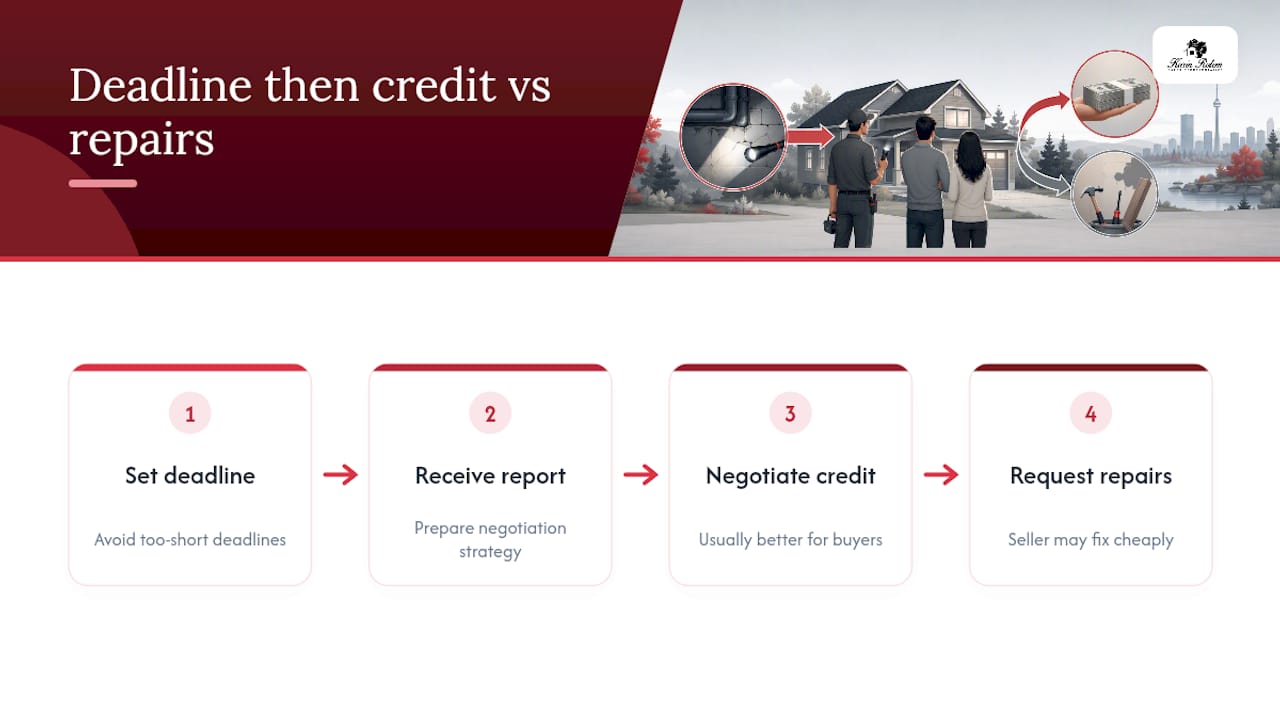
The deadline gets treated as a formality. It isn’t. Setting it too short is the single most common way buyers accidentally waive protection they meant to keep, simply because they run out of time to act. The second miss is defaulting to repair requests when a credit almost always serves the buyer better. A seller has every incentive to fix things cheaply. You don’t, because you’re the one living there.
What the research on this consistently supports is control: control over your timeline, control over your contractor, control over how the money gets spent. If you take one thing from this article, it’s that a contingency is only as strong as the deadline behind it and the negotiation strategy you’re prepared to use once the report lands.
— Felix
How Karin Rotem helps you use your inspection contingency
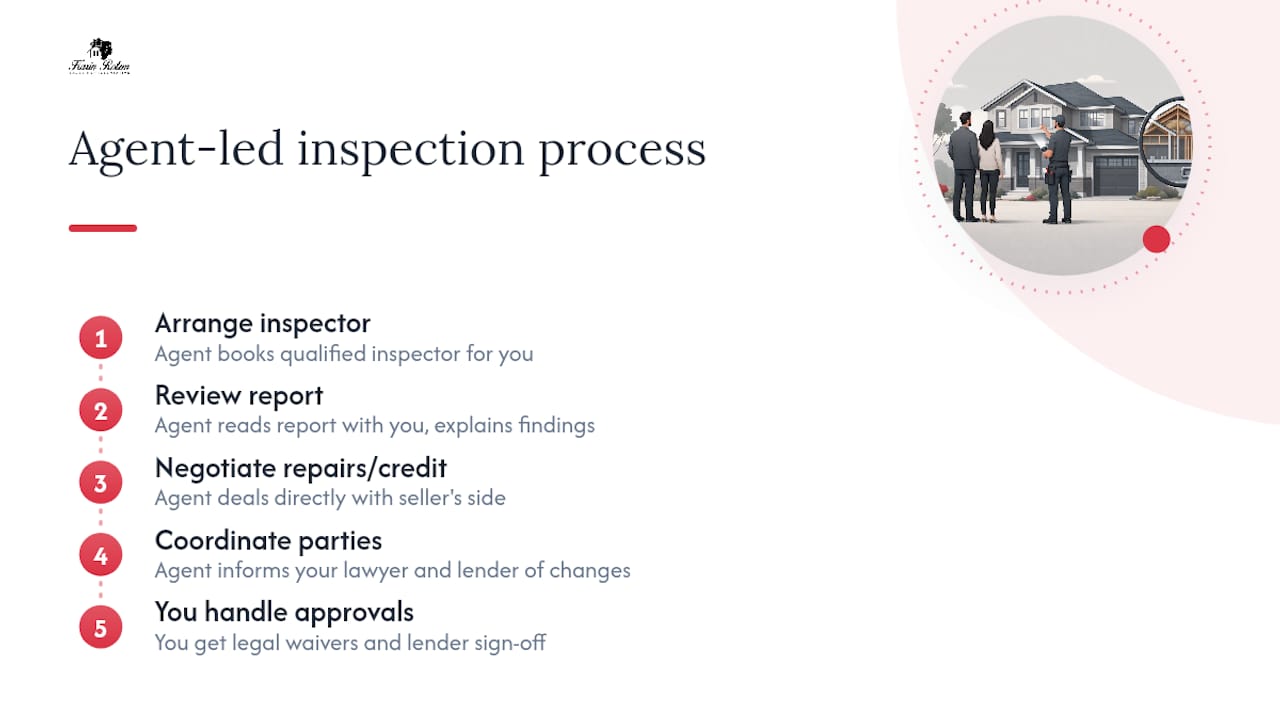
Karin Rotem is the alternative to going through a purchase alone: instead of researching contract wording and inspector qualifications on your own timeline, you get an agent who arranges the inspector, reads the report with you, and negotiates the repair or credit request directly with the seller’s side. That includes coordinating with your lawyer and mortgage lender when the purchase price shifts after inspection, so nothing falls through the cracks between your conditional deadline and closing day.
Legal advice on waivers and lender approval on revised pricing are still steps you’ll need to handle with your own professionals. Karin’s role is making sure those conversations happen at the right time, not after a deadline has already passed.
If you’re actively shopping in Toronto, Innisfil, or Friday Harbour, reach out through our properties page to talk through your buying plan before you write your next offer.
Sources
- Home Inspection Contingency – Storeys
- Home inspection guide for Canadian buyers (2026) — Credit Resources
- Offer to purchase a home in Canada: Complete Guide (2026) — WealthNorth
- Demystifying the Agreement of Purchase and Sale — HS Legal PC
FAQ
What is the biggest red flag in a home inspection?
Structural issues top the list, particularly foundation cracks or movement, along with major electrical hazards and significant water or mould damage. These are the findings most likely to justify a price credit or walking away entirely.
What is the biggest reason to make your offer contingent on a professional home inspection?
It gives you a legal exit or renegotiation right if the report is unsatisfactory, protecting your deposit from a purchase that turns out to have hidden structural, electrical, or moisture problems.
What’s the worst thing a home inspector can find?
Active foundation failure, unsafe electrical wiring, or extensive hidden mould are typically the costliest and most dangerous discoveries, since they often require specialist follow-up beyond what a standard inspection reveals.
Can you get out of a contingency contract?
Yes. If your inspection is unsatisfactory within the conditional deadline, you can terminate under a properly worded inspection contingency and reclaim your deposit, provided you haven’t already signed a waiver on that condition.