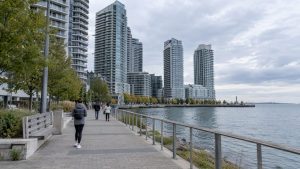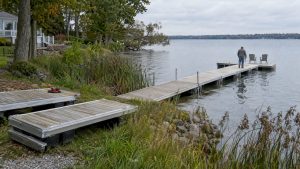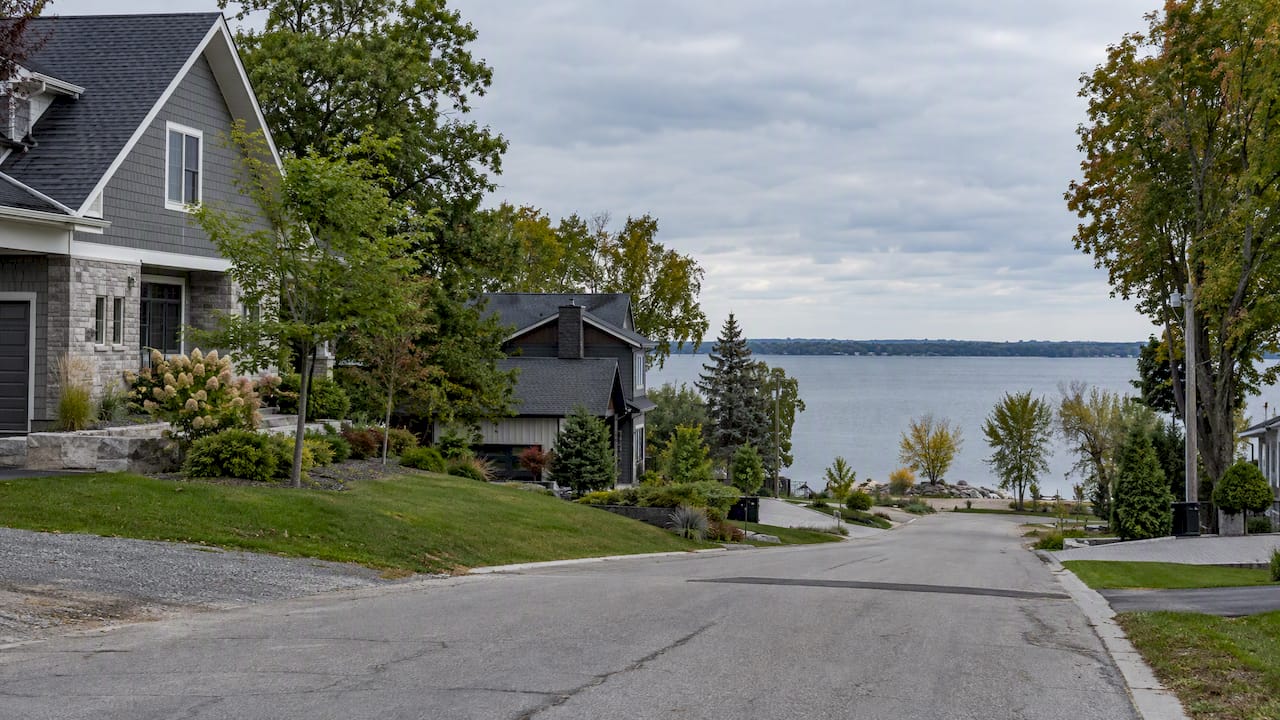
Yes, Lake Simcoe offers a varied lakeside lifestyle for families, commuters and weekend owners, but your experience depends heavily on which shore you choose and how well you plan for shoreline rules and commuting. The watershed is home to roughly 500,000 residents, spread across towns with very different characters. Before committing, check three things: your realistic commute, whether your lot sits in a regulated shoreline area, and which community matches your season-to-season plans.
TL;DR:
- Barrie and inland Innisfil favor family homes, while Georgina and parts of Orillia offer cottage lots; Friday Harbour condos provide marina access without shoreline upkeep.
- Before offering, check LSRCA mapping and consult planners: docks, grading, filling, and even small sheds in regulated areas may require permits under Ontario Regulation 41/24.
- Driving from Barrie or Innisfil to Toronto typically takes under two hours, but traffic and interchange access affect travel times; transit remains limited beyond Barrie’s core.
- Before financing conditions expire, request a septic inspection and waterfront insurance quote, then verify legal access, service type, shoreline condition, rental rules, and marina fees.
Lake Simcoe communities: Barrie, Innisfil, Georgina and Orillia compared
Each shore around Lake Simcoe has its own personality, and picking the right one matters as much as picking the right house. Barrie sits at the northwest corner as the region’s main urban hub, with the hospitals, shopping and transit connections that come with a full-service city. Innisfil, just south, has grown quickly as families priced out of Toronto look for space, with Friday Harbour anchoring much of its lakeside appeal. Georgina covers the lake’s south shore with a more cottage-country feel, while Orillia sits at the north end, closer to Muskoka’s weekend traffic.
- Barrie works for buyers who want full urban services with lake views nearby.
- Innisfil suits families and commuters chasing newer builds and a planned lakeside community.
- Georgina fits buyers wanting a quieter, more rural shoreline.
- Orillia appeals to those who want a small-city feel with easy access north.
Cottagers tend to gravitate toward Georgina and Orillia, while full-time families and investors increasingly look at Innisfil.
Life on the lake through the seasons
Summer on Lake Simcoe means public beaches, boat launches and a steady hum of activity on the water from May through September. Ice fishing takes over in winter, when hut villages appear on the frozen lake and daylight gets noticeably shorter. Winter festivals and local events keep the towns active even when the water is locked up, and the seasonal rhythm is part of what draws people here in the first place.
- Check beach postings before swimming, since bacteria levels can rise after heavy rainfall.
- Watch ice conditions closely in early winter and late spring, when thickness varies across the lake.
- Plan for shorter daylight between November and February if you work or commute year-round.
Beach advisories have varied from year to year, and the Lake Simcoe 15-year monitoring report ties much of that variability to rainfall and water temperature rather than a steady decline in quality.
Housing near Lake Simcoe: property types and buyer priorities
Barrie recorded a 73.4% homeownership rate in the 2021 Census and grew by 4.5% between 2016 and 2021, while Innisfil’s population grew by roughly 18.5% over the same period. That growth shows up directly in housing stock: new subdivisions in Innisfil sit alongside older cottage lots, and waterfront condo communities like Friday Harbour have added an entirely different ownership option.
What I tell my clients is that the right property type depends entirely on the goal, not just the budget:
- Year-round family homes tend to cluster in Barrie and inland Innisfil, away from flood-prone shoreline.
- Waterfront cottages are concentrated on Georgina’s south shore and parts of Orillia.
- Condo ownership at Friday Harbour suits buyers who want marina access and resort-style amenities without shoreline maintenance.
For a closer look at how these options stack up, our guide to waterfront property types near Toronto breaks down which fits a primary residence, a weekend retreat or a rental property. Buyers chasing rental income usually focus on Friday Harbour’s condo inventory, while those wanting a family base look inland first and add lake access later.
Shoreline permits and regulated areas you need to check first
Any lot touching Lake Simcoe or a tributary likely falls under the Lake Simcoe Region Conservation Authority’s regulated area mapping, and that status affects what you can build and how fast. Many common shoreline activities trigger a permit requirement under Ontario Regulation 41/24, including:
- Building or replacing a dock on a regulated shoreline.
- Grading or filling near the water’s edge.
- Adding a structure within the mapped regulated area, even a small bunkie or shed.
Before writing an offer, use LSRCA’s online mapviewer to confirm whether the lot sits in a regulated area, and pre-consult with their planning staff if it does. Skipping this step is the most common reason waterfront deals stall after closing, when a buyer discovers a planned dock or retaining wall needs retroactive approval.
Pro Tip: Ask the listing agent for the property’s regulated-area status before your first showing, not after your offer is accepted.
Schools, childcare and health care access around the lake
Families moving to the Lake Simcoe area need to weigh school catchments alongside childcare availability, since demand has outpaced supply in parts of Simcoe County. The county’s service plan targets nearly 5,000 new licensed childcare spaces by the end of 2026, which matters for anyone planning around daycare waitlists.
- Barrie and Innisfil offer the widest range of public school options, with some private alternatives in Barrie.
- Health care access centres on Barrie’s regional hospital, with additional facilities in Orillia for the lake’s north end.
- Emergency planning matters more on rural shoreline lots farther from town centres.
Commuting to Toronto and getting around Simcoe County
Driving from Barrie or Innisfil to Toronto typically takes under two hours depending on traffic and time of day, making a daily commute workable but not effortless. Highway 400 is the main corridor, and proximity to an interchange often matters as much as square footage when choosing a lot.
- LINX Transit and county-local coordination are expanding routes to connect communities to major hubs.
- Highway-access neighbourhoods suit daily commuters better than remote shoreline roads.
- Walk-to-transit locations are still limited outside Barrie’s core, so most buyers plan around a car.
For commuters, mapping proximity to a LINX stop or a highway interchange is as decisive as price per square foot.
What most buyers don’t realize about pre-offer checks
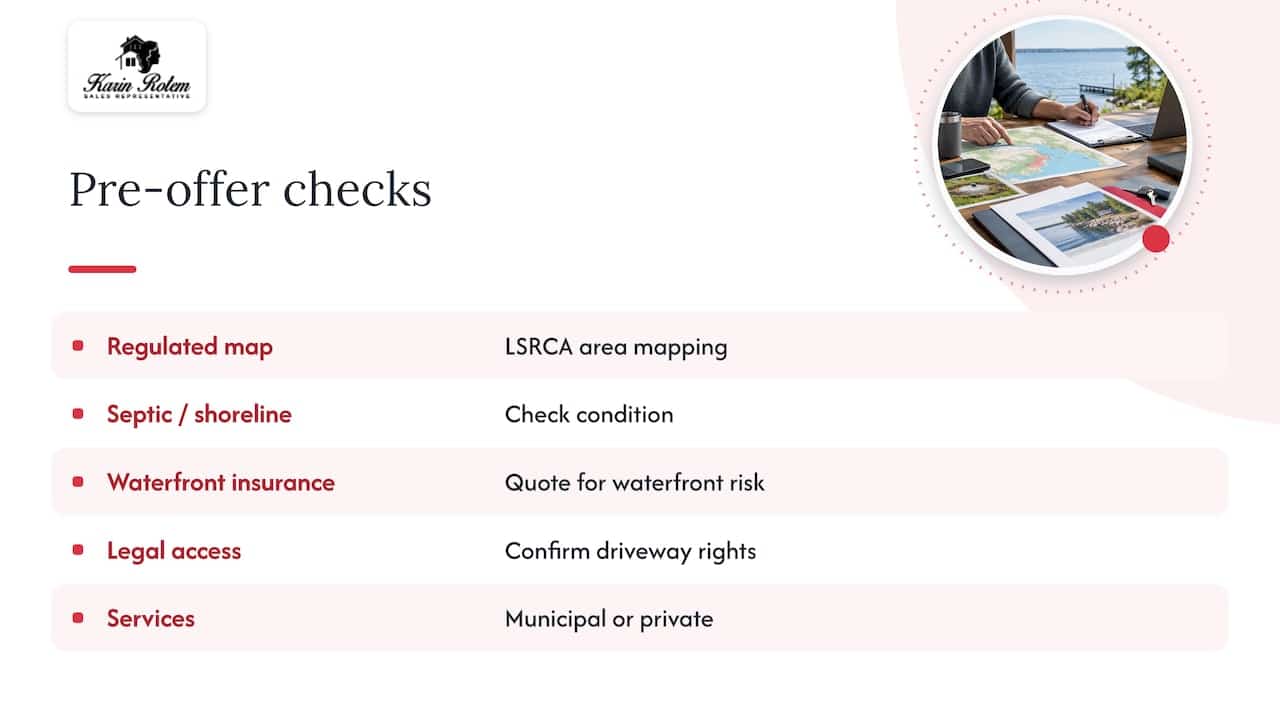
What most buyers don’t realize is that the five pre-offer checks on a Lake Simcoe property take a fraction of the time a permit delay costs after closing. I walk clients through LSRCA regulated-area mapping, septic and shoreline condition, insurance quotes specific to waterfront risk, legal access and driveway rights, and confirmation of municipal versus private services before any offer goes in. Our guide on buying waterfront in Ontario covers all five in detail.
Friday Harbour listings often draw a different buyer than a standalone cottage lot, since many are weighing rental potential alongside personal use. Asking the right questions upfront, about rental bylaws, marina fees and seasonal occupancy rules, saves weeks of back-and-forth later.
Pro Tip: Request the property’s most recent septic inspection and insurance quote before your financing conditions expire, not after.
How our team supports buyers and sellers on Lake Simcoe
We guide buyers and sellers through the Lake Simcoe market with the same permit-aware approach described above: confirming regulated-area status, coordinating pre-offer checks and negotiating with shoreline realities in mind rather than discovering them after closing. Whether you’re drawn to Friday Harbour’s exclusive listings or exploring Innisfil’s broader real estate market, we tailor the search to your goals, whether that’s a family home, a weekend retreat or an income property. For a national-level checklist on flood mapping and shoreline due diligence, findRE’s waterfront buying guide is a useful companion resource.
Reach out through Karinrotem to start a search tailored to your shoreline, your commute and your timeline.
Is lakeside living on Lake Simcoe right for you?
Lakeside living on Lake Simcoe rewards people who plan around the seasons and the shoreline rules, not just the view. Commuters willing to manage a highway drive and families comfortable with regulated-area checks tend to be happiest here. If you’re weighing a move, reach out and I’ll walk you through what fits your goals.
— Felix
FAQ
How much water is in Lake Simcoe?
Lake Simcoe is one of Ontario’s larger inland lakes, and its watershed supports a population of roughly 500,000 residents today, with growth projected to around 900,000 by 2051. Exact lake volume figures aren’t part of the monitoring data cited here, so check the Ontario government’s monitoring report directly for hydrological specifics.
Why do people move to Barrie?
People move to Barrie for its mix of urban services and lakeside access, along with housing growth that outpaced many nearby towns. Barrie grew by 4.5% between 2016 and 2021 and has a homeownership rate of 73.4%, reflecting steady demand from families and commuters.
How long is the drive from Toronto to Lake Simcoe?
Driving from Toronto to the Lake Simcoe area, including Barrie or Innisfil, typically takes under two hours depending on traffic and time of day. Highway 400 is the main route, and commute times vary with proximity to an interchange.
What is there to do in Simcoe, Ontario?
Activities around Lake Simcoe shift with the seasons, from boating and public beaches in summer to ice fishing and winter festivals once the lake freezes. Local marinas, golf courses and community events add to the mix throughout the year.
What permits do I need for a shoreline property on Lake Simcoe?
Many shoreline activities, including docks, grading and new structures, require a permit from the Lake Simcoe Region Conservation Authority under Ontario Regulation 41/24. Checking the regulated-area status before making an offer helps avoid delays after closing.