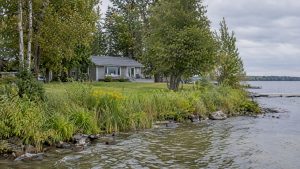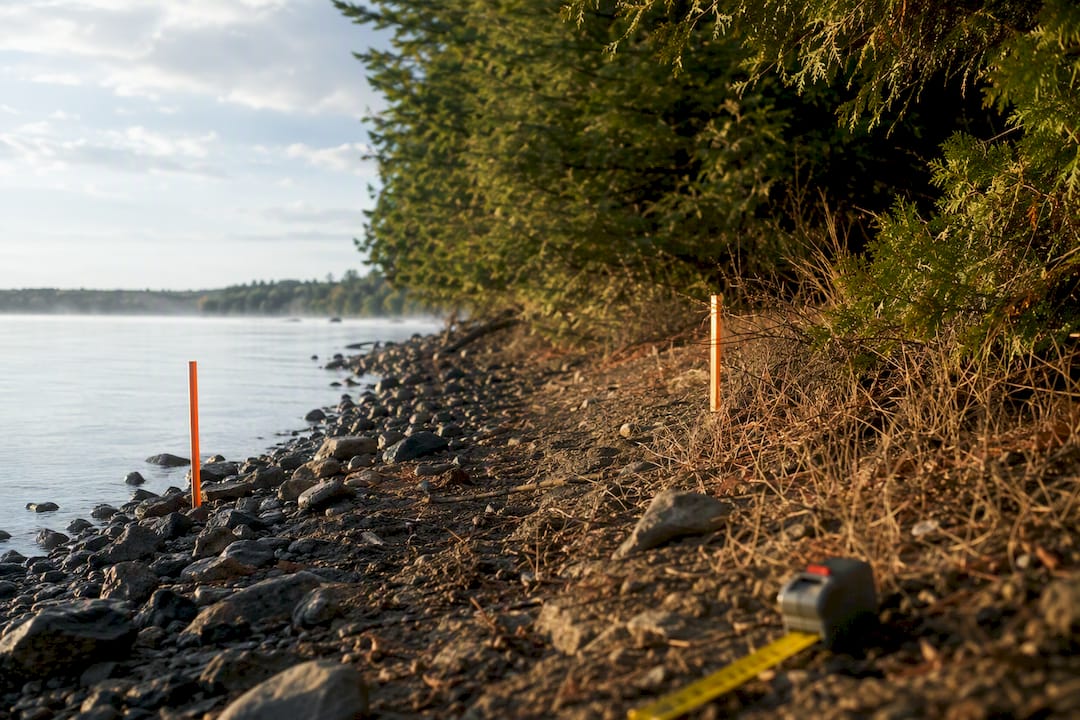
A shoreline road allowance in Ontario is a strip of land, typically 66 feet (about 20 metres) wide, running between the water and private waterfront lots, and in most cases the municipality (or the Crown, in unincorporated areas) owns it, not you. That means your legal property line may sit well back from the water’s edge, even if your deck, dock, or boathouse crosses onto it. Before you close on any waterfront purchase, check the title and order a survey.
TL;DR:
- Shoreline road allowances in Ontario are typically owned by municipalities or the Crown, making structures on them technically encroachments and not automatically owned by waterfront property owners.
- Verifying allowance status requires current surveys, municipal records, and detailed title searches to avoid potential issues during property transactions or development.
- Purchasing a shore road allowance can take six months to a year, involving application fees, surveys, council approval, and costs based on frontage or area, with extra delays for objections or submerged land approvals.
- Building permanent structures without municipal approval or a license of occupation is generally prohibited, and provincial or conservation approvals are often necessary for shoreline alterations or submerged areas.
- Local real estate agents and surveyors are essential for identifying allowance issues early, ensuring proper legal procedures, and safeguarding resale value during waterfront property transactions.
What is a shoreline road allowance in Ontario?
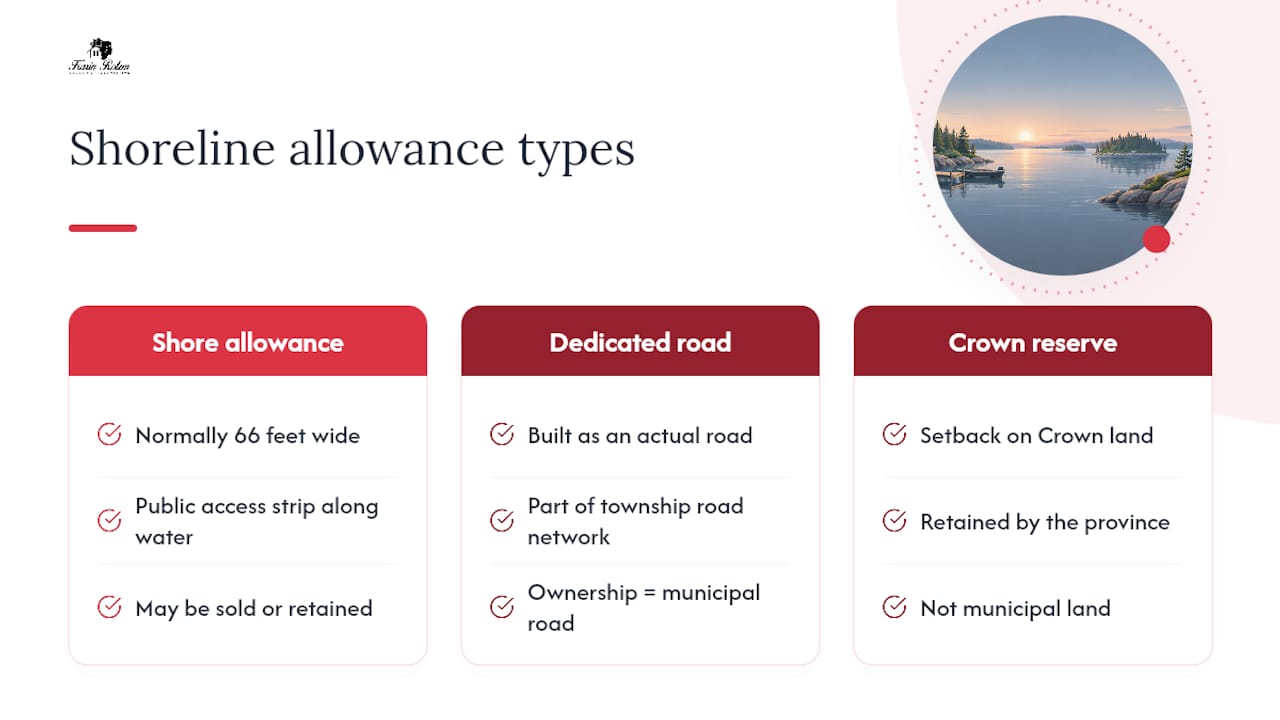
Ontario’s original surveyors reserved a strip along most lakes and rivers when they laid out townships in the 1800s, intending it as public access to water for travel, fishing, and later, road building. That strip is the shore road allowance, and it’s normally 66 feet wide, running parallel to the high-water mark.
It’s a distinct category from “dedicated roads” (allowances that were actually built into roads) and “Crown shoreline reserves” (similar setbacks retained on Crown land rather than municipal land). Some allowances were sold off decades ago; others were deliberately retained because a township or the province wanted to preserve continuous public access along a lake. That history is exactly why two cottages on the same bay can have completely different ownership situations.
Who owns the allowance, and what that means for you
In incorporated municipalities, most shore road allowances belong to the local township or town, which administers them under municipal road allowance policy. In unincorporated territory (parts of Northern Ontario without municipal government), the Ministry of Natural Resources and Forestry manages them on the Crown’s behalf.
Ownership by a public body carries real consequences:
- The municipality can’t grant you exclusive use just because you’ve built on the allowance.
- The public generally retains a right to walk along it, even where it fronts your cottage.
- A boathouse, retaining wall, or deck sitting on unpurchased allowance is technically an encroachment on municipal or Crown land.
- Long-term use doesn’t create ownership. Encroachment doesn’t create title, no matter how many decades a structure has been there.
- A licence of occupation lets you use the strip legally without buying it, but the municipality can revoke it.
Pro Tip: Don’t assume “it’s always been there” protects a dock or boathouse. Municipalities have required removal or retroactive purchase when allowances came up for review during a sale.
How to check if your waterfront property has a shore road allowance
Start with the title search your real estate lawyer runs at purchase. Look for notations referencing an “original shore road allowance” or exceptions carving out a strip along the water, since a clean-looking deed can still exclude that frontage.
- Order a reference plan from an Ontario Land Surveyor. It must show the high-water mark and the precise square-metre area of the allowance, information municipalities require before any sale can proceed.
- Check municipal records directly. Call the planning department or clerk’s office; many townships, including North Frontenac, keep dedicated shore road allowance files.
- Search Land Information Ontario mapping for a preliminary read on whether an allowance shows up, then confirm with a formal survey.
Pro Tip: A survey done for a neighbour ten years ago won’t cut it. Municipalities want a current registered plan tied to your specific lot.
How to buy a shore road allowance: process, timeline, and costs
Buying the allowance outright gives you clean title to the water’s edge, which matters enormously at resale. The process is municipal, not provincial, and it follows a fairly consistent sequence across Ontario townships:
- Enquire with the municipal planning or clerk’s department about eligibility and current fees.
- Submit a formal application with the administrative fee.
- The municipality issues public notice and accepts comment, since abutting neighbours and the general public get a say.
- Council must declare the allowance surplus before any sale.
- You commission a registered survey from an Ontario Land Surveyor showing the exact area.
- Your solicitor checks for easements, utility rights, and title exceptions.
- Council passes a closure by-law.
- You pay and register the transfer.
Expect the whole process to take six months to a year, longer if a neighbour objects during the notice period or the strip includes submerged land requiring provincial consent under the Municipal Act.
Costs stack up from several sources: an application fee, the land cost itself (calculated per frontage foot or square metre, or set by appraisal depending on the municipality), survey fees, and legal fees on both the municipal and buyer’s side. Example municipal fee schedules, like Huntsville’s, spell out application fees and minimum land charges, but every township sets its own numbers, so confirm current figures before budgeting.
Permits, licences, and limits on shoreline structures
You generally can’t build a permanent structure on an unpurchased shore road allowance without municipal sign-off, and even a modest dock can trigger multiple layers of approval.
- A licence of occupation lets you legally maintain an existing dock or boathouse for an annual fee, but the municipality can revoke it, and it never converts to ownership.
- Municipal building permits apply to anything more permanent than a seasonal dock.
- Conservation authority approval is often required for shoreline alteration, especially near wetlands or floodplains.
- Submerged portions of the allowance face extra scrutiny; provincial consent is typically required before those areas can be sold or built on.
Your shore road allowance due-diligence checklist
Before you write an offer on any waterfront property, or before you develop your own shoreline, gather these documents and ask these questions.
- Request a full title search through your lawyer, specifically flagging shore road allowance notations.
- Ask the municipality for its written policy on allowance sales, retention areas, and current fee schedule.
- Request copies of any existing licence of occupation on the property, since it transfers differently than owned land.
- Contact the conservation authority if the property is near a wetland, floodplain, or environmentally protected shoreline.
- Talk to the municipal solicitor or planner directly about whether that stretch is in a retention area where sale simply isn’t offered.
If you discover an existing encroachment, don’t panic and don’t ignore it either. Insurance may still cover the structure while you regularize the situation, but the real fix is either applying for closure and purchase or negotiating a price reduction that accounts for the risk. For more on structuring an offer around these unknowns, see our pre-offer waterfront checklist.
Pro Tip: When I see a shore road allowance flagged mid-transaction, I build a survey and legal review into the conditional period rather than waiting until after closing. It’s cheaper to walk away from a bad allowance situation than to fix one you already own.
What I tell my clients about shore road allowances
What most buyers don’t realize is that a shore road allowance isn’t automatically a dealbreaker. If the municipality routinely sells allowances in that area and the fee is modest relative to the property’s value, I tell clients to pursue the purchase. It clears up title and protects resale value down the road.
Where a township treats a stretch as a retention area, a licence of occupation is often the more realistic path, and that changes how I negotiate price and timing on an offer. Every municipality runs this differently, so the right move always starts with a title and survey review, ideally with a local agent who’s seen how your specific township handles it.
— Felix
How Karin Rotem helps you navigate shore road allowance issues
Experienced local real estate agents can help flag shore road allowance issues before you’re locked into a firm offer and connect you with the surveyors and solicitors who resolve them properly.
That local knowledge matters because municipal policy on these allowances varies street by street, not just township by township. Whether you’re eyeing a resale cottage or exploring Friday Harbour condo options, the team’s due-diligence support means you know exactly what you’re buying, and what it will take to clear up the title if an allowance is involved. Ready to look at a specific property? Karinrotem to request a property-specific review and start the conversation.
Sources
- Ontario
- How to buy a shore road allowance in Ontario: Step-by-step guide for waterfront property owners
- Original Shore Road and Original Road Allowance | Town of Huntsville
- Shoreline road allowances | HGR Graham Partners LLP
FAQ
What are shoreline property rights in Ontario?
Owning waterfront land in Ontario doesn’t automatically include the strip between your lot and the water if a shore road allowance sits there. Your riparian rights, like access to use the water, still generally apply, but legal ownership of the land itself may rest with the municipality or the Crown until it’s formally purchased.
How wide is a road allowance in Ontario?
A shore road allowance is normally 66 feet, or about 20 metres, measured from the high-water mark inland. The exact figure for your property is only confirmed by a registered reference plan from an Ontario Land Surveyor.
Can I use an unopened road allowance in Ontario to get to my property?
An unopened road allowance can sometimes provide legal access, but it’s still public land, and using it doesn’t give you ownership or the right to block others from using it too. Confirm the specific allowance’s status with the municipal clerk before relying on it for access.
Who are the “road allowance people”?
This phrase most often refers to Métis communities historically pushed onto unsurveyed road allowance land in parts of Canada; it isn’t a term used in Ontario’s shoreline road allowance policy. If you’ve encountered it in a different context, it’s worth checking the specific source, since it addresses a separate historical and legal issue entirely.
Do I need a lawyer to buy a shore road allowance?
Yes, in practice you need both a solicitor and an Ontario Land Surveyor. The municipal closure by-law process requires a registered survey and a legal review of easements and title exceptions before council will approve the sale.