
Toronto home staging prices typically vary from a free to moderate cost for consultations, a few thousand dollars for occupied condo or house staging, and a higher range for fully vacant detached home staging. Staged listings tend to draw stronger offers and fewer price cuts, based on industry ROI research. Whether it is worth it depends on your price point and timeline, so get a fixed-price quote before you list.
TL;DR:
- Most staged homes in Toronto see industry research indicating stronger offers and fewer price reductions, especially when key rooms are targeted for staging.
- Costs vary based on service type, property size, and whether furniture is rented or existing, ranging from around $0 to over $8,000, with occupied staging generally cheaper than vacant.
- Additional factors influencing price include the number of rooms staged, rental period length, building logistics, crew size, and timing urgency.
- Sellers should get fixed-price quotes, clarify what is included, and confirm scheduling details before committing to staging services.
- Proper preparation, such as deep cleaning and decluttering, is essential for staging to be effective and align with the timing of listing photos and showings.
How much does home staging cost in Toronto?
Toronto home staging prices vary more by service type than by neighbourhood. Here is what sellers actually pay, based on current market pricing.
Most stagers offer a free or low-cost consultation, sometimes crediting that fee toward your final contract if you book within a set window. That credit policy matters. It means the “free walkthrough” isn’t really free if you don’t hire the stager, but it is if you do.
- Consultation only: free to moderate cost, sometimes credited toward booking
- Occupied staging (condo or house): at a moderate price depending on use of existing furniture
- Condo staging (vacant): costs similar to vacant houses due to unit size
- Detached home staging (vacant): at a higher price depending on size
- Luxury properties: generally higher due to premium inventory and size.
These ranges come from current Toronto staging pricing data, which also notes most fixed-price quotes bundle in a standard rental period. Occupied staging costs less because the stager works with what you already own, adding accent pieces, art, and layout fixes rather than furnishing from scratch. Vacant staging costs more because everything is rented furniture from the inventory. Condos often cost similarly to small detached homes because size influences price more than property type.
What drives the price of home staging?
Two identical-looking staging quotes can differ by thousands of dollars, and the reasons usually come down to a handful of variables.
- Rooms staged and square footage: more rooms mean more furniture, more labour, and a longer install day.
- Inventory needs: vacant homes need a full furniture set; occupied homes need selective additions.
- Rental period length: most quotes bundle a set number of weeks, and anything beyond that triggers renewal fees.
- Building logistics: high-rise condos often require elevator booking windows and loading-dock time, which can add labour hours.
- Crew size and styling level: a two-person crew doing a light refresh costs less than a full design team doing a top-to-bottom install.
- Timing: rush jobs, weekend installs, or last-minute bookings sometimes carry a premium.
Pro Tip: Ask your stager how many hours are budgeted for install and whether elevator or loading-dock bookings are included in the quoted price. Condo installs that require a building-managed elevator slot can add a full day if it’s not pre-booked.
What’s the difference between staging formats?
Not every listing needs the same level of staging, and picking the right format is where sellers either save money or waste it.
- Consultation: A stager walks through your home and gives you a room-by-room action list, sometimes covering furniture placement, paint colour, and what to remove. Many companies credit this fee toward full staging if you book afterward.
- Occupied staging: The stager works with your existing furniture, adding pieces, rearranging layout, and depersonalizing. This works well when your furniture is in decent shape and the home just needs editing.
- Vacant staging: Full furniture and décor come from the stager’s rental inventory, since there is nothing already in the home. This costs more but tends to be the only real option for empty properties, where buyers otherwise struggle to picture scale and flow.
- Partial staging: Only key rooms, usually the living room, kitchen, and primary bedroom, get staged. This can be a smart middle ground on larger properties where staging every room adds cost without adding much visual impact.
How should you budget staging against expected ROI?
Percent uplift figures are only useful once you turn them into dollars for your own price point. Industry data from NAR and RESA points to staged homes commanding higher offers and facing fewer price reductions than unstaged listings, based on research cited by Toronto staging professionals.
In dollar terms: on a $900,000 Toronto condo, a modest uplift in offer strength can outweigh a $2,500 staging bill many times over, especially when it also shortens time on market and avoids carrying an extra mortgage payment during a slow listing period.
That second point matters more than sellers realize. Toronto’s current market conditions directly affect how long a home sits, and every extra week on market is another week of mortgage, property tax, and utility carrying costs, plus the risk of hitting your rental renewal date and paying a 10 to 30 percent renewal fee on top of the original contract.
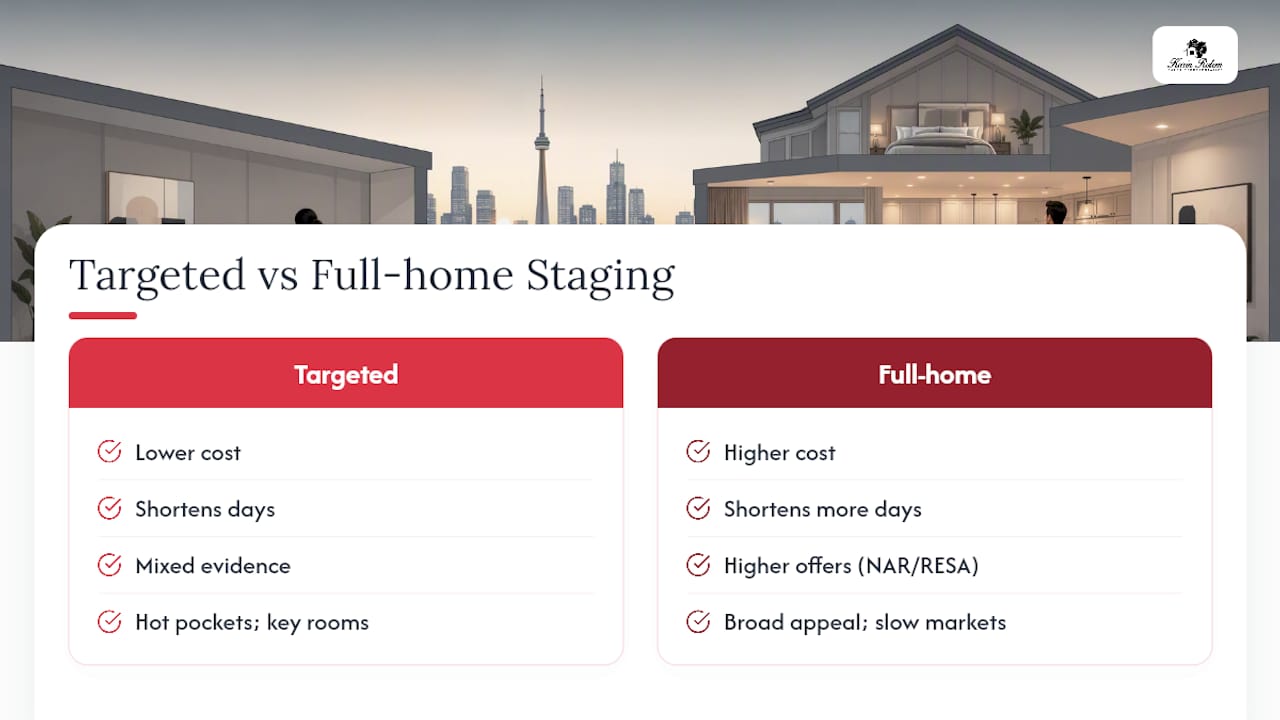
Not every home needs full staging to see this benefit. An independent Liberty Village study found staging correlated with reduced days on market but had mixed evidence regarding final sale price increases, indicating that outcomes vary by neighbourhood and market conditions. In hot pockets, targeted staging in key rooms often captures most of the benefit at a fraction of full-home cost.
What questions should you ask a stager before booking?
A vague quote is where staging budgets get blown. Before you sign anything, ask these questions and get the answers in writing.
- Is this a fixed-price quote, or does the final invoice change after install?
- Exactly what’s included: furniture, art, plants, labour, delivery, and pickup?
- What’s the rental period, and what’s the exact renewal fee if the listing runs longer?
- Is the inventory insured, and who’s liable for damage during the rental?
- What’s the install and removal schedule, and does it work around your photography date?
Red flags include quotes with no written scope, prices well below market with no explanation, or a stager who can’t tell you their inventory size or show you past work. When comparing two quotes, line up the same variables side by side: same rooms, same rental length, same inclusions. A $1,800 quote and a $3,200 quote aren’t comparable if one covers three rooms and the other covers the whole main floor.
What do sellers need to do before staging day?
Staging only works if the house is ready for it, and that prep is entirely on you.
- Deep clean every room, including windows, baseboards, and grout. Stagers work around dirt; they don’t remove it.
- Declutter and depersonalize, clearing counters, closets, and family photos so the space reads as neutral. A junk removal and cleaning service can speed this up if you’re short on time.
- Fix small repairs, like chipped paint, loose handles, or burnt-out bulbs, before the crew arrives.
- Coordinate installation day with your photographer so photos happen within a day or two of the final styling touches.
- Plan for the rental clock to start ticking the moment furniture arrives, typically a 30 to 60 day window, and budget an extra month in case your listing runs long.
What I tell my clients should know about staging in Toronto and Friday Harbour
What most sellers don’t realize is that staging performs differently depending on the buyer walking through the door. In central Toronto neighbourhoods, kitchens and primary bedrooms sell the deal. At Friday Harbour, lifestyle staging matters more: buyers are picturing weekends on the water, so decks, great rooms, and views need to feel lived-in and inviting, not just clean.
What I tell my clients is that full staging isn’t always the right call. On a tight timeline or a smaller budget, targeted staging of two or three key rooms often gets you 80 percent of the visual impact for half the cost. That’s why our team leans on fixed-price quotes every time: it removes the guesswork and lets you plan your listing budget with actual numbers, not estimates that shift after install.
— Felix
How Karin Rotem’s team handles staging for Toronto sellers
Some real estate teams offer coordination of staging quotes, vendor scheduling, and timing installation with photography and showings as part of listing services. That coordination is where most sellers lose time and money without realizing it, between elevator bookings, rental renewal deadlines, and photographer availability.
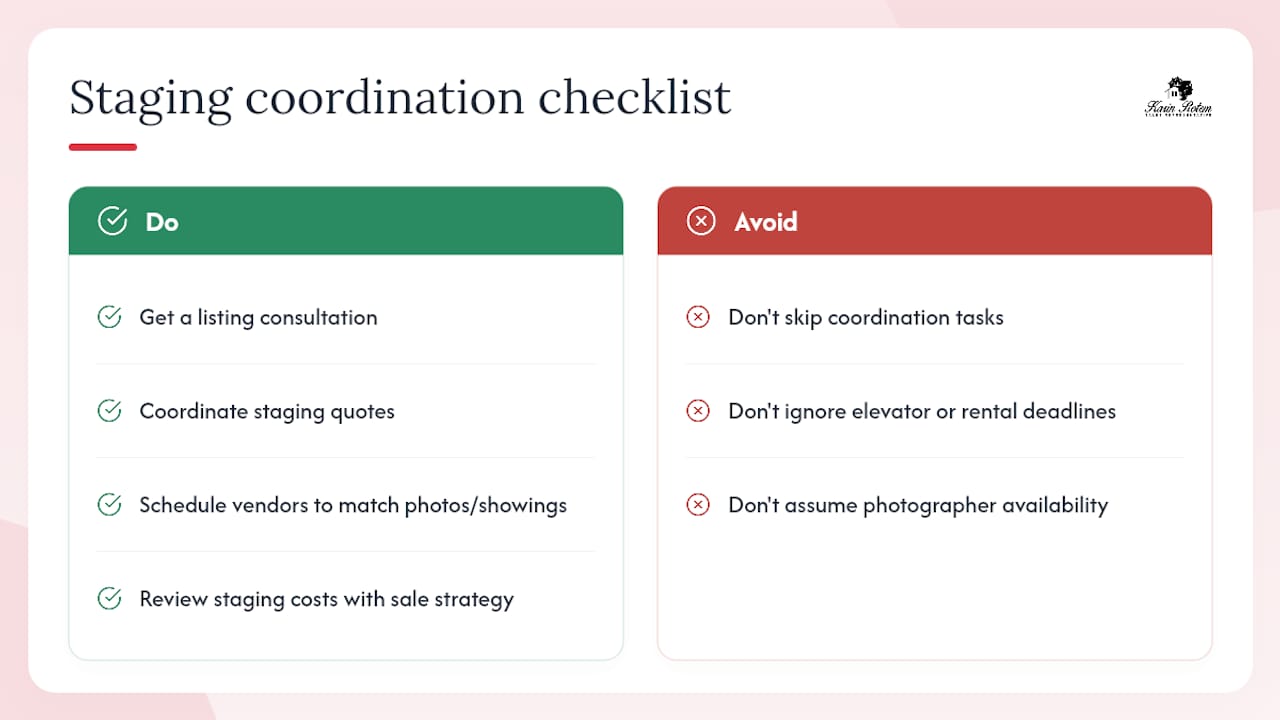
If you’re preparing to list in Toronto or considering a move to Innisfil or Friday Harbour, get a listing consultation and we’ll walk through staging costs alongside your full sale strategy, so the numbers make sense before you commit to anything.
Sources
FAQ
How much does home staging cost in Toronto?
Consultations run $0 to $450, occupied staging runs $1,000 to $3,500, and vacant staging for condos or houses runs $1,500 to $8,000 or more depending on size, based on current Toronto pricing.
Who usually pays for staging, the seller or the agent?
Sellers typically pay staging costs directly, though some agents contribute toward it or arrange staging as part of a listing package. Ask your agent whether staging support is included before booking independently.
How long does a typical staging rental period last?
Most Toronto stagers include a standard rental period in the fixed-price quote, with renewal fees applying if the listing period extends beyond the initial rental term.
Is home staging actually worth the cost?
For most Toronto listings, yes: staged homes tend to see fewer price reductions and stronger offers, though the uplift varies by neighbourhood, and targeted staging of key rooms can capture most of that benefit at lower cost.
Does Karin Rotem’s team help arrange staging for sellers?
Yes. Karinrotem coordinates fixed-price staging quotes and vendor scheduling as part of a full listing strategy, so staging timelines line up with photography and showings.