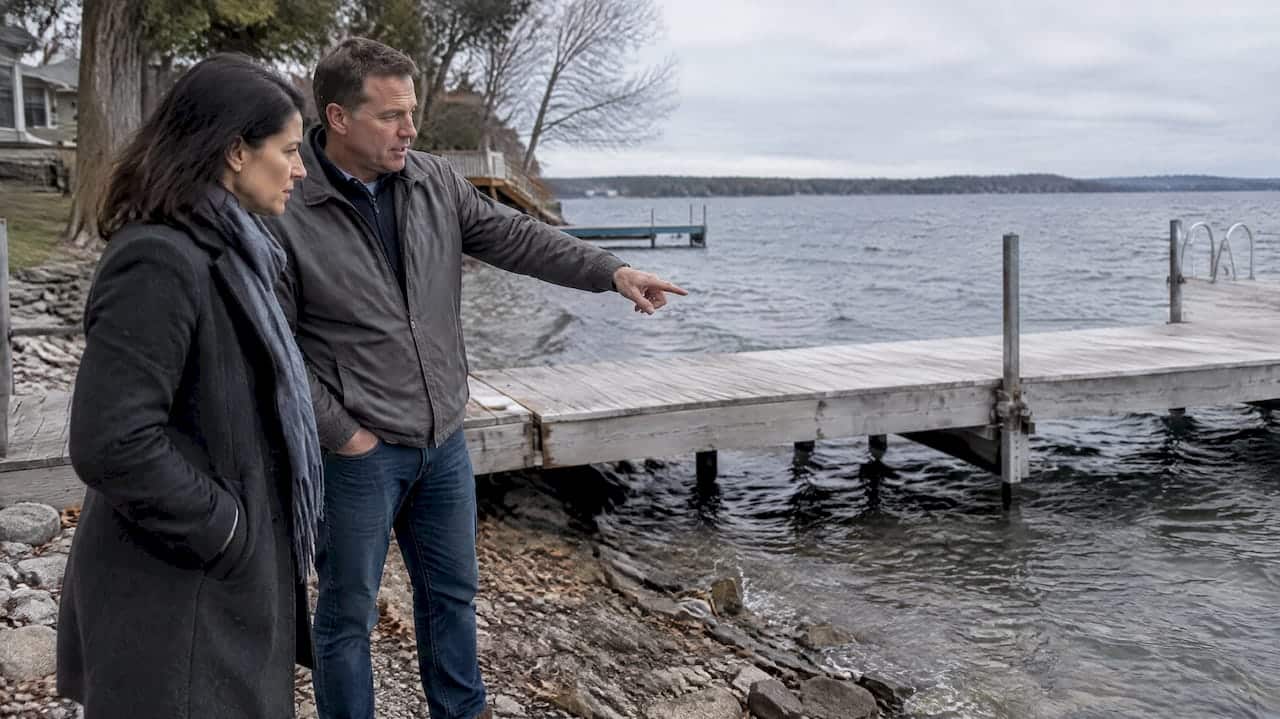
Yes, you can buy waterfront in Innisfil, but the shoreline you see in photos is only half the story. Before you write an offer, confirm the property’s shoreline permit status, check the septic system’s capacity, and understand its flood risk. Then bring in a local specialist who knows Lake Simcoe’s rules, because these three checks decide whether your dream property becomes a smooth closing or a costly surprise.
TL;DR:
- Confirm shoreline permit status and septic system capacity before making an offer, as these determine legal use and long-term value.
- Verify if the property falls under Parks Canada jurisdiction, especially for dock permits, as non-compliance can lead to costly fixes or removals.
- Conduct a comprehensive due diligence check on environmental permits, shoreline rules, and flood zones, rather than relying solely on standard inspections.
- Build in a 10 to 14 day condition period for permit and septic verification to manage the complex approval timelines effectively.
- Focus on permit history and long-term shoreline health, as these factors impact property value and ability to expand or build over time.
Innisfil waterfront market snapshot: inventory, price bands, and what “waterfront” means here
Waterfront in Innisfil covers a wide range, from modest cottages with shared shoreline access to custom builds with private docks on Lake Simcoe. What counts as “waterfront” here often depends on proximity to Friday Harbour, where lifestyle amenities add a premium that straight shoreline footage does not always command elsewhere on the lake.
Ontario’s resale market is expected to see a modest national recovery in 2026, according to CREA’s revised forecast, which matters for buyers trying to time an offer. A slower winter market can mean more room to negotiate, while spring listings tend to draw multiple offers on true waterfront parcels.
What buyers prioritize most when searching Innisfil waterfront listings:
- Private shoreline versus shared or association-controlled access.
- Existing dock or boathouse permits already in place.
- Distance to Friday Harbour’s marina, shops, and golf.
- Septic system age and whether it is rated for year-round use.
Checklist: what to verify before you sign an offer
Waterfront due diligence in Innisfil goes well beyond a home inspection. Four areas can affect what you are legally allowed to build, rebuild, or even keep on the property.
-
Confirm CPPS status. Innisfil’s Community Planning Permit By-law applies to Alcona and every parcel abutting Lake Simcoe. Ask the listing agent or the town directly whether the parcel falls under Class 2 or Class 3 permitting, since those classes dictate what shoreline work you can do and what environmental conditions apply.
-
Check for Parks Canada jurisdiction. Some Lake Simcoe shoreline work falls under Trent-Severn Waterway rules, which require a permit for docks, boathouses, boatlifts, and shoreline stabilization work, even repairs to structures that already exist. A new owner can inherit a non-compliant dock that must be fixed or removed.
-
Inspect the septic system. Ask for the Environmental Compliance Approval and a maintenance history. A system sized for a two-bedroom seasonal cottage will not support a four-bedroom, year-round renovation.
-
Review flood and erosion mapping. Ontario Regulation 97/04 restricts development in flood and erosion hazard areas along the shoreline, and the local conservation authority can require additional permissions before you build or alter grading.
-
Ask about Underused Housing Tax exposure. If you plan to use the property as a vacation home rather than a primary residence, review the CRA’s exemption guidance before closing, since exemptions are specific and not automatic for every vacation property.
Pro Tip: Request the seller’s permit file (CPPS approvals, Parks Canada licences, ECA documents) as a condition of your offer, not after closing.
A property with a permitted dock in good standing is worth more than one requiring a new licence of occupation, since Parks Canada licences carry annual fees and use restrictions that affect long-term ownership costs.
For buyers focused specifically on dock and boathouse rules, our breakdown of Ontario boathouse permits walks through the provincial and municipal steps in more detail.
Step-by-step: how to buy waterfront in Innisfil
Buying waterfront works best as a sequence, not a scramble. Here is the order that protects you from the biggest risks.
- Set up targeted alerts for waterfront-specific features like dock permits, shoreline type, and septic age, not just price and bedroom count.
- Draft conditional offers that include permit verification, a septic inspection, and a current survey, giving you time to walk away if something does not check out.
- Hire specialists early: a septic inspector, a shoreline or erosion consultant where the property sits in a hazard zone, and a licensed surveyor to confirm boundaries against any Crown land or water lot lines.
- Review financing and insurance with a lender familiar with waterfront and seasonal properties, since some lenders treat cottages differently from standard residential mortgages. A rental property mortgage guide is a useful starting point if you plan to generate income from the property.
- Confirm closing requirements, including any Parks Canada licence transfers or outstanding CPPS permit conditions, before your lawyer finalizes the deal. For signing logistics, see this Ontario closing guide covering notarization requirements.
Pro Tip: Build a 10 to 14 day condition period into your offer for waterfront properties: permit and septic checks almost always take longer than a standard home inspection.
Our own pre-offer checklist for Ontario waterfront covers shoreline and septic checks in more depth if you want a reference to bring to your first showing.
What I tell my clients: on-the-ground advice from our team
What I tell my clients is that they are buying stewardship as much as they are buying a view. Shoreline health, permit history, and septic condition shape a property’s long-term value far more than a fresh coat of paint or a staged dock.
I have shown clients two nearly identical properties on the same stretch of shoreline where one had a fully permitted dock and the other required a new licence of occupation from Parks Canada. The price difference reflected that gap exactly, and the buyer who understood it negotiated accordingly instead of finding out after closing.
Our team walks buyers through permit checks, connects them with septic inspectors and surveyors, and negotiates with due diligence built into the offer from day one.
Why due diligence matters more than the view
Most buyers fall in love with the shoreline and treat permits as paperwork to sort out later. That is backwards. A property’s CPPS classification and its septic capacity will determine what you can actually do with the land for as long as you own it, long after the photos stop mattering.

The conventional advice to “get a home inspection and a survey” undersells what waterfront ownership demands here. Lake Simcoe shoreline comes with layered jurisdiction, municipal, provincial, and sometimes federal, and skipping any one of those checks can cost far more than the inspection would have.
If I had to pick one priority for a buyer to nail down first, it would be permit history. A dock you cannot legally keep, or a septic system you cannot legally expand, changes the entire value proposition of the property, no matter how good the sunset view looks from the dock.
— Felix
How our team helps Innisfil waterfront buyers
Finding the right waterfront property in Innisfil means pairing market knowledge with permit literacy, and that combination is where our team spends most of its time. We run targeted searches tuned to shoreline type, dock status, and septic condition, not just price and square footage, so you see properties that actually fit your plans.
Our focus on Friday Harbour and the surrounding Lake Simcoe shoreline means we already know which parcels sit inside CPPS priority areas and which have clean permit histories. We also refer clients to septic inspectors, surveyors, and shoreline consultants we trust, and we build permit and inspection conditions into every offer we write.
If you are ready to start a focused search, visit Karinrotem to connect with our team and set up listing alerts for Innisfil waterfront properties that match what you actually need.

FAQ
Is a waterfront property a good investment?
Waterfront property can hold long-term value well, particularly where supply is limited and amenities like Friday Harbour add demand. Whether it is a good investment for you depends on permit status, carrying costs, and whether you plan to use it personally or generate rental income.
Where’s the cheapest place to buy waterfront property in Ontario?
Prices vary widely by lake, proximity to Toronto, and shoreline type, with entry-level cottages generally cheaper farther from major urban centres. Innisfil’s Lake Simcoe shoreline sits at a premium compared to more remote lakes because of its proximity to the GTA and amenities like Friday Harbour.
What is the average price of a house in Innisfil, Ontario?
Average home prices in Innisfil vary by property type and location, with waterfront and Friday Harbour properties commanding a premium over inland homes. Our pricing breakdown for Innisfil waterfront outlines what that premium looks like across different property types.
Do I need to pay the Underused Housing Tax on a vacation property in Innisfil?
It depends on how you use the property and whether it qualifies for an exemption, such as being seasonally inaccessible or used as a primary residence. The CRA’s exemption guidance outlines the specific categories, and owners planning to rent out the property should confirm their status before closing.
Do I need a permit to repair an existing dock in Innisfil?
Often, yes. Parks Canada’s shoreline works policy requires permits for repairs and replacements along the Trent-Severn Waterway, not just new construction, so a dock that predates your ownership may still need a current permit.
Sources
Start your own research with these authorities before you make an offer. The Town of Innisfil’s CPPS pages explain shoreline permit classes, while Parks Canada’s Trent-Severn licence page covers water lot licences and leases. The CRA’s UHT guidance addresses vacation property tax exemptions, and Ontario Regulation 97/04 governs shoreline and flood hazard development. CREA’s 2026 forecast offers broader market context for timing your purchase.
- Community Planning Permit By-law | Town of Innisfil
- In-water and shoreline works permits | Parks Canada — Trent–Severn Waterway
- Canada
- O. Reg. 97/04 — Development, Interference with Wetlands and Alterations to Shorelines and Watercourses
- CREA revises resale housing market forecast — CREA Café