For most seasonal cottages in Ontario, you should prioritise water and electricity: drain every line, secure the breakers, then handle the roof, eavestroughs and septic. Fully close an uninsulated three-season cottage, and keep heat on only if the building is insulated and you can monitor it remotely. Follow the Electrical Safety Authority, Natural Resources Canada and the Ontario Building Code.
TL;DR:
- Drain the system after shutting off the pump and water heater; open taps and low drains, and use antifreeze made for potable water systems.
- Keep heat only in an insulated cottage you can monitor remotely; Hydro One recommends setting thermostats to 16–18°C and warns against unattended space heaters.
- Inspect and pump the septic system every 3 to 5 years, or when solids reach about one third of tank capacity; keep vehicles off the field.
- Get a professional energy assessment before buying insulation; major renovations, seasonal to permanent conversions, and structures over 10 square meters require permits.
- Ask your insurer before closing whether coverage requires drained plumbing, running heat, or scheduled inspection visits, and how long the cottage may remain vacant.
What does a winter-closing checklist look like on closing weekend?
What I tell my clients is simple: work from the outside in, and finish with the things that protect your insurance claim. A closing weekend goes smoothly when you move in a fixed order, so nothing gets missed as the light fades.
Exterior first
- Inspect the roof for lifted shingles, damaged flashing and loose vents before the first snowfall.
- Clear the eavestroughs and downspouts of leaves and needles, so meltwater does not back up and freeze at the fascia.
- Move deck furniture, kayaks and cushions into a shed or secured storage, away from the cottage walls.
- Stack firewood well away from the building. A woodpile against the siding invites mice, carpenter ants and moisture.
- Check trees that overhang the roof and have a professional remove limbs that could fall under heavy snow.
Utilities in the middle
- Decide which electrical circuits stay live and which go off. Switch off branch circuits for large appliances first, then the main breaker if you are shutting everything down.
- Drain the water system fully. The next section walks through the sequence in detail.
- Drain the water heater, shut off the pump, and winterize the washer, dishwasher and any outdoor taps.
- Pour plumbing-grade antifreeze into every P-trap, including the ones you cannot easily reach.
Interior and security last
- Unplug small appliances, chargers, lamps and entertainment equipment.
- Rodent-proof gaps around pipes, vents and the foundation with steel wool, mesh or sealant. Mice need only a small opening.
- Prop open cupboard and closet doors, empty the fridge, and leave the fridge and freezer doors ajar.
- Lock up, label the keys, and tell a neighbour or caretaker who has access.
- Photograph every room, the mechanical area and the exterior. Those photos are useful if you ever file an insurance claim.
Pro Tip: Keep a laminated closing checklist inside the utility room door and tick items off with a dry-erase marker each fall. You will thank yourself when you are cold, tired and one task short of done.
How do you drain and protect the plumbing and water systems?
Frozen water expands, and that is what splits pipes, fittings and pump housings. The goal is a system with no standing water anywhere. Hydro One’s cottage closing checklist lays out the core procedure, and the order matters.
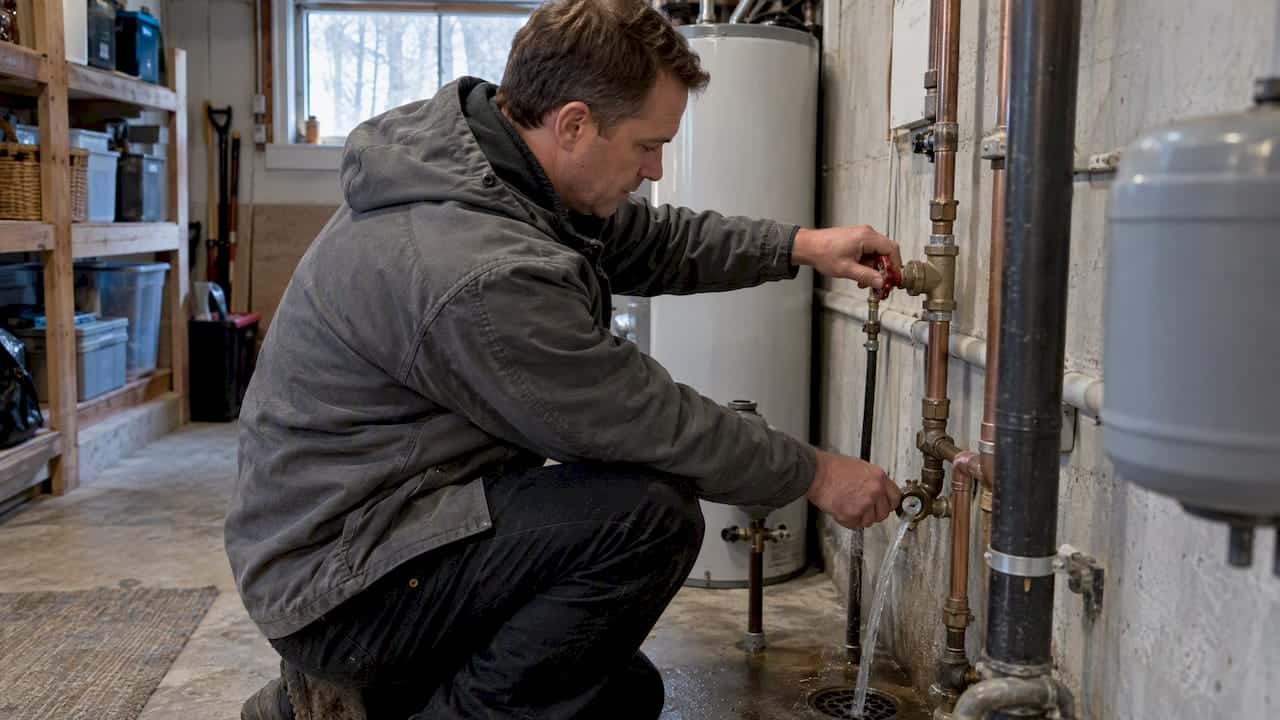
- Turn off the water pump and the hot water heater before you open any valve, so neither runs dry or heats an empty tank.
- Drain the water heater tank using the drain valve at the bottom of the tank.
- Open every tap, hot and cold, and open the hot taps at the highest point in the cottage so the lines can drain completely and air can enter.
- Drain the supply lines to the washer and dishwasher, since these are among the easiest places to miss.
- Open the lowest drain point in the system and let gravity finish the job.
- Pour plumbing-grade antifreeze into the P-traps under sinks, the toilet bowls and tanks, and any inaccessible trap you cannot drain.
Use only plumbing or RV-grade antifreeze made for potable water systems. Automotive antifreeze is toxic and has no place near a drinking-water line.
Complex setups need a professional. If you have in-floor loops, a lake-water intake with a long run, a pressure tank with several zones, or a system you inherited without drawings, hire a plumber for the first closing and take notes. Professional help can be inexpensive compared with repairing a burst line under a finished floor.
At spring opening, close all drains, fill the system slowly, and check every fitting for drips before you leave the property again. Open the highest hot tap first to push out trapped air and avoid airlocks.
Pro Tip: Photograph each valve in its closed and open position and tape a small labelled tag to it. A caretaker, family member or future buyer can then repeat your procedure without a phone call.
Should you leave the heat on or shut the power off?
This is the decision that shapes everything else, so make it deliberately. If the cottage is insulated and you want to protect finishes, furniture and plumbing, keeping low heat running can make sense. If the cottage is a true three-season building with thin walls and no insulation under the floor, shutting down and draining is safer.
If you leave power on, Hydro One advises setting thermostats to a minimum of 16–18°C to reduce moisture and mould risk. Consider a smart thermostat and remote monitors that send flood and freeze alerts to your phone. A cottage that cannot tell you it has lost power is a cottage that fails quietly.
If you shut power off, the sequence matters. Switch off individual branch circuits for non-essential appliances first, then flip the main breaker. That protects appliances from power surges when the system is restored. Then unplug small devices, because many draw small amounts of power even when switched off.
Electrical safety deserves its own attention:
- Never rely on unattended space heaters to keep pipes from freezing. Do not put one in a pump pit.
- Hire a Licensed Electrical Contractor for repairs, damaged wiring and new installations.
- Ask a Licensed Electrical Contractor to assess electrical protection for outlets near water, including those by the kitchen, bathroom, boathouse and pump area.
- If you add in-floor electric heating, coordinate the work with a licensed contractor, because ESA requires notification and inspection before heating cables or pads are covered.
ESA warns that electrical fires in cottages are often linked to improper use of portable space heaters or damaged wiring. That is the reason a heater left running “just to be safe” can create the very risk you were trying to avoid.
How do you look after the septic system before winter?
Septic problems are easy to prevent in October and painful to fix in January, when the ground is frozen and equipment cannot reach the tank. The Ontario government’s SepticSmart guide recommends inspecting and pumping every 3 to 5 years, and pumping when solids reach about one-third of tank capacity.
- Book the inspection and pump-out in early fall, before frost goes deep and before haulers fill their calendars.
- Ask the contractor to check the baffles, the outlet filter, and the condition of the lid and risers.
- Keep vehicles, trailers and snowmobiles off the distribution field. Compaction and frost penetration damage lines and can cause a break-out.
- Mark the tank and field clearly so a plow operator or caretaker knows where not to drive.
- Keep every pump-out receipt and inspection report in a folder. Insurers and buyers both ask for them.
Site conditions and Ontario Building Code rules shape which system suits your lot, so rely on a qualified professional for anything beyond routine servicing. If you are weighing a waterfront purchase or sale, the shore and septic checks in our pre-offer guide for Ontario waterfront buyers show why a documented septic history matters at resale.
What does it take to convert a cottage to four-season use?
Conversion is where owners overspend or underspend. Start with a professional energy assessment before you buy a single roll of insulation. Natural Resources Canada recommends a comprehensive approach: insulate attics, frame walls and basements, seal air leaks, and upgrade the heating system. A certified energy advisor can provide an EnerGuide rating that tells you where retrofit dollars will buy the most comfort. Natural Resources Canada’s building science overview also covers air leakage control, attic and basement insulation, and windows and doors.
- Prioritise the attic and air sealing first, then walls, then the basement or crawlspace.
- Insulating basements from the outside is preferred, but interior insulation is often the practical choice.
- Plan vapour barriers and a heat recovery ventilator (HRV) so a tighter building does not trap moisture.
- Check older insulation for vermiculite, which may contain asbestos, before anyone disturbs it.
- Confirm permit requirements with your municipality. Any major renovation, a change of use from seasonal to permanent, or an added structure over 10 square metres requires a building permit so the work meets the Ontario Building Code.
Municipal inspectors review work at stages such as framing, insulation and plumbing, so ask which stages need inspection before you begin. If you are renovating near the shoreline, our guide to Ontario boathouse permits covers setbacks and permit implications.
Pro Tip: Book the energy assessment before you collect contractor quotes. Contractors then price the same scope, and you avoid paying for upgrades that the assessment would have ranked low.
What does winterizing or upgrading a cottage really cost?
Prices vary widely by region, access and cottage age, and I will not guess at a number that does not fit your property. What I can do is show you where the money goes, so you can compare it fairly with the cost of selling.
Common cost buckets
- Trades labour for plumbing, electrical and carpentry
- Septic pumping, inspection and repairs
- Electrical inspections and repairs
- Insulation, air sealing and heating or HVAC upgrades
- Remote-monitoring hardware and the internet or cellular service to run it
Hidden costs owners overlook
- Accommodation for contractors on remote properties
- Winter access, including plowing or an emergency visit when an alert goes off
- Insurance changes after you convert or leave the property vacant
- Remediation for mould, rodent or water damage you could have prevented
Spend in order of risk. Safety comes first: electrical, heating and anything that could cause a fire or flood. Energy and comfort improvements come second. Cosmetic work comes last.
When should you close, and what fits in one day?
Many Ontario owners close over Thanksgiving weekend, but let the weather decide. An early cold snap can force an earlier closing, and a warm fall can give you extra time.
The tasks you do yourself include draining lines, switching circuits, securing the exterior and photographing everything. Book the rest in advance: the septic pump-out, a Licensed Electrical Contractor, and any HVAC or insulation contractor. Frozen ground and snow can delay site work quickly, and good trades book up early in the fall.
How do you remove snow and maintain the roof in winter?
Most cottages sit unoccupied, so snow load is mostly about preparation. Before closing, have a professional repair weak flashing and sagging sections, and trim branches that could drop snow or limbs onto the roof.
If snow on the roof concerns you, contact a qualified roofing professional rather than attempting removal yourself.
If you notice changes to the roof, doors, windows or ceilings, have a qualified professional assess the property. Keep vents, chimneys and the area around the foundation clear, so meltwater drains away from the walls instead of toward them.
Clear a safe path from the road to the door if you plan winter visits, and ask your plow operator to avoid piling snow against the foundation or over the septic field.
How do you prepare outdoor equipment and landscaping for winter?
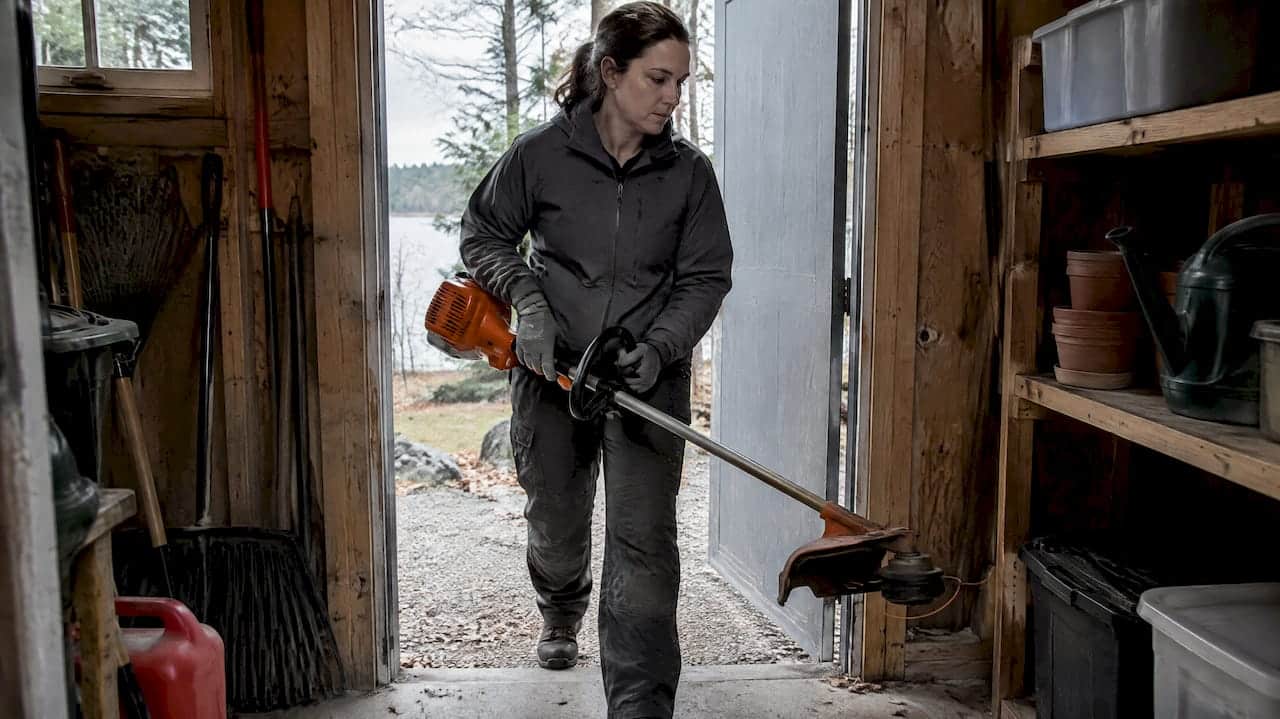
Outdoor gear is where owners lose the most money to neglect. Drain fuel from small engines or add a stabilizer, change the oil, and store lawn tractors, trimmers and chainsaws in a dry, lockable space. Disconnect and drain garden hoses and outdoor taps, then shut the outdoor supply valve inside the cottage.
For boats, pull the plug, drain the engine and lower unit, stabilize the fuel, and remove electronics and batteries. Lift docks and floating platforms where your lake requires it, and store cushions and fabric indoors where moisture cannot reach them.
In the yard, rake heavy leaf cover from beside the foundation, cut back shrubs that touch the siding, and protect young trees with guards against rodents and deer. Keep woodpiles and brush away from the building, which also lowers fire risk. Mark driveway edges and the septic field with stakes, so a plow or caretaker avoids both.
If your property backs onto the shoreline, check setbacks and shoreline rules before you move anything near the water. Our guide to seasonal rental demand patterns in Ontario is also worth a read if you plan to rent the cottage out and need equipment ready year-round.
What insurance questions should Ontario cottage owners ask?
Insurance is where a missed step becomes an expensive one. Call your broker before closing, not after a loss, and ask how your policy treats an unoccupied or seasonal property.
- Ask whether the policy requires the water to be shut off and the system drained, and whether heat must stay on, and at what temperature.
- Ask how long the cottage can sit vacant before coverage changes, and whether regular inspection visits are required.
- Ask what documentation they expect after a claim. Dated photographs and receipts from your closing weekend, your septic pump-out and any contractor work all help.
- Ask how a conversion to four-season or rental use changes your premium and coverage.
- Disclose heating sources honestly. A wood stove, a space heater or an electric heating upgrade can change your terms.
Keep a closing log with the date, what you shut off, who has keys and who checks the property. If a frozen pipe or a fire ever leads to a claim, that record shows you took reasonable care.
What I tell my clients: weigh the holding cost against the value
What I tell my clients in Friday Harbour and Innisfil is to price the whole cost of holding a cottage, including insurance and winter readiness, before spending on upgrades. A winter-ready property is easier to sell and easier to rent, but not every upgrade pays for itself. A consultation lets you compare the upgrade cost with the likely gain before you commit.
— Felix
Thinking about selling, renting or upgrading? Talk to us first
If you are unsure whether to winterize, sell or shift to rental use, we can help you decide with real numbers.
- A market consultation to compare resale value with upgrade cost
- A comparative market assessment for Friday Harbour and Innisfil, or rental-demand insight for The Harbour
Start at Karinrotem for more information.
FAQ
How much does it cost to winterize a cottage in Ontario?
The cost depends on your cottage’s size, location and systems, so no single figure fits every property. A do-it-yourself closing costs mainly your time plus antifreeze and supplies. Septic pumping, electrical work and insulation upgrades add costs, so get written quotes from licensed trades.
What is required to winterize a cottage?
You must drain the plumbing, the water heater and the pump, and add plumbing-grade antifreeze to traps, as Hydro One’s closing checklist explains. You also decide what to do with power, protect the exterior and roof, and rodent-proof the building.
Can you winterize a three-season cottage?
Yes, and for most uninsulated three-season cottages a full drain-down is the safest choice. Keeping heat on in a poorly insulated building can cost a lot and still leave pipes at risk. Converting to four-season use needs an energy assessment, insulation, a suitable heating system and, for major work, a building permit.
Are cottages in Ontario currently selling well?
Demand varies by region, price point and how winter-ready a property is. Market conditions change often, so I prefer to look at recent local sales than to quote a general claim. Ask us about your local real estate market.
Sources
- COTTAGE CLOSING TIPS
- Keeping The Heat In – Section 1: Introduction – Natural Resources Canada
- SepticSmart – Understanding Your Home’s Wastewater System