
The three moves that matter most when staging a waterfront property are showing the water from every key sightline, decluttering and depersonalizing so buyers can picture their own life there, and staging the outdoor living spaces as real, usable rooms. We pair those priorities with professional photography timed for golden hour, because waterfront is one of the most searched terms on REALTOR.ca, and buyers are searching for the lifestyle before they ever book a showing.
TL;DR:
- DIY decluttering and cleaning may suffice when furniture fits and the home shows well; hire a stager for vacant rooms, awkward layouts, or personal decor.
- Published estimates associate staging with 30%–50% shorter listing times and a 6%–20% price premium, though unstaged properties can still sell, often more slowly.
- Because unique waterfront homes may lack close comparable sales, a professional appraisal can help set a realistic asking price before marketing begins.
- Before showings, remove valuables, medications, and sensitive documents, then agree with your agent on visitor supervision and photo or video rules.
- Sellers must disclose known latent defects, while agents must disclose material facts such as flooding history or major system problems before the first showing.
1. Staging priorities for waterfront sellers: the high-impact checklist
Staging a waterfront home is about storytelling as much as tidying. Buyers are not just evaluating square footage, they are imagining mornings on the deck and evenings watching the water change colour. Professional stagers help with exactly that: they help buyers visualize themselves living in the home and bring an outside perspective on flow that a seller living in the space often cannot see.
Before you book anyone, there is a core checklist every waterfront seller can work through:
- Clear sightlines to the water from the entry, living room and primary bedroom.
- Remove family photos, personal collections and excess furniture that compete with the view.
- Handle small repairs: squeaky doors, chipped paint, loose railings and stained grout.
- Choose neutral accents in soft, water-inspired tones rather than bold personal colour choices.
- Confirm foot traffic flows naturally from the entry toward the water, not around obstacles.
A professional stager earns their fee on homes with awkward layouts, vacant rooms or heavily personalized decor. If your home already shows well and the furniture fits the space, a weekend of DIY decluttering and a thorough clean often gets you most of the way there.
2. Exterior and curb appeal: how to stage the first impression
Buyers form an opinion before they step out of the car, and on waterfront properties that first impression includes the approach, the entry and the shoreline. CREA’s photography guidance recommends shooting the front, back, entry points, foundation and siding, ideally at golden hour, because the warm light flatters stone, wood siding and water alike.
Before the camera arrives, walk the property with a critical eye:
- Pressure wash siding, walkways and the dock approach to remove algae and water stains.
- Tidy the lawn, trim shoreline vegetation and clear any debris along the waterline.
- Touch up exterior paint on doors, trim and railings facing the water.
- Stage the entry with a clean mat, simple planters and clear house numbers.
Drone footage adds real context for waterfront listings, showing the lot, the shoreline and the neighbourhood from above. If you shoot near other properties or people, follow the privacy practices Transport Canada lays out for drone operators in Canada, which call for limiting personal information collected, getting consent where people might be identifiable and storing footage securely. Filming on federally managed waterways, including sites like the Rideau Canal National Historic Site, can also require a permit.
Pro Tip: Walk the dock and shoreline the morning of your photo shoot, not the night before, since overnight dew and debris show up clearly in wide exterior shots.

3. Interior staging for waterfront homes: highlight the view and the lifestyle
Inside the home, every staging decision should answer one question: does this draw the eye toward the water or away from it? Pull furniture away from windows, angle seating toward the view and remove anything tall enough to block a sightline from the main entry.
Depersonalizing matters here more than in a typical listing because waterfront buyers are shopping on emotion. Swap personal photos and bold artwork for simple, neutral pieces, and layer in natural textures like linen, rope or driftwood tones that nod to the setting without turning the home into a theme.
A few habits separate a well-staged waterfront interior from an average one:
- Clean windows inside and out so the view reads crisp in photos and in person.
- Touch up scuffed trim and baseboards near patio doors and windows, which draw extra attention.
- Keep pathways from the kitchen and living room to the outdoor space clear and obvious.
- Use light, airy fabrics rather than heavy drapes that shrink the sense of space.
Vacant rooms or unusual floorplans, common in older cottages and custom waterfront builds, often benefit from rental furniture or a stager who can work with an unbiased viewpoint to improve flow. Our team has walked enough of these layouts to know when a small furniture rental budget pays for itself versus when simple decluttering is enough, and we outline more interior examples in our guide to staging a lifestyle property to attract buyers.
4. Outdoor living, docks and shoreline: staging places buyers will use
Outdoor space sells waterfront homes, so treat the patio, deck and dock as rooms, not afterthoughts. Define distinct zones, a dining area, a lounging spot and discreet storage, using compact, weather-suitable furniture that will not look lost in a wide photo.
Before any showing, clear the dock and shoreline of personal gear:
- Store hoses, life jackets, buoys and fishing equipment out of sight in a shed or garage.
- Stage the dock with one or two simple chairs rather than a full collection of water toys.
- Check railings, steps and pathways for safety and keep access routes clear and obvious.
- Keep landscaping trimmed and simple, avoiding anything that reads as high maintenance.
If your property has had any dock, septic or shoreline work done, keep maintenance records accessible in case buyers or their agents ask. It signals a well-cared-for property and avoids last-minute scrambling during a showing. If decluttering a boathouse or garage full of seasonal gear feels like its own project, a service like Atlas Kings handles moving and decluttering for exactly this kind of prep work.
5. Photography and marketing: how to get images that sell waterfront listings
Staging is only half the job if the photos do not deliver. Book a specialist real estate photographer and treat staging as the final prep step before the shoot, not something to tidy up as you go. Professional photography is a critical step after staging, and a photographer who knows lighting and angles can generate real interest before a buyer ever books a tour.
A strong waterfront photo set mixes a few types of shots:
- Wide interior shots that show the view from the main living areas.
- Exterior front and back shots capturing the entry, siding and shoreline.
- A few lifestyle vignettes, a set table on the deck, chairs angled toward the water.
- Select drone images for context, shot with privacy guidance in mind.
Pro Tip: Schedule your shoot for golden hour and confirm the outdoor furniture, dock and shoreline are staged the same day, since weather and debris change fast near water. For more on coordinating this process, see our listing photography tips for home sellers.
6. Pricing, staging ROI and timing: when staging is worth the cost
Staging is not free, so it is fair to ask whether it pays off. Published guidance on staging suggests it can reduce listing time by 30% to 50% and support a price premium, commonly cited in the range of about 6% to 20% compared with a similar unstaged or vacant home, though an unstaged property can still sell, often more slowly and at a softer price.
Waterfront homes add another layer: because comparable sales can be scarce, unique waterfront properties often benefit from a professional appraisal to set a realistic list price before marketing begins.
Practical sequencing matters as much as budget:
- Stage before photos whenever possible, not after the listing goes live.
- If early showings generate feedback but no offers, consider partial restaging in high-traffic rooms.
- DIY prep covers decluttering and cleaning; partial staging adds key rooms; full staging furnishes the entire home.
7. Preparing for showings and open houses: safety and seller checklist
Open houses on waterfront properties draw curious neighbours as well as serious buyers, so a little structure protects you. Sellers are generally advised to remove small valuables, medications and sensitive paperwork before any showing, and it helps to take an inventory of anything stored away so nothing goes unnoticed if it goes missing.
A simple pre-show routine covers the essentials:
- Walk every room and remove valuables, medications and personal documents.
- Confirm with your agent how visitors will be escorted and whether identification is checked.
- Agree on a photo and video policy for the showing in advance.
- Have disclosure notes and any material fact documentation ready for your agent to reference.
Disclosure is not optional. Agents are expected to determine and disclose material facts such as flooding history or major system issues, and sellers carry a legal obligation to disclose known latent defects. Talk through what applies to your property before the first open house, not after an offer comes in.
8. Use of water-themed decor and color palettes to enhance waterfront ambiance
Waterfront staging works best when the decor echoes the setting without turning the home into a nautical gift shop. Soft blues, sandy neutrals, driven greys and warm wood tones read as calm and current, and they photograph well against natural light bouncing off the water.
Texture does more work than colour alone. A woven throw, a jute rug or a linen slipcover suggests coastal living far more convincingly than a wall of anchors or seashell frames. The goal is a palette that feels like an extension of the view outside the window, not a costume layered over the furniture.
Keep accents minimal and consistent from room to room. One or two touches per space, a ceramic vase in sea glass tones, a simple woven basket, say more than a dozen small nautical objects competing for attention. Buyers remember a home that feels calm and cohesive far longer than one that feels themed.
This is also where small interior upgrades pay off. A tired closet door or dated interior door can pull focus from an otherwise well-staged room, and a quick swap, like the kind offered by One Day Doors & Closets, can refresh a space without a full renovation budget or timeline.
9. Staging for different types of waterfront properties (lakefront, riverfront, oceanfront)
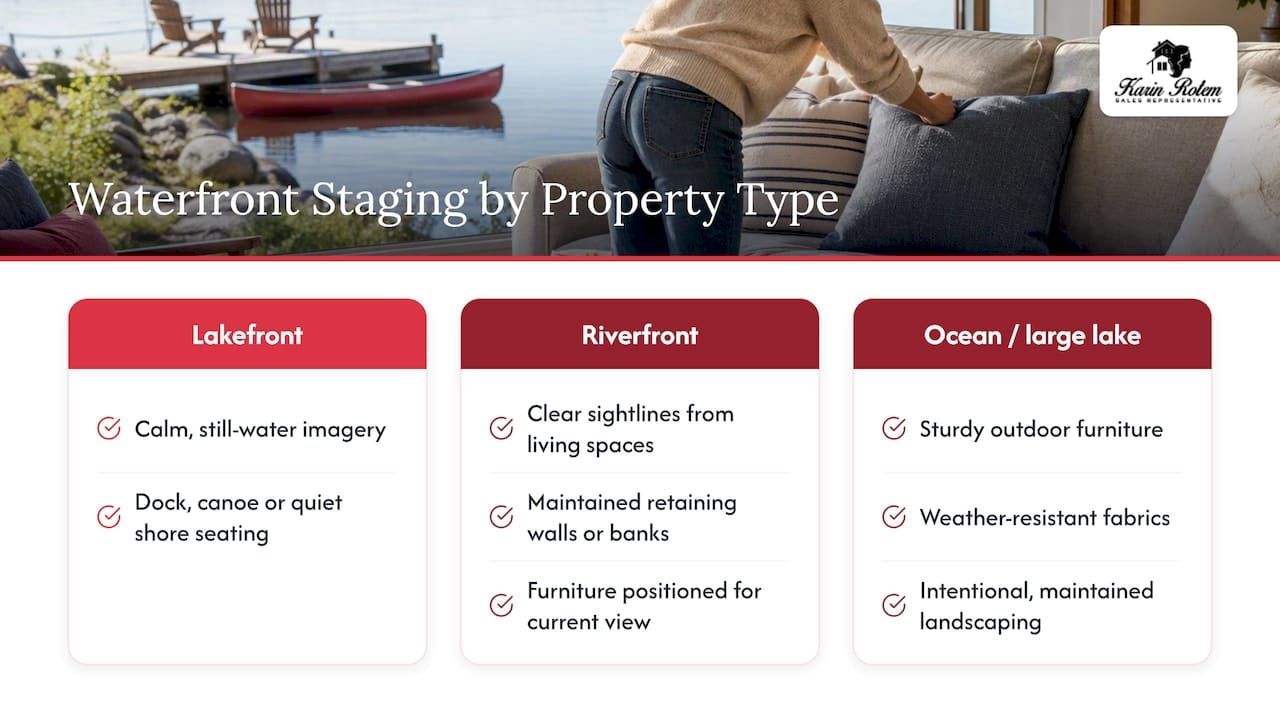
Not all waterfront is the same, and staging should reflect the kind of water your property sits on. Lakefront homes tend to sell on calm, still-water imagery, so staging that emphasizes a dock, a canoe or a quiet sitting area by the shore tends to resonate.
Riverfront properties often come with a stronger sense of motion and changing water levels, so buyers appreciate seeing how the home handles that, clear sightlines from main living spaces, well-maintained retaining walls or banks, and outdoor furniture positioned to take advantage of the current view without looking exposed.
Oceanfront and larger lake properties usually deal with more weather exposure, so staging should subtly signal durability: sturdy outdoor furniture, weather-resistant fabrics and landscaping that looks intentional rather than overgrown from salt air or wind. Buyers on these properties are often picturing longer stays or year-round living, so the staging should support that broader use case rather than a weekend-only feel.
Across all three, the constant is sightlines and lifestyle storytelling. Whether the water is still, moving or tidal, the staging goal stays the same: let the buyer picture themselves using the space, not just looking at it. Our overview of waterfront property types near Toronto walks through how these distinctions shape buyer expectations and listing positioning.
10. Highlighting waterfront lifestyle amenities and activities through staging (boating, fishing, relaxation)
Buyers shopping waterfront are often buying a lifestyle as much as a property, so staging should make that lifestyle visible without cluttering the space. A neatly stored kayak or paddleboard near the dock tells a story; a jumble of gear piled against the boathouse tells a different one.
Simple, intentional touches work best. A couple of folded towels and a pair of chairs angled toward the water suggest relaxation. A single fishing rod resting against a railing, rather than a full tackle box left out, hints at the activity without looking cluttered. If there is a fire pit or outdoor seating area, stage it as a gathering spot with simple cushions or a throw, since evenings by the water are often part of what draws buyers to these listings in the first place.
Boat lifts, slips and marina access are worth featuring clearly in both staging and photography if your property includes them, since they are a genuine differentiator for buyers comparing waterfront listings. Keep them tidy and show them as functional rather than aspirational. The goal throughout is restraint: a few well-placed, lifestyle-relevant touches outperform an outdoor space staged like a catalogue display.
11. Climate and weather considerations for staging waterfront homes (humidity, sun exposure, seasonal changes)
Waterfront homes deal with conditions that inland properties often do not, and staging needs to account for that. Humidity near lakes, rivers and coastlines can affect wood furniture, fabric and even wall finishes, so check for any musty smells, warped trim or peeling paint before a showing, particularly in basements or lower-level rooms closer to the waterline.
Sun exposure is another factor worth planning around. South or west-facing rooms with large windows toward the water can fade fabrics and furniture over time, so swap out any visibly sun-damaged cushions or rugs before photos. During the shoot itself, strong midday sun can wash out a view through glass, which is part of why golden hour timing works better for both interior and exterior shots.
Seasonal timing matters too. A property staged for a summer listing might emphasize the dock, outdoor seating and open windows, while a fall or winter listing should lean into cozy interior staging, warm lighting and clear, safe pathways if snow or ice is a factor. Whatever the season, keep gutters, siding and any visible exterior surfaces clean and well-maintained, since seasonal wear shows up quickly in photos taken near water.
12. What I tell my waterfront seller clients
What I tell my waterfront seller clients is that staging budget should match the gap between what the home is and what a buyer needs to picture. I have seen a simple declutter and a weekend of yard work shift buyer response as much as a full staging package. Start with the free changes first.
— Felix
How we help with listing, staging coordination and waterfront pricing
We coordinate staging, photography timing and pricing strategy for waterfront sellers across Innisfil and Friday Harbour, so you are not piecing together a plan on your own. Our team has walked enough docks, boathouses and lakefront living rooms to know which staging moves matter for your specific property and which ones you can skip.
- We help line up a photographer, staging priorities and a realistic price range before your home goes live.
- We can connect you with trusted local resources for cleaning, decluttering or small repairs ahead of photos.
- We walk through disclosure obligations with you so nothing catches you off guard during showings.
If you are weighing whether to stage, price or simply get a second opinion on your waterfront home, reach out through our main page and we will put together a plan suited to your property and your timeline.
FAQ
Does staging really help a waterfront home sell faster?
Staging is associated with shorter listing times and a price premium in published guidance, commonly cited at a 30% to 50% reduction in days on market and roughly 6% to 20% higher sale prices compared with similar unstaged homes. A home can still sell without staging, but it often takes longer and sells for less.
Do I need a professional appraisal before listing a waterfront property?
Unique waterfront homes often lack close comparable sales, which makes pricing harder to pin down from listing data alone. A professional appraisal is commonly recommended to help set a realistic asking price before marketing begins.
Are drone photos allowed for waterfront listings in Canada?
Drone photography is widely used for waterfront listings, but operators need to follow privacy rules. Transport Canada guidance calls for limiting personal information collected, getting consent where people might be identifiable, and storing any footage securely.
What should I remove from my home before a waterfront open house?
Sellers are generally advised to remove small valuables, medications and sensitive documents before any open house or showing. Taking a quick inventory of anything stored away beforehand makes it easier to confirm nothing is missing afterward.
What am I legally required to disclose when selling a waterfront home?
Sellers have a legal obligation to disclose known latent defects, and agents are expected to determine and share material facts that could affect a buyer’s decision, such as flooding history or major system problems. These obligations are outlined in RECO’s disclosure guidance, and it is worth reviewing them with your agent before listing.