As of this writing, Americans generally cannot buy residential property in Canada. The federal foreign buyer ban covers most non-Canadians, and the ban is scheduled to run to January 1, 2027. There are exceptions, and Ontario adds a 25% tax on top when a foreign national does buy. I’m Karin Rotem, and I work with buyers in Toronto, Innisfil and Friday Harbour every week. Below is what I tell American clients before they fall in love with a listing.
TL;DR
- The federal ban prohibits most non-citizens and non-permanent residents from buying residential property. Some people and some purchases are exempt. Confirm the current status before you make an offer, because the ban’s end date is close.
- If you are not a citizen or permanent resident and you buy in Ontario, the Non-Resident Speculation Tax is 25% of the purchase price, unless you qualify for a refund or exemption.
- Owning a home does not give you the right to live in Canada. As a U.S. citizen you can generally visit for up to six months at a time, and the property does not extend that.
- Rental income, a later sale and an unused property each trigger Canadian tax filings, and the penalties for missing them are real.
- Talk to a cross-border tax adviser and a Canadian real estate lawyer before you sign anything, not after closing.
Can Americans buy property in Canada?
Short answer: it depends on your status and on what you are buying.
The Prohibition on the Purchase of Residential Property by Non-Canadians Act prohibits non-Canadians from buying residential property, with exceptions for certain temporary residents, protected persons, qualifying spouses and other prescribed persons and circumstances. It applies to certain residential properties in a census metropolitan area or census agglomeration, and breaking the Act can mean a $10,000 fine and a court-ordered sale. The U.S. Department of State tells American investors the same thing: non-Canadians are barred from buying residential real estate until January 2027.
What most American buyers don’t realize is how the exceptions are shaped. They are narrow. CMHC’s summary of the Act lists non-Canadians who rent a dwelling to occupy it, people who acquire property through divorce, separation, gift or death, certain temporary workers and students who meet strict conditions, and purchases made for development. A U.S. citizen on a valid work permit, for example, may fall into an exception. An American who simply wants a weekend place on the water generally does not.
Two things to check before you go further:
- Your status. Citizens and permanent residents of Canada are not caught by the ban. A U.S. citizen who is also a Canadian citizen, or who becomes a permanent resident, is in a different position from someone who is neither.
- The date. The ban was extended once already, and the current end date is January 1, 2027. I can’t tell you today what Ottawa will decide next, so confirm the current status on the federal pages above or with your lawyer before you commit.
If you are not sure which side of the line you are on, reach out to my team early. It is far cheaper to learn this before you tour than after you have a conditional offer.
What the ban does and doesn’t cover
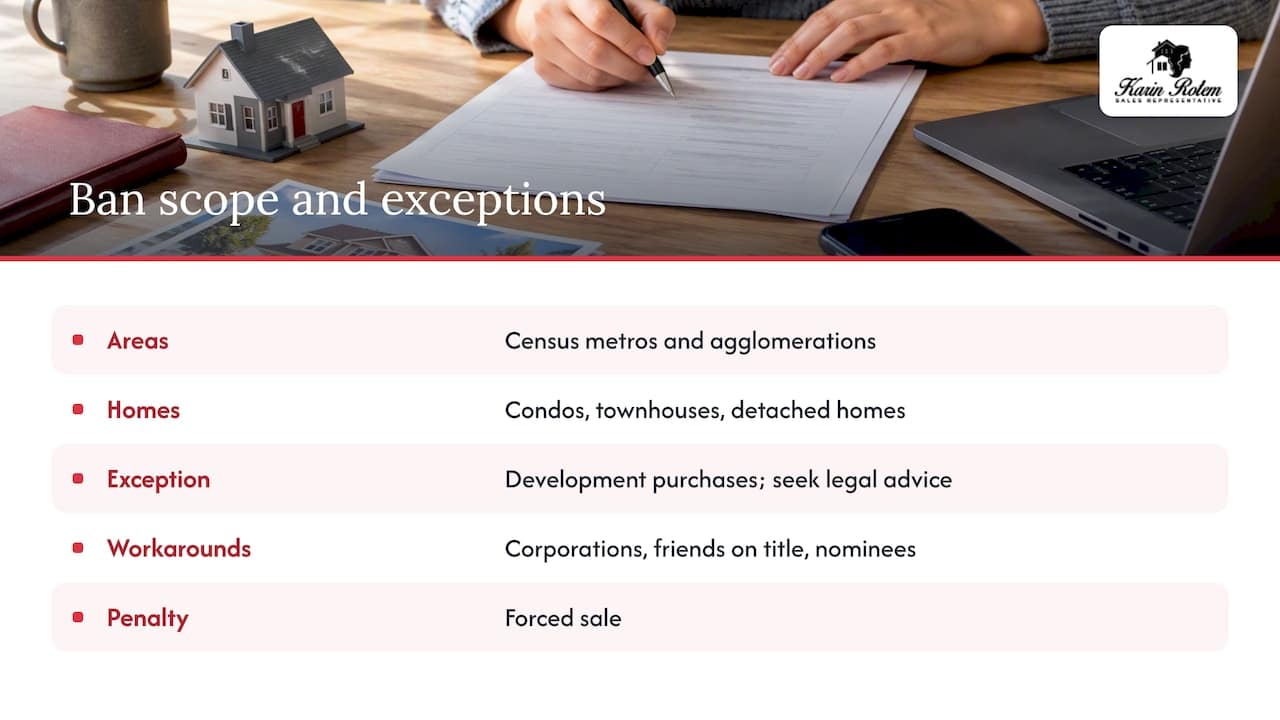
The ban targets residential property in census metropolitan areas and census agglomerations, which takes in most of the places Americans ask me about, including Toronto and the Innisfil and Barrie area. It was designed around homes people live in, so the type of property matters. Condos, townhouses and detached homes are all in scope. Purchases made for development are among the listed exceptions, but that is a different kind of transaction from buying a vacation unit, and you would need legal advice to structure it.
The usual workarounds people propose are the ones I steer clients away from: buying through a corporation, putting a Canadian friend on title, or using a nominee. Foreign commercial enterprises are expressly caught by the ban, and the penalty includes a forced sale. What I tell my clients: if the structure only works when nobody looks closely, it doesn’t work.
Ontario’s 25% Non-Resident Speculation Tax
Even where the federal ban doesn’t stop you, Ontario may tax you. The Non-Resident Speculation Tax (NRST) applies to purchases of residential property in Ontario by foreign nationals, at 25% since October 25, 2022. It applies to land with at least one and not more than six single-family residences, which includes detached homes, semis, townhouses and residential condominium units.
Here is what that looks like on a purchase price of $800,000:
| Item | Amount |
|---|---|
| Purchase price | $800,000 |
| NRST at 25% | $200,000 |
| Ordinary Ontario land transfer tax | Payable in addition |
That $200,000 comes due at closing, on top of your down payment. Ontario has refund and exemption rules, and I’ve covered them in detail in our guides to the 25% NRST at closing and non-resident property purchases in Ontario. The broader picture is in our foreign buyer rules overview.
Toronto adds its own layer
If the property is in the City of Toronto, you also face the Municipal Land Transfer Tax. The City says buyers may also owe a 10% Municipal Non-Resident Speculation Tax on the purchase price of certain residential properties, in addition to provincial taxes. See our Toronto land transfer tax breakdown and the Ontario land transfer tax explainer for how those numbers work on a real purchase.
New condos and HST
Buying a new condo? In Ontario, HST applies to new condominium units but generally not to resale units. Rebates exist for some buyers, though they are designed with residents in mind. Our HST rebate guide explains who qualifies.
Can you live in Canada if you own a home here?
No. This is the point that surprises people most. Owning property does not give you immigration status.
Americans may generally stay in Canada for up to six months per visit without a visa, but that is not a right to live here indefinitely. Border officers look at the overall pattern of your entries and your ties, and owning a home does not extend the permitted stay. If you plan to spend most of the year in Canada, you need to look at immigration options, not just real estate. Speak with a Canadian immigration lawyer or consultant about that, and do it before you buy.
The other side of this: spending a lot of time here can affect your tax residency. For GST/HST purposes the CRA says residence is decided case by case. It looks at ties such as a dwelling place, a spouse or dependants, personal property and social ties, and keeping a dwelling suitable for year-round occupancy available in Canada will generally mean residential ties were not severed. A cross-border accountant can tell you where your own pattern lands.
Financing a Canadian purchase from the U.S.
Plan on a larger down payment than a resident would need. CMHC mortgage insurance is designed for Canadian residents, and non-permanent residents may face different eligibility rules and limits on non-traditional down payments. In practice, that means many non-resident buyers put down a substantial share in cash and deal with lenders who have specific non-resident programs. I’ve laid out the options in our non-resident mortgage guide.
Budget for closing costs too. CMHC says buyers should expect legal fees, land transfer taxes and similar costs to run roughly 1.5% to 4% of the purchase price. That range is for ordinary buyers. If the NRST or Toronto’s municipal non-resident tax applies to you, the total is far higher. Our closing costs guide lists what each line item covers.
Taxes after you own
This is where most of the cross-border surprises sit. Here is the short version, with the official source for each.
| Situation | What applies |
|---|---|
| You rent the property out | 25% withholding tax on gross rent, unless you elect under section 216 to be taxed on net rental income |
| You sell the property | Non-residents must notify the CRA under section 116, or the buyer may have to withhold 25% to 50% of the price as security |
| You miss the 10-day notice after a sale | $25 per day, minimum $100, maximum $2,500 |
| The home sits empty or underused | Possible 1% annual Underused Housing Tax on assessed value, with an annual filing |
Rental income
If you plan to rent, the election under section 216 matters. Without it, tax is withheld from gross rent. With it, you are taxed on net income and may recover over-withheld amounts. Our short-term rental tax guide walks through the T776 steps and the deductions people leave on the table.
Selling
Canadian real property counts as taxable Canadian property. A non-resident seller can notify the CRA within 10 days after the sale, or notify it ahead of a proposed sale and request a certificate of compliance. If the buyer doesn’t receive that certificate, they must remit a set amount to the Receiver General and may deduct it from the price. Sellers who ignore this find out at closing, when the lawyer holds back money. See our explanation of non-resident withholding tax.
Vacation property and empty homes
The federal Underused Housing Tax has a vacation-property exemption, but for 2024 and later it is limited to affected individuals who own in their own right, whose own or their spouse’s or partner’s personal use adds up to at least 28 days, and who meet CRA’s location and filing conditions. Some Ontario cities, including Toronto, Ottawa and Hamilton, also levy a vacant unit tax. Even if you owe nothing, you may still have to file.
The U.S. side matters too. Canada may treat a sale as tax-free where the principal residence exemption applies, but the IRS does not always agree, and how you hold title changes the outcome. That is the kind of detail a cross-border tax professional has to model for your situation, as MoneySense’s guide for Americans also stresses.
Renting it out: check the local rules first
A lot of Americans think of a Canadian waterfront condo as a place to use for a few weeks and rent the rest of the time. Before you count on that income, check the municipality. Ontario municipalities may license or register hosts, limit home-sharing to principal residences, restrict rental days, or use zoning. Condo corporations can add their own rules on top.
This is why Friday Harbour is not like a typical Ontario condo purchase. It’s a resort community with its own structure for rentals, and what is allowed depends on the building and the unit. I’ve explained it in Friday Harbour rental rules for owners. If you’re weighing the product type, see what a condo hotel unit is and what a short-term rental income property is. I’ll also tell you plainly when a unit is the wrong fit for your plan.
Our perspective
We talk to Americans about Ontario waterfront all the time, and the honest advice often starts with “not yet” or “not like that.” The appeal is real: Innisfil and Friday Harbour offer marina living, a resort setting and a shorter drive from Toronto than most people expect. But the ban, the 25% provincial tax and the post-closing filings change the math on a deal that looks simple on a listing sheet.
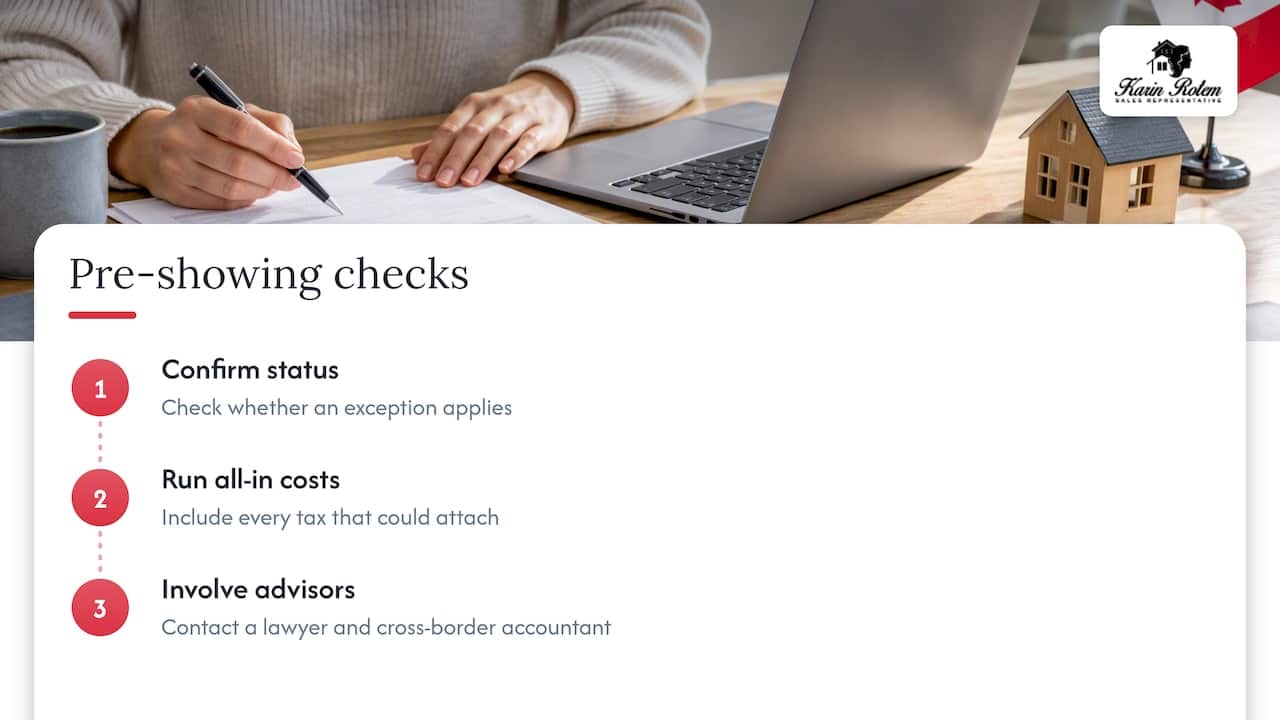
So we do three things before we book a showing for a non-Canadian buyer. We confirm status and whether an exception applies. We run the all-in cost, including every tax that could attach. And we involve a Canadian real estate lawyer and a cross-border accountant early. If you qualify, we’ll find you the right place. If you don’t, we’ll say so and point you to what is possible, such as renting at Friday Harbour first, rather than let you spend months on something that can’t close.
— Felix
Where to start if you are eligible
If you’re a Canadian citizen, permanent resident or someone who fits an exception, my team can search Friday Harbour, Innisfil and the Toronto area with you. Browse Friday Harbour condos for sale, see exclusive Friday Harbour listings, or compare the numbers in how Friday Harbour condo prices compare to Toronto. Not ready to buy? You can also look at Friday Harbour rentals to test the lifestyle first. Tell us your status, your budget and how you’d use the place, and we’ll tell you honestly whether it fits.
Estate planning and how you hold title
How you take title is not a formality. It can affect U.S. capital gains exposure, probate, estate administration, creditor protection and provincial family-law rights, and changing title later can carry legal, tax or land-transfer consequences. Cross-border estate specialists also warn that trusts and corporations can create Canadian tax complications, including deemed dispositions and possible transfer taxes. For personally owned Canadian real estate, they recommend a will in the province where the property sits to simplify administration. Settle this with your lawyer before closing.
A practical checklist
- Confirm your status and whether the federal ban or an exception applies to you, and re-check the ban’s current end date.
- Get your lender’s non-resident terms in writing and budget for the down payment.
- Run the full cost, including NRST, any Toronto municipal tax, land transfer tax, legal fees and HST if the unit is new.
- Ask a cross-border accountant about rental withholding, the section 216 election, the Underused Housing Tax and U.S. reporting.
- Check municipal and condo rules before you count on rental income.
- Decide how you will hold title and update your will.
- Plan your exit, including the section 116 process.
FAQ
Can Americans buy property in Canada right now?
Generally no, for residential property, unless you are a Canadian citizen or permanent resident or qualify for an exception under the federal Act. The ban is scheduled to run to January 1, 2027, so check whether it has changed. A lawyer can confirm your status before you make an offer.
Is the 25% Ontario tax on top of the federal ban?
They are separate. The federal ban decides whether you may buy. Ontario’s NRST is a tax charged to foreign nationals who do buy residential property in the province, and Toronto adds its own municipal non-resident tax. Ask about refund and exemption rules before you budget.
Can I live in Canada year-round if I own a home here?
No. Americans can generally visit for up to six months at a time, and property ownership does not extend that stay. Staying long term requires an immigration pathway, which an immigration lawyer can assess.
Do I pay Canadian tax if I rent out my property?
Yes. Non-residents face a 25% withholding tax on gross rent unless they elect under section 216 to be taxed on net rental income. Short-term rentals also depend on local licensing rules, so check your municipality and condo corporation first.
Sources
- Prohibition on the Purchase of Residential Property by Non-Canadians Act
- CMHC: Prohibition on the Purchase of Residential Property by Non-Canadians Act
- Department of Finance: two-year extension to the ban
- Housing, Infrastructure and Communities Canada: Tab A
- U.S. Department of State: Canada investment climate statement
- Ontario: Non-Resident Speculation Tax
- City of Toronto: Municipal Land Transfer Tax and MNRST
- CMHC: Ontario fact sheet
- 49th Parallel Wealth: how long an American can stay in Canada
- CRA: Residence
- CMHC: Mortgage loan insurance quick reference
- CMHC: General requirements
- CRA: T4144 Section 216 guide
- CRA: Section 116 procedures
- CRA: Disposing of or acquiring certain Canadian property
- CRA: Exemption for vacation properties
- Mann Lawyers: real estate transactions for non-residents
- Ontario: Home-sharing guide for municipalities
- MoneySense: what every American should know before buying in Canada
- ACTEC Foundation: considerations for U.S. owners of Canadian real property